Broken Marriage?
Fix it
Here FREE

Get My Marriage Back


11 Signs Your Wife Doesn’t Respect You (And What to Do About It)

Few things wound a husband more deeply than feeling disrespected by his wife. It doesn’t just hurt your egoโ€”it can make you question your value, your leadership, and even the future of your marriage.

More Video on our YouTube Channel

If you’ve been searching for signs your wife doesnt respect you, you’re probably not looking for validation to start another argument. You’re looking for answers because something feels fundamentally off.

Maybe she constantly criticizes you. Maybe she dismisses your opinions, rolls her eyes when you speak, or makes decisions without including you. Whatever the situation, it’s important to recognize one truth:

Respect cannot be demanded, argued into existence, or forced through intimidation. It is earned over time through consistent character, emotional stability, healthy boundaries, and leadership.

That doesn’t excuse disrespectful behavior. But if your goal is to rebuild your marriage instead of simply winning arguments, you’ll need a different approach.

Let’s examine the warning signsโ€”and more importantly, how to respond in a way that restores dignity rather than creating more distance.

signs your wife doesnโ€™t respect you

Why Respect Matters More Than Winning Arguments

Respect is one of the foundations of attraction in long-term relationships.

Without respect:

  • Communication becomes hostile.
  • Conflict becomes personal.
  • Intimacy begins to disappear.
  • Friendship slowly erodes.

Many husbands respond in one of two destructive ways.

Some become angry, reactive, and determined to prove they’re right.

Others become passive, avoid conflict, and constantly try to please their wives.

Ironically, both responses often reinforce the same problem.

One communicates emotional instability.

The other communicates a lack of self-respect.

Neither creates the calm confidence that naturally earns respect over time.

5 Signs of wife LOSING INTEREST In Husband

11 Signs Your Wife Doesn’t Respect You

1. She Constantly Belittles You

Constructive criticism is normal.

Contempt is different.

If she frequently calls you stupid, lazy, incompetent, weak, or mocks your abilities, that’s more than frustrationโ€”it’s disrespect.

This becomes even more concerning if these comments happen repeatedly after you’ve calmly expressed how hurtful they are.


2. She Rolls Her Eyes or Dismisses Everything You Say

Disrespect often shows up in subtle body language before it becomes obvious.

Examples include:

  • Eye rolling
  • Heavy sighs
  • Smirking
  • Interrupting
  • Acting like your opinions don’t matter

These behaviors communicate that she has stopped valuing your perspective.


3. She Makes Important Decisions Without You

Marriage is a partnership.

Healthy spouses consult each other before making significant financial, parenting, or family decisions.

If she consistently excludes you from major choices, she’s acting as though your input has little value.


4. She Publicly Embarrasses or Humiliates You

One of the clearest signs your wife doesnt respect you is when she criticizes or mocks you in front of:

  • Friends
  • Family
  • Children
  • Coworkers
  • Social media audiences

Healthy couples protect each other’s dignity in publicโ€”even when they disagree privately.


5. She Rarely Asks for Your Opinion

Everyone wants to feel that their thoughts matter.

If your wife never asks:

  • “What do you think?”
  • “How would you handle this?”
  • “Can I get your advice?”

it may indicate she no longer views you as someone whose judgment she values.


6. She Values Everyone Else’s Advice Over Yours

It’s perfectly healthy to seek advice from family or friends.

The issue arises when your opinion is consistently dismissed while everyone else’s opinions carry more weight.

Over time, this creates emotional distance and leaves you feeling like an outsider in your own marriage.


7. She Frequently Gives You the Silent Treatment

Taking space during conflict can be healthy.

Using silence as punishment is different.

When your wife consistently ignores you, refuses communication, or withholds interaction to gain emotional leverage, it damages trust and connection.


8. She Doesn’t Defend You

Respect often reveals itself when you’re not in the room.

If friends, relatives, or coworkers criticize you unfairly, a respectful spouse generally sets reasonable boundaries.

If she regularly joins in, laughs, or allows others to demean you without speaking up, it’s a warning sign.


9. She Shows Little Appreciation

Nobody expects constant praise.

But when your efforts go unnoticed for monthsโ€”or yearsโ€”it becomes difficult to feel valued.

Simple appreciation like:

  • “Thank you.”
  • “I appreciate what you do.”
  • “I noticed your effort.”

helps sustain emotional connection.

When appreciation disappears completely, respect often follows.


10. She Regularly Crosses Boundaries

Respect includes honoring each other’s emotional boundaries.

Examples include:

  • Ignoring reasonable requests
  • Invading privacy
  • Mocking personal values
  • Continuing hurtful behavior after repeated conversations

Healthy boundaries aren’t about controlling someone else.

They’re about defining what treatment you will and won’t accept.


11. She Treats You More Like a Roommate Than a Husband

Emotional indifference can sometimes hurt more than open conflict.

If your marriage has become little more than logistics, chores, bills, and parentingโ€”with little friendship, affection, admiration, or intimacyโ€”it may indicate respect and attraction have both eroded.

before your assume, here are signs your wife doesnโ€™t respect you
โ€œHow Do You Tell If Your Wife STILL LOVES YOU After SEPARATION?โ€

Before You Assume She Doesn’t Respect You

Sometimes what feels like disrespect is actually:

  • Chronic stress
  • Burnout
  • Unresolved resentment
  • Depression
  • Communication breakdown
  • Emotional exhaustion

Likewise, occasional frustration isn’t the same as persistent contempt.

Look for patterns rather than isolated incidents.

One bad week doesn’t define a marriage.

Months or years of recurring disrespect deserve serious attention.


The Biggest Mistake Most Husbands Make

When a man feels disrespected, his instinct is often to restore order immediately.

That usually looks like:

  • Lecturing
  • Defending himself endlessly
  • Demanding apologies
  • Trying to prove he’s right
  • Starting power struggles

Unfortunately, this rarely creates more respect.

It usually creates more resistance.

Respect grows when your behavior consistently reflects calm strengthโ€”not emotional volatility.


How to Rebuild Respect Without Begging for It

Stop Chasing Validation

Your worth cannot depend on whether your wife praises you today.

The more desperately you seek validation, the more emotionally dependent you become.

Confidence grows from within, not from constant approval.


Lead Yourself First

One uncomfortable truth is that people often mirror how we treat ourselves.

Ask yourself:

  • Have I neglected my physical health?
  • Have I abandoned my purpose?
  • Do I constantly seek reassurance?
  • Do I tolerate behavior that violates my own values?

Self-respect usually comes before receiving respect from others.


Establish Calm Boundaries

Boundaries are not threats.

They’re clear standards.

Instead of shouting:

“You need to respect me!”

Try:

“I’m willing to have this conversation when we’re both speaking respectfully.”

Then actually follow through.

Consistency matters far more than emotional intensity.


Stop Being Obsessed With Right and Wrong

Many marriages become courtroom battles.

Every disagreement turns into proving who’s correct.

That mindset creates opponents instead of partners.

The goal isn’t winning arguments.

The goal is rebuilding connection.


Rebuild Your Own Purpose

Attraction naturally increases when someone is living a meaningful life.

That doesn’t mean ignoring your marriage.

It means becoming someone whose identity isn’t entirely dependent on it.

Invest in:

  • Your physical health
  • Your career
  • Your spiritual life
  • Personal growth
  • Friendships
  • Leadership at home

Purpose creates stability.

Stability often creates respect.


Improve the Friendship

Respect rarely thrives where friendship has died.

Ask yourself:

  • Do we laugh together?
  • Do we enjoy each other’s company?
  • Have we become purely transactional?

Sometimes rebuilding attraction begins with rebuilding genuine companionship.


When Professional Help Is Necessary

Some marriages involve patterns that go far beyond ordinary disrespect.

If your relationship includes:

  • Emotional abuse
  • Threats
  • Intimidation
  • Constant humiliation
  • Manipulation
  • Fear

don’t simply try harder to earn respect.

Seek help from a qualified marriage counselor or individual therapist, and prioritize your emotional and physical safety.

Healthy leadership never means tolerating abuse.
signs your wife doesnโ€™t respect you - recognizing the signs

Recognizing the signs your wife doesn’t respect you can be painful, but it doesn’t automatically mean your marriage is over.

In many relationships, respect erodes gradually because resentment, poor communication, unhealthy expectations, and emotional reactivity quietly replace admiration and friendship.

The good news is that respect is rarely rebuilt through louder arguments or better speeches.

It grows through consistent self-respect, emotional intelligence, healthy boundaries, purpose, and steady leadership over time.

Instead of asking, “How do I make her respect me?” consider asking a better question:

“What kind of man am I consistently becoming?”

That shift won’t produce overnight resultsโ€”but it often becomes the beginning of lasting change.

Frequently Asked Questions [FAQ]

How do you handle a disrespectful wife?

Start by assessing your personal level of self respect before attempting to address disrespect. Instead of reacting emotionally or trying to win an argument, set clear boundaries, communicate your expectations respectfully, and focus on strengthening your own emotional stability and leadership while remaining open to counseling if the pattern continues.

How do I get my wife to respect me?

You cannot force or negotiate respect, but you can create the conditions where it naturally grows over time. Build self-respect through purpose, consistency, healthy boundaries, emotional intelligence, and dependable actions that inspire trust rather than demand admiration.

How to deal with a toxic wife?

If your wife regularly uses manipulation, humiliation, intimidation, or emotional abuse, recognize that these behaviors go beyond ordinary marital conflict. Protect your well-being, establish firm boundaries, and seek professional support to determine whether the relationship can become healthy again.

What are the first signs a marriage is ending?

Early warning signs include persistent contempt, emotional distance, unresolved resentment, poor communication, loss of friendship, and a decline in mutual respect and affection. While these patterns are serious, recognizing them early gives couples the best opportunity to address the underlying issues before they become permanent.

Your Husband Doesn’t Care About You? 4 Signs, How to Separate Feelings From Reality & Rebuild Connection

Few thoughts hurt more than quietly whispering to yourself, “My husband doesn’t care about me anymore.”

It often doesn’t happen overnight. Instead, it grows through weeks, months, or even years of emotional distance. Conversations become transactional. Affection fades. Date nights disappear. You stop feeling seen, appreciated, or emotionally safe.

Eventually, your heart reaches a painful conclusion:

“He just doesn’t care.”

That feeling deserves compassion. But before making a life-changing decision based on it, there’s an important distinction to make.

Your feelings are real. They deserve attention. But they are not always the complete picture.

Sometimes your husband truly has become emotionally disconnected. Other times, what you’re experiencing is complacency, unresolved resentment, burnout, depression, stress, or a marriage that has gradually lost its emotional and romantic energy.

Understanding the difference changes everything because you can’t solve the right problem if you’ve identified the wrong one.

my husband doesn't care about me

Why You Feel Like Your Husband Doesn’t Care About You

No woman wakes up one morning and randomly concludes her husband doesn’t care.

Usually, she’s responding to a consistent pattern such as:

  • He rarely initiates conversations.
  • Physical affection has almost disappeared.
  • He seems emotionally unavailable.
  • He prioritizes work, hobbies, friends, or screens over the relationship.
  • He seems indifferent when you’re hurting.
  • Arguments never seem to get resolved.
  • You feel more like roommates than spouses.

When these patterns continue long enough, your brain naturally fills in the blank:

“If he cared, he wouldn’t act this way.”

That’s an understandable conclusionโ€”but it’s not always the only explanation.


Separate Emotional Reality From Objective Reality

One of the healthiest skills in marriage is learning to separate emotional perception from objective evidence.

Your emotional experience matters.

If you feel neglected, lonely, or unwanted, those feelings are real. They shouldn’t be dismissed or minimized.

However, feelings answer the question:

“What am I experiencing?”

They don’t always answer:

“Why is this happening?”

That’s where many couples get stuck.

One spouse feels abandoned.

The other feels overwhelmed.

Neither understands the other’s internal world.


The Resource Test: Where Is He Investing His Life?

One practical way to evaluate whether your husband truly doesn’t care is to examine where he consistently invests his resources.

People generally put their:

  • Time
  • Energy
  • Attention
  • Effort
  • Money

behind what matters most to them.

For many husbands, especially those who naturally express love through responsibility rather than emotion, providing for the family is one of their strongest demonstrations of care.

Ask yourself:

  • Does he continue working hard to support your household?
  • Does he solve problems when they arise?
  • Does he protect the family’s stability?
  • Does he make sacrifices that benefit everyone?

If the answer is yes, the situation is probably more complicated than simply saying he doesn’t care.

He may be emotionally unavailable.

He may have become complacent.

He may have lost attraction or connection.

He may be carrying stress he hasn’t shared.

Those are serious issuesโ€”but they are different from complete indifference.

Affection - my husband doesn't care about me

When Caring and Affection Become Two Different Things

One of the biggest misunderstandings in marriage is assuming care and affection are identical.

A husband may genuinely care about his family while doing a poor job expressing warmth, empathy, romance, or emotional availability.

That doesn’t excuse emotional neglect.

But it does help explain why some wives feel unloved while their husbands sincerely believe they’re doing everything right.

He thinks:

“I work hard every day.”

She thinks:

“I haven’t felt emotionally close to you in months.”

Both experiences can be true simultaneously.

The real issue often becomes the growing affection deficit rather than the complete absence of care.


4 Signs Your Husband May Seem Like He Doesn’t Care

Before assuming the worst, consider whether any of these factors may be contributing.

1. Emotional Burnout

Many people don’t process stress by talking more.

They withdraw.

Financial pressure, career struggles, health concerns, and family responsibilities can quietly consume emotional energy.

Unfortunately, marriage often receives whatever energy remains.


2. Unresolved Resentment

Sometimes emotional distance isn’t caused by a lack of love.

It’s caused by unresolved hurt.

Old arguments.

Broken trust.

Repeated disappointments.

Unspoken expectations.

When resentment accumulates, affection often disappears long before love does.


3. Lost Friendship

Romance rarely survives where friendship dies.

Many couples spend years managing children, bills, careers, and responsibilities while unintentionally neglecting simple friendship.

They stop laughing together.

Stop learning about each other.

Stop enjoying each other’s company.

Without friendship, emotional attraction slowly fades.


4. The Marriage Has Become Predictable

Every relationship needs both certainty and variety.

Security creates trust.

Novelty creates excitement.

When every week looks identical, emotional energy naturally declines.

Sometimes the relationship doesn’t need a dramatic rescue.

It simply needs fresh experiences together.


Could Attraction Have Changed?

This is an uncomfortable conversation, but an important one.

Sometimes a husband still cares deeply about the marriage while losing romantic attraction within the relationship.

Attraction isn’t only physical.

It’s emotional.

Behavioral.

Psychological.

Relational.

Over time, criticism, constant conflict, emotional neediness, defensiveness, resentment, or chronic negativity can quietly reduce attraction for either spouse.

Likewise, emotional distance, passivity, neglect, or a lack of effort from him can diminish your attraction toward him.

Rather than asking only:

“Does he care?”

A more productive question may be:

“What has happened to the emotional climate of our marriage?”

That question creates room for solutions instead of assumptions.


What You Can Control Right Now

You cannot force your husband to become emotionally available.

You cannot control his choices.

You cannot make him care more than he chooses to.

But you can influence the emotional environment you help create.

Healthy influence begins with personal leadership, not self-blame.

That means asking:

  • Am I communicating my needs clearly instead of expecting him to guess?
  • Have criticism and frustration replaced curiosity?
  • Are we making time for friendship?
  • Have we stopped prioritizing intimacy?
  • Am I becoming the version of myself I respect regardless of his response?

Taking responsibility for your influence is empowering.

Taking responsibility for his decisions is impossible.

Know the difference.


How to Talk to Your Husband Without Making Him Shut Down

If you’ve reached the point where you’re thinking, “My husband doesn’t care about me,” the conversation matters.

Instead of saying:

“You never care about me.”

Try:

“I’ve been feeling lonely lately, and I miss feeling close to you.”

Instead of building a courtroom case filled with evidence, invite him into the emotional experience you’re having.

People are often less defensive when they don’t feel they’re being prosecuted.

The goal isn’t to win an argument.

The goal is to reopen emotional connection.


When It Really Is Emotional Neglect

Sometimes the evidence points beyond complacency.

If your husband consistently shows no concern for your emotional, physical, or relational well-beingโ€”and refuses every reasonable attempt to rebuild the marriageโ€”you may be facing genuine emotional neglect.

Signs include:

  • Complete emotional indifference.
  • Persistent contempt.
  • Chronic disrespect.
  • Refusal to communicate.
  • No effort toward repair.
  • No investment in the relationship whatsoever.

At that point, the question shifts.

Instead of asking:

“How do I make him care?”

You begin asking:

“Why am I accepting a relationship where my basic emotional needs are consistently ignored?”

That isn’t about blaming yourself.

It’s about reclaiming your standards, dignity, and long-term emotional health.

Identity - my husband doesn't care about me

Don’t Let This Thought Become Your Identity

Thinking, “My husband doesn’t care about me,” is a painful emotional experience.

It should never become your identity.

Whether the problem is complacency, stress, lost attraction, unresolved resentment, or genuine emotional neglect, your next step is the same:

Seek clarity before certainty.

Observe patterns instead of isolated moments.

Communicate before concluding.

Lead yourself before trying to lead your spouse.

Many marriages recover after seasons of emotional distance because both spouses become willing to address what was happening beneath the surface.

And if your marriage cannot be rebuilt, you’ll move forward knowing your decisions were guided by wisdom rather than assumptions.

19 Signs Your Wife Is Not Sexually Attracted To You

Frequently Asked Questions [FAQ]

What to do when your husband doesn’t care about you?

Start by identifying whether you’re dealing with emotional distance, complacency, or genuine neglect rather than assuming they are all the same. Communicate your experience calmly, focus on what you can influence, and seek professional marriage counseling if both of you are willing to work on rebuilding the relationship.

What are the first signs a marriage is ending?

Common early signs include persistent emotional distance, unresolved conflict, loss of friendship, declining intimacy, and little interest in repairing disagreements. While these warning signs deserve serious attention, they do not automatically mean the marriage is beyond saving if both spouses are willing to address them.

How does a man act when he doesn’t care about you?

A husband who no longer cares may consistently show indifference to your emotional needs, avoid meaningful conversations, refuse to repair conflict, and make little or no effort to invest in the relationship. However, emotional withdrawal alone is not enough to reach that conclusion because stress, burnout, resentment, or complacency can produce similar behaviors.

What does emotional neglect do to a wife?

Emotional neglect can leave a wife feeling lonely, unseen, rejected, and emotionally unsafe even while living under the same roof as her husband. Over time, it can reduce self-confidence, increase anxiety or resentment, and weaken the friendship and intimacy that healthy marriages depend on.

Your Husband Doesn’t Listen to You? 7 Ways to Feel Heard Again

If you’ve been thinking or feeling that your husband doesn’t listen to you, chances are you’re not just frustrated.

You’re hurt.

You feel unseen.

You feel like your thoughts, feelings, and concerns are constantly competing with work, his phone, the TV, hobbies, stress, or simply his lack of attention.

After repeating yourself enough times, it can begin to feel like you’re speaking to a brick wall.

But before we jump to conclusions, let’s slow down and get clear on something important:

What exactly do you mean when you say your husband doesn’t listen to you?

Because there is listening.

There is active listening.

And then there is simply waiting for your turn to speak.

Understanding the difference could completely change how you approach this challenge and dramatically improve your marriage.

Not All “Listening Problems” Are the Same

One of the biggest mistakes people make is treating every communication issue as if it’s the same problem.

In reality, there are several possibilities.

He Doesn’t Listen Because He Doesn’t Agree

Sometimes “he doesn’t listen” really means:

  • He doesn’t do what you suggested
  • He pushes back
  • He disagrees
  • He says no

If that’s the case, the issue may not be listening at all.

Healthy marriages are partnerships, not dictatorships.

A husband who understands your perspective but chooses a different course of action isn’t necessarily ignoring you.

The better question becomes:

Why is he disagreeing?

Have you taken the time to understand his reasoning?

He Hears Your Words but Misses Your Feelings

This is where many wives find themselves.

You don’t necessarily need him to agree.

But you need him to understand… right?

You want him to:

  • Hear your concerns
  • Understand your emotions
  • Acknowledge your experience
  • Make you feel important

This is active listening.

This is what most people mean when they say they don’t feel heard.

He Listens Only to Respond

Some people aren’t listening to understand.

They’re listening to defend themselves.

They’re preparing their counterargument before you’ve even finished talking.

When that happens, conversations become debates rather than connections.

And nobody feels heard.

my husband doesn't listen to me

Why Your Husband May Have Stopped Listening

Contrary to popular belief, most husbands don’t wake up one morning and decide to ignore their wives.

In many cases, listening problems are symptoms of something deeper.

Emotional Burnout

If every interaction feels like a complaint, criticism, or confrontation, some men begin emotionally checking out.

Not because they don’t care.

Because they feel defeated.

Defensiveness Has Become a Habit

One of the most common relationship traps is criticism.

Even when your intentions are pure, repeated criticism often creates defensiveness.

And defensiveness destroys listening.

Many marriages become trapped in this cycle:

  • Wife feels unheard
  • Wife complains
  • Husband feels attacked
  • Husband withdraws
  • Wife feels even more unheard

The cycle repeats.

Complacency Has Set In

Comfort can become complacency.

Many husbands assume everything is fine because the marriage is still functioning.

Bills are paid.

The household is running.

Nobody is leaving.

Meanwhile, emotional connection slowly deteriorates.

Unmet Emotional Needs

Every human being seeks six core emotional experiences:

  • Certainty
  • Variety
  • Significance
  • Connection
  • Growth
  • Contribution

When these needs aren’t being fulfilled, emotional distance tends to follow.

Communication breakdown is often just the visible symptom.

stop chasing - my husband doesn't listen to me

Stop Chasing and Start Understanding

This advice may sound counterintuitive.

If you’re not being heard, your instinct is probably to talk more.

Explain more.

Push harder.

Repeat yourself louder.

But that approach often backfires.

The harder one person pushes, the more the other retreats.

Instead, consider this:

What if the first step toward being heard is becoming curious?

Ask yourself:

  • What is my husband experiencing?
  • What pressures is he under?
  • What makes him shut down?
  • What causes him to become defensive?

Understanding is influence.

And influence is often far more powerful than pressure.

The Surprising Connection Between Listening and Attraction

Most communication advice ignores a critical reality:

Attraction and communication are deeply connected.

People naturally pay attention to what captivates them.

This doesn’t mean manipulating your spouse.

It means understanding human nature.

When attraction, admiration, friendship, and emotional connection are thriving, communication becomes easier.

When those things decline, listening often declines with them.

Friendship Comes First

One of the strongest predictors of marital success isn’t romance.

It’s friendship.

Ask yourself:

  • Do we enjoy being around each other?
  • Do we laugh together?
  • Do we still have fun together?

Many couples lose friendship long before they lose the marriage.

Avoid Anti-Seducer Behaviors

Many relationship problems worsen because one or both spouses become trapped in unattractive patterns.

Common attraction killers include:

  • Neediness
  • Constant criticism
  • Moralizing
  • Reacting emotionally to everything
  • Talking without listening
  • Trying to control outcomes

When attraction weakens, attention often weakens alongside it.

Rebuild Emotional Safety

People listen better when they feel safe.

Not judged.

…shamed.

Condemned.

And not blamed.

The more emotional safety exists, the easier meaningful conversations become.

my husband doesn't listen to me - marriage killers

The Two Marriage Killers Most Couples Miss

Many couples think their marriage struggles stem from communication alone.

In reality, two issues drive most long-term relationship breakdowns:

1. Mismanaged Expectations

Unspoken expectations become hidden resentments.

Your husband cannot meet expectations he doesn’t know exist.

And even when he knows them, they must be realistic.

2. Mismanaged Pride

Pride prevents accountability.

It prevents humility.

Pride prevents growth.

And it keeps couples focused on proving who’s right instead of solving problems together.

Many communication issues are actually pride and expectation issues wearing different clothes.

9 Ways to Get Your Husband to Listen More

1. Check Your Timing

Don’t start important conversations when he’s distracted, exhausted, or mentally occupied.

Ask if it’s a good time first.

2. Use “I Feel” Instead of “You Never”

Instead of:

“You never listen to me.”

Try:

“I feel disconnected when we don’t have meaningful conversations.”

3. Focus on One Topic

Avoid overwhelming him with a list of grievances.

One issue is easier to process than ten.

4. Listen First

If you want understanding, model understanding.

Curiosity often opens doors criticism cannot.

5. Appreciate What He Does Right

People naturally move toward appreciation and away from criticism.

Recognition can be surprisingly powerful.

6. Build Friendship Intentionally

Create positive experiences outside of problem-solving conversations.

Friendship strengthens influence.

7. Rebuild Attraction

Physical attraction matters.

Emotional attraction matters.

Intellectual attraction matters.

Never underestimate the power of becoming the most grounded, confident version of yourself.

8. Stop Trying to Win

Marriage isn’t a courtroom.

The goal is connection, not victory.

9. Take Ownership Without Taking Blame

Ownership means focusing on what you can control.

It does not mean carrying responsibility for everything wrong in the relationship.

Leadership and Partnership Can Coexist

Healthy marriages are partnerships.

But every marriage occasionally requires leadership.

Someone has to rise above the emotional noise.

…interrupt the cycle.

Someone has to focus on solutions instead of blame.

That doesn’t make one person superior.

It makes them temporarily responsible for helping move the relationship forward.

Often, the person willing to lead emotionally creates the breakthrough both spouses desperately need.

The Goal Isn’t Just Communicationโ€”It’s Connection

When most people say:

“My husband doesn’t listen to me.”

What they’re really saying is:

“I don’t feel seen.”

“Don’t feel understood.”

“I don’t feel important.”

And that’s a much deeper issue than words.

The solution isn’t simply talking more.

It’s rebuilding the emotional environment where listening becomes natural again.

Focus on friendship, attraction, understanding.

…And emotional intelligence.

Because when two people genuinely feel connected, they rarely have to fight to be heard.

35 Warning Signs Your Wife Is Cheating (Is It Insecurity?)

Frequently Asked Questions

What are the first signs a marriage is ending?

The earliest signs are often emotional withdrawal, loss of friendship, chronic resentment, and indifference toward repairing problems. Couples typically drift apart emotionally long before they physically separate.

What is the rule of success for marriage?

Successful marriages are built on mutual respect, emotional connection, trust, and a commitment to continuous growth. Managing expectations and pride effectively is often more important than avoiding conflict altogether.

What are the four habits that destroy marriages?

The four most destructive habits are criticism, defensiveness, contempt, and stonewalling. These behaviors gradually erode emotional safety, trust, and attraction when they become recurring patterns.

What are the signs of a disrespectful husband?

Common signs include dismissing your feelings, belittling your opinions, chronic dishonesty, contemptuous behavior, and refusing to consider your perspective. Healthy disagreement is normal, but repeated devaluation of your thoughts and emotions is not.

How Do You Tell When Your Marriage Is Over? 5 Painful Signs You Shouldn’t Ignore

how do you tell when your marriage is over-these are signs

There is a special kind of heartbreak that comes from sharing a home with someone and still feeling completely alone.

You wake up beside them every morning.

You eat dinner at the same table.

You go through the motions of life together.

Yet something feels missing.

The connection is gone.

The warmth is gone.

The hope is fading.

And late at night, after another disappointing day, you find yourself typing the same question into Google:

how do you tell when your marriage is over

How do you tell when your marriage is over?

Most people asking this question aren’t looking for permission to leave.

They’re looking for clarity.

They’re trying to figure out whether they’re experiencing a difficult season or whether the marriage they once loved is slowly dying.

The truth is that marriages rarely end overnight.

They usually unravel through a series of painful patterns that grow worse over time.

If several of the signs below describe your relationship, it may be time to honestly evaluate whether your marriage is strugglingโ€”or whether it has already emotionally ended.

1. You’re No Longer On The Same Team

One of the strongest signs a marriage is in trouble is when the feeling of partnership disappears.

Healthy couples face problems together.

They may disagree, but they still feel like they’re standing on the same side.

When a marriage begins falling apart, that united front vanishes.

Psychologically, this often happens when trust has been damaged repeatedly.

After enough disappointments, broken promises, criticism, or unresolved conflicts, the brain starts focusing on self-protection rather than teamwork.

Instead of asking, “What’s best for us?” both spouses start asking, “How do I protect myself?

You notice it in everyday moments.

Your spouse makes a decision without consulting you.

You share a concern and immediately feel dismissed.

You tell your partner about a difficult day and receive criticism instead of comfort.

Even parenting becomes a struggle because neither person feels supported by the other.

Over time, you stop feeling like husband and wife.

You start feeling like two people living separate lives under the same roof.

That loneliness can be devastating because the one person who was supposed to have your back no longer feels like a safe place to land.

how do you tell when your marriage is over - contempt

2. Every Conversation Feels Like A Minefield

There was a time when talking to your spouse felt easy.

Now even the smallest conversation feels dangerous.

You carefully choose your words because you’re afraid of starting another argument.

You rehearse conversations in your head before speaking.

Sometimes you decide not to bring things up at all because the conflict doesn’t seem worth it.

This often develops after years of unresolved hurt.

Psychologists refer to this as a negative relationship filter.

Once resentment becomes deeply rooted, both spouses begin interpreting neutral comments as attacks.

Questions sound like accusations.

Requests sound like criticism.

Concerns sound like complaints.

Imagine asking your spouse what time they’ll be home.

Instead of answering, they become defensive.

Or maybe you ask for help around the house and somehow end up discussing every mistake you’ve made during the past five years.

The issue is no longer the conversation itself.

The issue is that emotional safety has disappeared.

Eventually, many couples stop talking about meaningful things altogether because every discussion feels exhausting.

The silence that follows can be just as painful as the arguments.

how do you tell when your marriage is over - abandonment

3. Someone Has Already Left Emotionally

One of the most heartbreaking signs your marriage is over is when one spouse emotionally checks out.

At first, they may have fought for the relationship.

They may have pleaded for change.

They may have expressed their frustrations repeatedly.

But after enough disappointment, many people simply stop trying.

Psychologically, this is often the result of emotional exhaustion.

When someone feels unheard for too long, hopelessness begins replacing effort.

The danger is that emotional withdrawal is often mistaken for peace.

The arguments stop.

The tension seems lower.

Things appear calmer.

But underneath the surface, something far more dangerous is happening.

The person has stopped believing the marriage can improve.

You may hear phrases like:

“I’m tired.”

“I don’t care anymore.”

“Do whatever you want.”

“What’s the point?”

Those words carry a different kind of pain.

Anger still contains emotion.

Frustration still contains investment.

Indifference often means the emotional bond is already breaking.

When your spouse no longer fights for the relationship, it can feel like you’re grieving someone who is still sitting right beside you.

4. The Marriage Has Stopped Moving Forward

Every healthy marriage requires growth.

Two imperfect people are constantly learning, adapting, apologizing, and improving.

When that process stops, the relationship begins to stagnate.

One spouse may stop working on themselves.

Both spouses may stop addressing problems.

The same conflicts repeat year after year without resolution.

Psychologically, people stop growing when they lose hope that their efforts matter.

Why change if nothing improves?

Why communicate if nobody listens?

Why work harder if the relationship feels dead already?

The result is a marriage that feels stuck in place.

The same disappointments happen over and over.

The same arguments replay like a movie you’ve seen a hundred times.

Nothing changes because neither person believes change is possible.

This creates a painful sense of helplessness.

You start looking at the future and realizing it looks exactly like the present.

For many couples, that realization is terrifying.

5. Physical Intimacy Has Completely Disappeared

A temporary dry season is normal in marriage.

Stress, children, health issues, work demands, and life transitions can all affect intimacy.

But when physical intimacy disappears for three months or longer without a clear reason, it often signals a deeper emotional problem.

Intimacy is more than sex.

It’s affection.

It’s touch.

It’s closeness.

It’s feeling wanted by your spouse.

Emotional distance often shows up physically long before couples realize what’s happening.

Resentment weakens attraction.

Unresolved conflict reduces desire.

Loss of respect destroys connection.

You stop holding hands.

The hugs become less frequent.

The kisses become routine or disappear entirely.

Eventually, physical distance becomes the new normal.

Few things hurt more than feeling rejected by the person you chose to spend your life with.

The loneliness of a sexless marriage is difficult to describe unless you’ve lived through it.

You begin wondering whether your spouse still desires you.

Whether they still love you.

Whether they still see a future with you at all.

how do you tell when your marriage is over - loss of respect

The Silent Killers: Indifference And The Loss Of Respect

Many people believe constant fighting means a marriage is over.

In reality, indifference is often much more dangerous.

Arguments usually mean both people still care enough to engage.

Indifference means someone has stopped emotionally investing.

The same is true of respect.

When mutual respect disappears, nearly every other area of marriage begins suffering.

Communication becomes harder.

Intimacy declines.

Trust weakens.

Conflict increases.

Emotional safety disappears.

Many marriages don’t die because of one major betrayal.

They die because of thousands of small moments where one or both spouses stop valuing, honoring, and respecting each other.

If you’re asking yourself, how to tell when your marriage is over, one of the most important questions to ask is whether respect still exists in the relationship.

Because when respect disappears, everything else usually follows.

If you’ve noticed growing emotional distance, constant conflict, criticism, or a spouse who seems checked out, read 3 Signs Your Wife or Husband Lost Respect for You (And How to Get It Back) to understand one of the biggest hidden causes of marital breakdown and what you can do before it’s too late:

Frequently Asked Questions

What are the first signs a marriage is ending?

The first signs often include emotional distance, frequent misunderstandings, declining affection, and feeling more like roommates than romantic partners.

What are the signs of marriage failure?

Common signs include chronic conflict, loss of respect, emotional disengagement, lack of intimacy, and one or both spouses giving up on solving problems.

How do I know if my marriage is worth saving?

If both spouses are still willing to communicate, take responsibility, and work toward change, there is often hope for rebuilding the relationship.

How do you know when a marriage is beyond repair?

A marriage may be beyond repair when there is complete emotional detachment, persistent contempt, ongoing abuse, or an unwillingness to address serious issues.

Can a marriage survive after years of emotional disconnection?

Yes, many marriages recover when both spouses intentionally rebuild trust, communication, respect, and emotional intimacy.

Is a sexless marriage always a sign the marriage is over?

No, but prolonged lack of intimacy often signals deeper emotional or relational problems that need immediate attention.

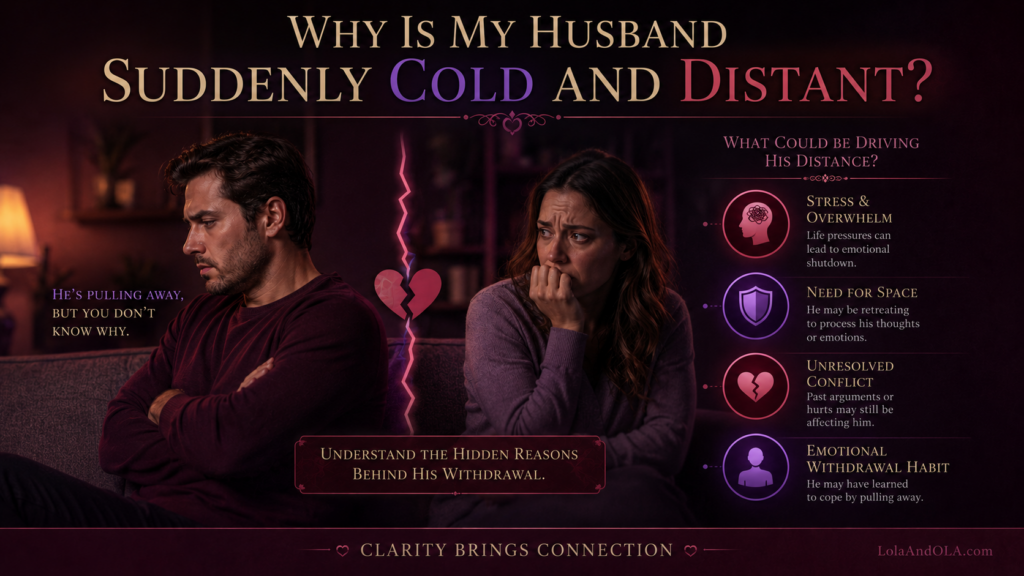
Why Is My Husband Suddenly Cold and Distant? How to Break the Silence

Few things cause more immediate panic than waking up to realize your husband has been cold and distant towards you.

It is an isolating, late-night experience that drives many women to search for answers, trying to decode a sudden shift in their partnerโ€™s behavior.

The confusion multiplies when the change happens without an obvious catalyst.

You find yourself wondering why your husband is suddenly cold and distant but everything on the surfaceโ€”the household chores, the finances, the co-parentingโ€”seems completely fine.

why is my husband suddenly cold and distant

When your husband is distant and moody, the instinctual response is often to treat the distance as a threat to be managed.

This is where fear-based relationship dynamics take root.

When a woman feels her husband is cold and unaffectionate, she may inadvertently step into a control-oriented posture, attempting to force reassurance out of a man who is currently emotionally offline.

To understand why your husband is so distant all of a sudden, we have to look past the surface-level silence and examine the underlying mechanics of how couples handle vulnerability.

The Panic Spiral: “Why Is My Husband Suddenly Cold and Distant?”

When a marriage enters a cold season, modern relationship discourse is quick to hand out viral labels.

Terms like “red flag,” “narcissist,” “simp,” or “pick-me” dominate social media feeds, reducing complex human connections to simple buzzwords.

When a husband becomes cold and emotionless, internet forums often offer scripts for walking away rather than frameworks for understanding.

The irony is that most people weaponizing these labels offer no framework for creating, maintaining, or protecting attraction.

True relationship mastery requires a framework of G.A.M.E.โ€”Giving Authentically and Mindfully with Emotional Intelligence.

It rejects manipulation, performative indifference, or withholding affection to gain leverage.

Instead, it focuses on understanding the dynamics of attraction and participating in them intentionally.

why is my husband suddenly cold and distant [ Emotional Withdrawal ] โ”€โ”€โ–บ [ Wife's Panic/Anxiety ]
              โ–ฒ                               โ”‚
              โ”‚                               โ–ผ
   [ Further Retraction ] โ—„โ”€โ”€ [ Hyper-Vigilant Control ]

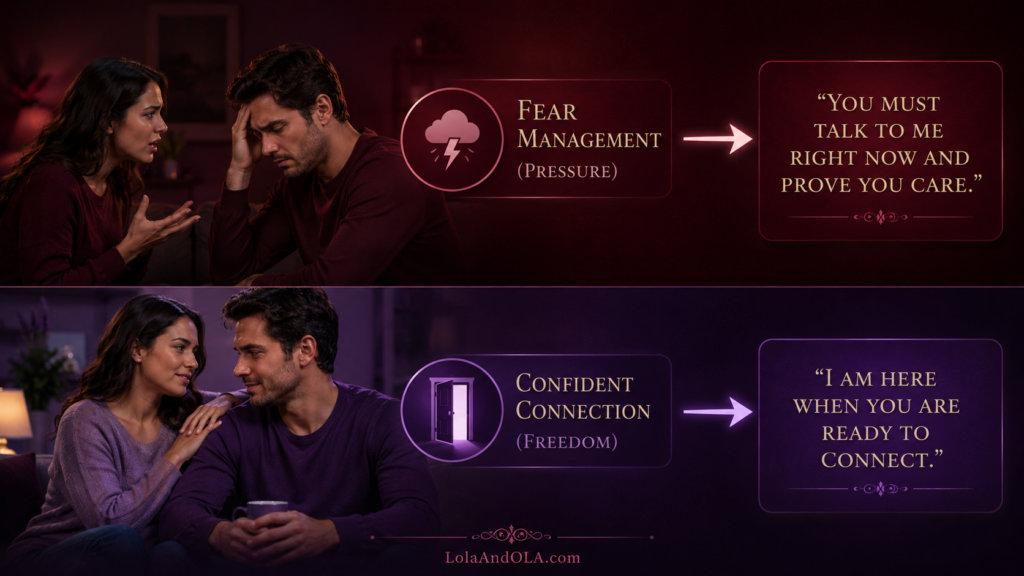
When a wife faces a husband who is suddenly cold and distant after an argument, a stressful career shift, or an unexpected life change, she faces a choice between two opposing mindsets: fear management and confident connection.

Meeting his reactive withdrawal with your own reactive panic simply locks both partners into a defensive standoff.

7 Core Differences in Relationship Dynamics That You Can use To Break That Toxic “Cold & Distant” Cycles

By examining the behavioral differences below, we can see why certain relationship styles foster resilient, long-term attraction while others inadvertently lock emotional distance into place.

DynamicThe Control-Oriented Approach (Fear Management)The Connection-Oriented Approach (G.A.M.E.)
1. FocusCharacter Certification (Seeking future guarantees)Relationship Experience (Appreciating current data)
2. FoundationMorality & Rules (“He must fulfill his duties”)Attraction & Compatibility (“We are a team”)
3. AtmospherePressure & Public Contracts (Reputation management)Freedom & Autonomy (Letting the partner choose)
4. MindsetCertainty-Based (“I need to know you won’t change”)Confidence-Based (“I trust us to handle change”)
5. Core TopicTemptation & Prevention (Focus on bad outcomes)Connection & Shared Values (Focus on good outcomes)
6. EnergyReactive Control (Hyper-vigilance and tracking)Proactive Admiration (Gratitude and safety)
7. PostureVulnerability Avoidance (“Don’t let him see you hurt”)Emotional Openness (High emotional intelligence)

1. Character Certification vs. Relationship Experience

There is a massive psychological difference between issuing a “character certificate” for a partner and expressing appreciation for the shared experience.

Declaring that a partner “is incapable of hurting me” is a statement about future behavior that no one can truly guarantee.

When a wife feels her husband has become cold and emotionless, her immediate response may be to look for absolute proof of his character.

G.A.M.E., however, focuses on the present realityโ€”such as compatibility, friendship, and your personal self-respect (and not necessarily mutual respect).

This centers the relationship on active appreciation.

Genuine appreciation is much harder to invalidate because it anchors itself in current data rather than future promises.

2. Morality vs. Attraction

Many relationship conversations revolve strictly around what a partner does not do (e.g., he doesn’t cheat, he doesn’t lie, he provides).

This fixes the conversation entirely on a baseline of morality.

However, basic fidelity and financial support are merely the floor of a relationship, not the ceiling.

Faithfulness is a minimum requirement; the advanced level of a partnership involves maintaining attraction level over time.

When your husband is cold and unaffectionate, the underlying issue is rarely a sudden collapse of his moral character; it is usually a stagnation of the attraction dynamics.

Obsessing over the moral baseline while neglecting the relational skills required to keep an emotional connection alive leaves a relationship vulnerable to a deep, silent freeze.

3. Pressure vs. Freedom

Attempting to force an emotionally withdrawn partner into engaging often feels like a contract or a public challenge.

When a woman panics because her husband is suddenly cold and distant, she may double down on expectations, demanding that he talk.

A more secure approach shifts the responsibility of character back to the individual.

Operating from a place of, “My partner’s emotional choices are ultimately up to him; I do not manage his character,” grants a partner autonomy.

Outside of influence, that responsibility belongs entirely to him.

This creates an atmosphere of freedomโ€”and freedom is fundamentally attractive.

why is my husband suddenly cold and distant - Fear Management (Pressure)  โ”€โ”€โ–บ "You must talk to me right now and prove you care."
Confident Connection (Freedom) โ”€โ”€โ–บ "I am here when you are ready to connect."

4. Certainty-Based vs. Confidence-Based

  • Certainty says: “I know exactly what you will do in the future, and I need proof.”
  • Confidence says: “Based on everything I know today, I trust you and our connection.”

The first mindset attempts to eliminate uncertainty entirely, while the second accepts it as an inescapable reality of human nature.

When a husband shows no emotion when you cry, it can feel like a devastating confirmation that certainty has been lost.

The temptation is to demand an emotional performance to restore that certainty.

True confidence, however, accommodates the moments of emotional offline processing without letting fear dictate a reactive behavior.

5. Temptation vs. Connection

Control-oriented dynamics structure the relationship narrative around feared outcomes, centering the conversation on temptation, infidelity, and emotional abandonment.

Connection-oriented dynamics keep shared values, mutual enjoyment, and partnership at the center.

When a woman finds herself wondering why her husband suddenly cold and distant, her focus often drifts toward worst-case scenarios.

A relationship generally grows where its attention goes.

Focusing on what is missing or what could go wrong builds a vastly different emotional environment than intentionally focusing on creating low-pressure opportunities for connection.

6. Reactive vs. Proactive Energy

Many people mistakenly believe that loyalty testing, suspicion, and tracking emotional shifts protect a marriage.

In reality, these fear-based strategies are reactive attempts to control the uncontrollable.

If your husband is distant and moody, meeting his reactive withdrawal with your own reactive panic simply locks both partners into a defensive standoff.

I’m not judging you if you want to do that but it won’t work out well.

Proactive behaviorsโ€”such as active admiration, gratitude, and clear, calm emotional boundariesโ€”do not eliminate the risk of distance, but they create an emotionally safe environment where attraction actually has room to thaw.

7. The Relationship to Vulnerability

The popular online advice concerning when to leave an emotionally unavailable husband often stems from the critics’ own fears.

Modern culture promotes a hyper-defensive internal narrative:

Never trust someone enough to be embarrassed later.

Never love or care more than the other person.

Never be the vulnerable one.

While these ideas masquerade as self-protective wisdom, they are actually forms of self-sabotage.

When a wife pulls back her warmth because she feels her husband has been cold and distant towards her, she isn’t protecting her relationship (and yes you can argue that he isn’t too)โ€”she is managing her own fear of rejection.

The Illusion of Fear Management

The popular modern advice to “never love or invest more than your partner” is not wisdom; it is fear management.

Healthy relationships are not built by constantly calculating who holds the power, who carries the leverage, or who is more detached.

They are built by people who know how to give authentically and mindfully, without resorting to blind desperation or fear-driven withholding.

When a marriage enters a cold season, the temptation to look for opportunities to compete with your partner is real; avoid it.

Wives typically begin scanning for confirmation of their fears, asking fear-based questions, effectively preparing for a breakup while still living under the same roof.

Can a partner pull away permanently?

Yes. Can a marriage break down? Absolutely.

That possibility exists in every relationship on Earth.

Refusing to offer warmth or celebrate a partner out of fear of looking foolish does not reduce that risk; it simply reduces the amount of appreciation and positive reinforcement available inside the home.

The ultimate goal of a mature partnership is not a guarantee of absolute certainty.

The goal is to cultivate attraction, genuine connection, healthy influence, and emotional intelligenceโ€”creating conditions where positive outcomes are highly likely, without pretending they are guaranteed.

Check this out: How to Save My Marriage

Frequently Asked Questions

What are the first signs a marriage is ending?

The earliest signs that a marriage is structurally deteriorating go beyond simple arguments and instead manifest as chronic emotional detachment, contempt, and the total replacement of vulnerability with defensive stonewalling. When a relationship is ending, partners stop fighting for connection and instead choose quiet coexistence, where appreciation is entirely withheld and both individuals begin living parallel, independent lives under the same roof. This shift from a connection-oriented partnership to a risk-mitigation strategy indicates that the emotional foundation has eroded past the point of simple adjustment.

Why is my husband so distant all of a sudden?

A sudden emotional withdrawal from a husband typically occurs when he feels overwhelmed, misunderstood, or relationally unsafe, causing him to retreat into his internal processing space to handle stress, shame, or perceived failure. Because men frequently lack the relational vocabulary to articulate complex emotional pressuresโ€”whether stemming from career stress, financial anxiety, or marital tensionโ€”they manifest their overwhelm by shutting down entirely, becoming cold and unaffectionate as a primitive form of emotional self-defense rather than a deliberate rejection of their spouse.

What are the three signs a relationship won’t last?

The three definitive signs that a relationship lacks the structural integrity to survive long-term are a complete absence of emotional responsiveness (such as when a partner consistently shows no emotion when you cry), the normalization of chronic contempt over mutual respect, and a protective habit of withholding vulnerability to avoid future embarrassment. When a couple transitions permanently into a certainty-based, control-oriented dynamic where protecting oneself from pain matters more than giving authentically and mindfully, the relationship loses its capacity for attraction and inevitably collapses under the weight of its own emotional defenses.


Broken Marriage?
Fix it
Here FREE

Get My Marriage Back