Broken Marriage?
Fix it
Here FREE

Get My Marriage Back


Disrespectful Wife Signs: Here’s What’s Really Going On (And What You Can Do About It)

📌 Author's Note from Lola & Ola:
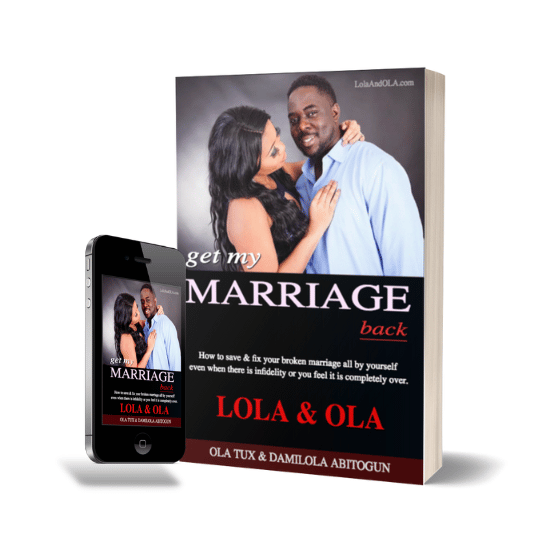
If you are reading this right now, we know the heartbreak of watching the desire, intimacy, and warmth fade out of your relationship. We survived our own marriage completely dying at the 9-year mark and rebuilt a 20+ year roadmap from it. Before you dive into the details below, grab our complete book Get My Marriage Back for FREE right now so you have an immediate, step-by-step action plan to turn things around.

Feeling disrespected by your wife is one of the deepest, most isolating pains a husband can experience.

It cuts straight through your sense of self, your identity as a provider, and your daily emotional well-being.

But marital disrespect is not always loud, aggressive, or obvious—no shouting matches or slammed doors are required to cause profound damage to a relationship.

disrespectful wife signs

Instead, it is a slow, freezing erosion driven by subtle, daily patterns: the silent eye-rolls, the sharp sarcasm, the way she talks at you instead of to you, and a heavy undercurrent of criticism telling you that no matter what you do, it is never enough.

If you have found yourself trying to help around the house only to be told you’re doing it wrong, trying to lead your family only to be labeled controlling, or retreating into silence only to be accused of being cold and distant, you are stuck in a painful behavioral loop.

Understanding the root causes of these disrespectful wife signs, and learning how to respond rather than emotionally react, is the only way to break the pattern and reclaim your household’s peace.

5 Core Indicators: Recognizing Disrespectful Wife Signs

Relational friction is normal, but systemic disrespect is a structural threat to your marriage.

To change the dynamic, you must first accurately identify the exact behaviors currently undermining your relationship.

1. Public and Private Emasculation

This occurs when your spouse systematically corrects, minimizes, or belittles your input in front of your children, friends, or extended family.

When private disagreements are weaponized into public performances, it signals a collapse of the marital team dynamic and destroys a husband’s authority in the home.

2. Chronic Dismissal of Your Personal Boundaries

A healthy marriage requires a mutual exchange of safety and consideration.

If your personal limits, your work schedule, or your explicit requests for calm, respectful communication are treated as non-existent, irrelevant, or laughable, your relational boundaries are actively being breached.

3. The Rejection of Household Leadership

If your financial plans, parenting boundaries, or long-term household decisions are instantly overridden or dismissed without a discussion, it forces you out of your natural frame.

You are left feeling less like an equal partner and more like an inconvenience.

4. Continuous Contempt, Sarcasm, and Passive-Aggressiveness

Contempt is the single greatest predictor of marital failure.

If your daily interactions are laced with mocking commentary, heavy sighing, sharp tones, or defensive stonewalling, the emotional bedrock of your connection is actively decaying.

5. Total Emotional and Physical Withdrawal

When respect exits a marriage, physical intimacy is almost always the next line of defense to fall.

This often triggers a devastating cascade where the relationship transitions into a completely platonic roommate arrangement, leading directly to the breakdown of the romantic covenant.

disrespectful wife signs - psychology

The Psychological Reality: Disrespect is a Dynamic

To change how your wife treats you, you must fundamentally change how you interpret and interact with her behavior.

Beneath the surface of a hostile marriage, three core relational truths are constantly at play:

Secret #1: Disrespect is a Feeling — Not a Fact

The first thing to understand is that disrespect is not always about an objective truth.

Instead, it is about how an action lands on your nervous system—it is a feeling based on perception.

For example, a husband sees an eye-roll or a sharp comment about budgeting as direct, malicious disrespect.

However, if you look beneath the surface, that tone is often an unmanaged expression of her own internal frustration, exhaustion, or fear.

She may see her tone not as disrespectful, but as desperate venting because she feels unsupported.

When you tie your entire sense of self-worth to your wife’s emotional state, you give away complete control over your peace of mind.

The moment you realize her attitude is a reflection of her internal world—not a factual verdict on your value as a man—you stop reacting defensively and start leading with clarity.

Secret #2: Her Hostility is a Test — Not the Final Grade

Many husbands dealing with a cold, critical spouse try everything to keep the peace.

They beg, they try to over-explain themselves, they try to buy gifts, or they retreat into total silence.

Nothing changes.

What they fail to realize is that her behavioral pushback is often an unconscious test of your emotional frame.

She is silently assessing your baseline stability.

She is asking:

Can I trust this man’s leadership, strength, and calm when a storm hits, or will he crumble into anger, match my hostility, or run away?

Reacting to disrespect with more disrespect simply fuels the cycle of dysfunction.

True leadership requires you to remain emotionally unshakeable, grounded in self-possession, while holding a firm, quiet line on your personal boundaries.

Secret #3: Her Behavioral Defenses are an Opportunity

A wife’s disrespectful behavior is almost always an erratic defense mechanism designed to prevent her from feeling dismissed, unseen, or rejected.

This creates a heartbreaking, vicious cycle: she pushes you away to protect herself from being hurt, and you respond by completely checking out or shutting down.

Breaking this cycle means leaning in with calm authority and deep empathy, not backing away in anger or trying to aggressively force her to change.

Listening for the underlying anxiety or pain driving the disrespect, while maintaining firm emotional boundaries, softens the conflict.

This approach transforms her defense mechanism back into mutual trust.

disrespectful wife signs - marital

The Broader Marital Picture

A systemic breakdown of respect rarely happens in a vacuum.

If you are noticing these severe behavioral shifts, it is highly likely your relationship is showing other structural warning signs.

Do thisiIf you are trying to evaluate whether this toxic dynamic has pushed your relationship to the point of no return.

Review our comprehensive diagnostic guide on the primary signs a marriage is ending.

Furthermore, if this emotional distance has already translated into a complete bedroom freeze, do this.

You must learn when to walk away from a sexless marriage before the underlying resentment permanently solidifies.

YOU WILL LIKE THIS TOO…

Sexless Marriage Effects on Husbands

Disrespectful Wife? FINALLY What To Do… (5 Tips)

FAQ

How to tell if your wife is disrespecting you?

You can tell your wife is disrespecting you when minor disagreements consistently transition into contempt, sarcastic put-downs, or public emasculation.

What is the behavior of a toxic wife?

The behavior of a toxic wife is characterized by chronic manipulation, emotional stonewalling, continuous invalidation of her partner’s efforts, and the weaponization of affection or intimacy.

How to deal with a wife that doesn’t respect you?

To deal with a wife who doesn’t respect you, you must stop matching her emotional volume or retreating into silent compliance.

What does the Bible say about a husband that disrespects his wife?

The Bible explicitly commands husbands to love their wives selflessly, just as Christ loved the church (Ephesians 5:25). Scripture warns men that treating their wives with harshness, disrespect, or emotional neglect will fundamentally compromise their own spiritual well-being and directly hinder their prayers (1 Peter 3:7).

Why Is My Husband Suddenly Cold and Distant? How to Break the Silence

📌 Author's Note from Lola & Ola:
If you are reading this right now, we know the heartbreak of watching the desire, intimacy, and warmth fade out of your relationship. We survived our own marriage completely dying at the 9-year mark and rebuilt a 20+ year roadmap from it. Before you dive into the details below, grab our complete book Get My Marriage Back for FREE right now so you have an immediate, step-by-step action plan to turn things around.

Few things cause more immediate panic than waking up to realize your husband has been cold and distant towards you.

It is an isolating, late-night experience that drives many women to search for answers, trying to decode a sudden shift in their partner’s behavior.

The confusion multiplies when the change happens without an obvious catalyst.

You find yourself wondering why your husband is suddenly cold and distant but everything on the surface—the household chores, the finances, the co-parenting—seems completely fine.

why is my husband suddenly cold and distant

When your husband is distant and moody, the instinctual response is often to treat the distance as a threat to be managed.

This is where fear-based relationship dynamics take root.

When a woman feels her husband is cold and unaffectionate, she may inadvertently step into a control-oriented posture, attempting to force reassurance out of a man who is currently emotionally offline.

To understand why your husband is so distant all of a sudden, we have to look past the surface-level silence and examine the underlying mechanics of how couples handle vulnerability.

The Panic Spiral: “Why Is My Husband Suddenly Cold and Distant?”

When a marriage enters a cold season, modern relationship discourse is quick to hand out viral labels.

Terms like “red flag,” “narcissist,” “simp,” or “pick-me” dominate social media feeds, reducing complex human connections to simple buzzwords.

When a husband becomes cold and emotionless, internet forums often offer scripts for walking away rather than frameworks for understanding.

The irony is that most people weaponizing these labels offer no framework for creating, maintaining, or protecting attraction.

True relationship mastery requires a framework of G.A.M.E.Giving Authentically and Mindfully with Emotional Intelligence.

It rejects manipulation, performative indifference, or withholding affection to gain leverage.

Instead, it focuses on understanding the dynamics of attraction and participating in them intentionally.

why is my husband suddenly cold and distant [ Emotional Withdrawal ] ──► [ Wife's Panic/Anxiety ]
              ▲                               │
              │                               ▼
   [ Further Retraction ] ◄── [ Hyper-Vigilant Control ]

When a wife faces a husband who is suddenly cold and distant after an argument, a stressful career shift, or an unexpected life change, she faces a choice between two opposing mindsets: fear management and confident connection.

Meeting his reactive withdrawal with your own reactive panic simply locks both partners into a defensive standoff.

7 Core Differences in Relationship Dynamics That You Can use To Break That Toxic “Cold & Distant” Cycles

By examining the behavioral differences below, we can see why certain relationship styles foster resilient, long-term attraction while others inadvertently lock emotional distance into place.

DynamicThe Control-Oriented Approach (Fear Management)The Connection-Oriented Approach (G.A.M.E.)
1. FocusCharacter Certification (Seeking future guarantees)Relationship Experience (Appreciating current data)
2. FoundationMorality & Rules (“He must fulfill his duties”)Attraction & Compatibility (“We are a team”)
3. AtmospherePressure & Public Contracts (Reputation management)Freedom & Autonomy (Letting the partner choose)
4. MindsetCertainty-Based (“I need to know you won’t change”)Confidence-Based (“I trust us to handle change”)
5. Core TopicTemptation & Prevention (Focus on bad outcomes)Connection & Shared Values (Focus on good outcomes)
6. EnergyReactive Control (Hyper-vigilance and tracking)Proactive Admiration (Gratitude and safety)
7. PostureVulnerability Avoidance (“Don’t let him see you hurt”)Emotional Openness (High emotional intelligence)

1. Character Certification vs. Relationship Experience

There is a massive psychological difference between issuing a “character certificate” for a partner and expressing appreciation for the shared experience.

Declaring that a partner “is incapable of hurting me” is a statement about future behavior that no one can truly guarantee.

When a wife feels her husband has become cold and emotionless, her immediate response may be to look for absolute proof of his character.

G.A.M.E., however, focuses on the present reality—such as compatibility, friendship, and your personal self-respect (and not necessarily mutual respect).

This centers the relationship on active appreciation.

Genuine appreciation is much harder to invalidate because it anchors itself in current data rather than future promises.

2. Morality vs. Attraction

Many relationship conversations revolve strictly around what a partner does not do (e.g., he doesn’t cheat, he doesn’t lie, he provides).

This fixes the conversation entirely on a baseline of morality.

However, basic fidelity and financial support are merely the floor of a relationship, not the ceiling.

Faithfulness is a minimum requirement; the advanced level of a partnership involves maintaining attraction level over time.

When your husband is cold and unaffectionate, the underlying issue is rarely a sudden collapse of his moral character; it is usually a stagnation of the attraction dynamics.

Obsessing over the moral baseline while neglecting the relational skills required to keep an emotional connection alive leaves a relationship vulnerable to a deep, silent freeze.

3. Pressure vs. Freedom

Attempting to force an emotionally withdrawn partner into engaging often feels like a contract or a public challenge.

When a woman panics because her husband is suddenly cold and distant, she may double down on expectations, demanding that he talk.

A more secure approach shifts the responsibility of character back to the individual.

Operating from a place of, “My partner’s emotional choices are ultimately up to him; I do not manage his character,” grants a partner autonomy.

Outside of influence, that responsibility belongs entirely to him.

This creates an atmosphere of freedom—and freedom is fundamentally attractive.

why is my husband suddenly cold and distant - Fear Management (Pressure)  ──► "You must talk to me right now and prove you care."
Confident Connection (Freedom) ──► "I am here when you are ready to connect."

4. Certainty-Based vs. Confidence-Based

  • Certainty says: “I know exactly what you will do in the future, and I need proof.”
  • Confidence says: “Based on everything I know today, I trust you and our connection.”

The first mindset attempts to eliminate uncertainty entirely, while the second accepts it as an inescapable reality of human nature.

When a husband shows no emotion when you cry, it can feel like a devastating confirmation that certainty has been lost.

The temptation is to demand an emotional performance to restore that certainty.

True confidence, however, accommodates the moments of emotional offline processing without letting fear dictate a reactive behavior.

5. Temptation vs. Connection

Control-oriented dynamics structure the relationship narrative around feared outcomes, centering the conversation on temptation, infidelity, and emotional abandonment.

Connection-oriented dynamics keep shared values, mutual enjoyment, and partnership at the center.

When a woman finds herself wondering why her husband suddenly cold and distant, her focus often drifts toward worst-case scenarios.

A relationship generally grows where its attention goes.

Focusing on what is missing or what could go wrong builds a vastly different emotional environment than intentionally focusing on creating low-pressure opportunities for connection.

6. Reactive vs. Proactive Energy

Many people mistakenly believe that loyalty testing, suspicion, and tracking emotional shifts protect a marriage.

In reality, these fear-based strategies are reactive attempts to control the uncontrollable.

If your husband is distant and moody, meeting his reactive withdrawal with your own reactive panic simply locks both partners into a defensive standoff.

I’m not judging you if you want to do that but it won’t work out well.

Proactive behaviors—such as active admiration, gratitude, and clear, calm emotional boundaries—do not eliminate the risk of distance, but they create an emotionally safe environment where attraction actually has room to thaw.

7. The Relationship to Vulnerability

The popular online advice concerning when to leave an emotionally unavailable husband often stems from the critics’ own fears.

Modern culture promotes a hyper-defensive internal narrative:

Never trust someone enough to be embarrassed later.

Never love or care more than the other person.

Never be the vulnerable one.

While these ideas masquerade as self-protective wisdom, they are actually forms of self-sabotage.

When a wife pulls back her warmth because she feels her husband has been cold and distant towards her, she isn’t protecting her relationship (and yes you can argue that he isn’t too)—she is managing her own fear of rejection.

The Illusion of Fear Management

The popular modern advice to “never love or invest more than your partner” is not wisdom; it is fear management.

Healthy relationships are not built by constantly calculating who holds the power, who carries the leverage, or who is more detached.

They are built by people who know how to give authentically and mindfully, without resorting to blind desperation or fear-driven withholding.

When a marriage enters a cold season, the temptation to look for opportunities to compete with your partner is real; avoid it.

Wives typically begin scanning for confirmation of their fears, asking fear-based questions, effectively preparing for a breakup while still living under the same roof.

Can a partner pull away permanently?

Yes. Can a marriage break down? Absolutely.

That possibility exists in every relationship on Earth.

Refusing to offer warmth or celebrate a partner out of fear of looking foolish does not reduce that risk; it simply reduces the amount of appreciation and positive reinforcement available inside the home.

The ultimate goal of a mature partnership is not a guarantee of absolute certainty.

The goal is to cultivate attraction, genuine connection, healthy influence, and emotional intelligence—creating conditions where positive outcomes are highly likely, without pretending they are guaranteed.

Check this out: How to Save My Marriage

Frequently Asked Questions

What are the first signs a marriage is ending?

The earliest signs that a marriage is structurally deteriorating go beyond simple arguments and instead manifest as chronic emotional detachment, contempt, and the total replacement of vulnerability with defensive stonewalling. When a relationship is ending, partners stop fighting for connection and instead choose quiet coexistence, where appreciation is entirely withheld and both individuals begin living parallel, independent lives under the same roof. This shift from a connection-oriented partnership to a risk-mitigation strategy indicates that the emotional foundation has eroded past the point of simple adjustment.

Why is my husband so distant all of a sudden?

A sudden emotional withdrawal from a husband typically occurs when he feels overwhelmed, misunderstood, or relationally unsafe, causing him to retreat into his internal processing space to handle stress, shame, or perceived failure. Because men frequently lack the relational vocabulary to articulate complex emotional pressures—whether stemming from career stress, financial anxiety, or marital tension—they manifest their overwhelm by shutting down entirely, becoming cold and unaffectionate as a primitive form of emotional self-defense rather than a deliberate rejection of their spouse.

What are the three signs a relationship won’t last?

The three definitive signs that a relationship lacks the structural integrity to survive long-term are a complete absence of emotional responsiveness (such as when a partner consistently shows no emotion when you cry), the normalization of chronic contempt over mutual respect, and a protective habit of withholding vulnerability to avoid future embarrassment. When a couple transitions permanently into a certainty-based, control-oriented dynamic where protecting oneself from pain matters more than giving authentically and mindfully, the relationship loses its capacity for attraction and inevitably collapses under the weight of its own emotional defenses.

She Says She’s Not in Love Anymore — What That Really Means (And What to Do)

she’s not in love anymore meaning
📌 Author's Note from Lola & Ola:
If you are reading this right now, we know the heartbreak of watching the desire, intimacy, and warmth fade out of your relationship. We survived our own marriage completely dying at the 9-year mark and rebuilt a 20+ year roadmap from it. Before you dive into the details below, grab our complete book Get My Marriage Back for FREE right now so you have an immediate, step-by-step action plan to turn things around.

“She says she’s not in love with me anymore…”

Click here below to watch…

she’s not in love anymore meaning

It’s one of the most heartbreaking sentences anyone in a relationship could ever hear.

It lands heavy.

Suddenly, your world feels like it’s collapsing.

But here’s what most people don’t realize:
That sentence doesn’t always mean what you think it means.

In fact, it could mean something very different—something that might actually help you… if you’re willing to understand it.

Today, we’re unpacking 3 powerful truths behind the phrase “I’m not in love with you anymore.”

Each one carries an opportunity for growth, connection, and yes… transformation.

Let’s dive in.


Secret #1 — “I’m not in love anymore” doesn’t mean love is dead… It means love has changed.

He sat silently on the edge of the bed, stunned.

No yelling.
No anger.
Just the chilling echo of her words:
“I still care about you… I’m just not in love with you anymore.”

For many people, this phrase signals the end.
But in reality, it often means that the form of love—not the love itself—has changed.

Here’s the truth: The fireworks and butterflies from the early stages of romance are designed to fade.

Science backs this up. According to biological anthropologist Dr. Helen Fisher, the romantic phase of love, fueled by dopamine and norepinephrine, naturally tapers off within 12 to 18 months.

After that, what remains is the opportunity to build something deeper—intimacy, trust, and emotional safety.

But many of us aren’t taught how to make that transition.
So when the sparks fade, we panic.
We assume something is broken.
We think she’s broken—or worse, we are.

That belief creates an internal block.

You might start telling yourself, “She doesn’t care anymore. It’s over.”

But that’s often a misunderstanding of what she’s actually feeling.

She could be craving connection, emotional presence, and a version of you that’s engaged—not just physically, but emotionally.

Externally, it’s easy to believe, “Well, if she said that, there’s no coming back.”

But that’s simply not true.

In fact, many emotionally restored marriages start right at this low point.

This isn’t the death of love.

It’s a wake-up call.

One that invites you to build something deeper than the early chemistry ever could.


Secret #2 — She’s not broken… she’s emotionally exhausted.

When a woman says, “I’m not in love anymore,” she may not be rejecting you.

She could be protecting herself.

Many women don’t suddenly fall out of love.
It’s often a slow build—of unmet needs, unheard feelings, and emotional fatigue.

We once heard a man say, “It’s like she just turned off one day.”

But the truth?
She didn’t just switch off.

She burned out from carrying the emotional weight for too long—without feeling seen, valued, or emotionally held.

Maybe she tried to talk before, but felt dismissed.
Maybe she withdrew because expressing her needs led to arguments.
Maybe she was tired of feeling like a burden.

So she shut down.

And when emotional shutdown happens, what we feel is distance.

Silence.
Icy tones.
Flat expressions.

This is often mistaken for “she doesn’t care.”

But most of the time, it’s self-preservation.

Internally, you may believe she’s already made up her mind.
That she’s gone, emotionally or mentally.
That it’s too late.

But let’s clear something up:

Women often want to reconnect…
They’re just scared to trust the process again.

Externally, you might’ve heard: “When she says she’s done, she’s done.”

But emotional detachment is not final—it’s protective.

According to psychology research, emotional withdrawal is a defense mechanism, not a declaration.

What she may actually want is for you to show up—not with flowers or dramatic gestures, but with consistency, patience, and real emotional presence.

That’s how emotional safety is rebuilt.

That’s how love becomes possible again.

And we’ve seen this happen—many times.

The moment you stop chasing and start leading with calm understanding…
She starts leaning in.

The more safe and seen she feels…
The more she wants to connect.

You don’t need her to come back overnight.

You need to show up in a way that invites her back—on her terms, at her pace.


Secret #3 — This is not the end… it’s the invitation to a better beginning.

Let’s be real.
Hearing “I’m not in love anymore” hurts like nothing else.

But what if it’s not the final chapter?

What if it’s the moment that wakes you up?

See, many relationships don’t fall apart from big betrayals…
They unravel through disconnection.

No more real conversations.
No more quality time.
Everything becomes survival, logistics, and routines.

Love slowly fades into background noise.

But when she says those words, she’s not just ending something.
She’s trying to make you see.

She’s giving you a mirror:
“Do you see me anymore?”
“Do you feel us drifting?”
“Do you even care enough to change?”

This is your cue.

Not to chase.
Not to beg.
Not to promise the stars.

But to change the rhythm.

To become emotionally attuned.
To learn how to lead the emotional dance again.

We know a man who, after hearing those words, started showing up differently.

Not to win her back, but to grow himself.

He worked on his tone.
He listened more than he spoke.
He became curious instead of reactive.
He made space instead of making demands.

And something amazing happened.

She noticed.

She softened.

One day, she said, “You feel different. And I didn’t think I’d ever feel anything for you again… but I do.”

That didn’t come from tactics.

That came from real change.

Because when you grow, the relationship grows.

And when the relationship feels safe again, love isn’t far behind.


So What Should You Do Next?

This is your turning point.

If you’re reading this and feeling that mix of fear, confusion, and maybe even hope—don’t ignore it.

Don’t wait until she’s completely gone.

Don’t wait for her to explain it better, show more affection, or give you another chance.

You are the one who can change the trajectory now.

👉🏿 Start by accessing the free books here:

It’s a step-by-step process that’s helped countless people reconnect with their partner emotionally—even when things felt over.

You’ll also get two FREE bonus books:
📘 “Get My Marriage Back”
📕 “#1 Red Flag”

It’s not therapy.
It’s not fluff.
It’s clarity, tools, and action.


Final Thoughts: She’s Not in Love Anymore… or Is She?

When she says she’s not in love anymore, she’s not always closing a door.

She might be opening a window—hoping you’ll see her again.

Not the version of her from years ago.
The version of her that’s tired, worn, and wondering if love still lives here.

This is your invitation.

To learn.
To lead.
To grow.

Not to fix her—but to become the safe space she no longer recognizes.

That’s how love comes back.

Not with pressure.

But with presence.


Want to Rebuild Your Marriage Starting Today?

Get full access to download your 2 FREE bonus books:

👉🏿 Click here to begin now →

Because love may be quiet right now…
But it’s not gone.

It just needs a safe place to breathe again.

You May Like This Posts…

FAQ: Understanding “She’s Not in Love Anymore”

What does it mean to not be in love anymore?

It usually means the emotional connection has faded—not necessarily the love itself—but the relationship no longer feels emotionally safe or fulfilling.

What does “I’m not in love with you anymore” mean?

This phrase often signals emotional exhaustion or disconnection, rather than the complete absence of love or care.

How to tell if she’s not in love anymore?

Common signs include emotional distance, lack of affection, low engagement in conversations, and a consistent feeling that she’s disconnected or indifferent.

What to do when she says she’s not in love with you anymore?

Stay calm, avoid chasing or begging, and focus on rebuilding emotional safety and presence by becoming a more self-aware and emotionally grounded version of yourself.


Is Physical Attraction Overrated in Marriage? Here’s the Real Truth

📌 Author's Note from Lola & Ola:
If you are reading this right now, we know the heartbreak of watching the desire, intimacy, and warmth fade out of your relationship. We survived our own marriage completely dying at the 9-year mark and rebuilt a 20+ year roadmap from it. Before you dive into the details below, grab our complete book Get My Marriage Back for FREE right now so you have an immediate, step-by-step action plan to turn things around.

Is physical attraction in marriage overrated—or just misunderstood?

Click below to watch the video

how to maintain physical attraction in marriage

Click above to watch the video

In a world of filters, gym bodies, and picture-perfect couples on Instagram, many couples enter marriage with high expectations about physical chemistry… only to find that attraction isn’t always enough to sustain the relationship.

So what happens when the spark fades? Is that the end—or just the beginning of something deeper?

In this post, we’ll explore the complex role physical attraction plays in marriage through three real-world truths (aka secrets) that every couple should understand.

If you’re struggling with the emotional or physical disconnection in your relationship, this will shift your mindset—and possibly save your marriage.


Secret #1: No, It’s Not Overrated—If Only One Person Is Asking

Let’s start with one of the most common scenarios:

“I just don’t feel attracted to them anymore.”

We hear this far more than we should. But the truth behind it isn’t what most people think. In many cases, physical attraction doesn’t just disappear because someone “let themselves go.” What’s really going on is a breakdown in emotional connection.

When only one spouse starts questioning attraction, it’s often a symptom of emotional disconnection—not just physical disinterest. We once coached a couple where the husband admitted his attraction had faded. Meanwhile, the wife had been trying everything—intimacy, compliments, even new outfits—to no avail.

The problem?
He had emotionally checked out.

And here’s the twist: she was still deeply attracted to him.

This disconnect highlights an uncomfortable truth—when emotional intimacy fades, physical desire usually follows. According to a 2022 study in the Journal of Social and Personal Relationships, emotional closeness is a far better predictor of long-term physical attraction than appearance.

The Shift:

Once this couple rebuilt emotional safety, the spark returned. He literally said, “She looks more beautiful than ever.” And yet, nothing changed physically.

This proves that real attraction grows from inside the heart, not just what’s on the surface. Emotional intimacy is the fuel that keeps physical attraction alive—not the other way around.


Secret #2: Yes, It’s Overrated—If That’s All You Have as a Bond

We all know that one couple who looks perfect online.

Flawless wedding photos. Gym-fit bodies. Daily “couple goals” selfies.

But behind the scenes, things often look very different.

One stunning couple we worked with seemed to have it all—looks, chemistry, passion. But six months into the marriage, they couldn’t even hold a conversation without arguing.

They were bonded by passion, not purpose.

They said things like:

“We’re just so attracted to one another.”

And while that sounds romantic, it doesn’t hold water long-term.

Here’s why:

Real marriage starts after the butterflies fade.
When life gets real—bills, kids, disappointments—you need more than vibes to survive.

This couple lacked emotional safety, shared values, and friendship. Their initial attraction had turned into unmet expectations, and eventually, resentment.

The Shift:

They realized that physical compatibility isn’t enough. They needed to build respect, emotional resilience, and intellectual intimacy.

They had to unlearn the myth that passion guarantees longevity and relearn that peace is the real platform for lasting love.

Now, they’re still together—still beautiful—but now they’re building with bricks, not vibes.


Secret #3: Maybe It’s Overrated—If You’re in an Arranged Marriage

Let’s address a different angle that’s rarely talked about—arranged marriages.

A woman we mentored was married off at 23. There were no butterflies, no late-night convos, no “aha” moment. She didn’t even know if she loved him. Attraction? Practically non-existent.

Fast-forward six years and two children, she said:

“I think I love the man he’s become with me.”

That one sentence speaks volumes.

In her case, attraction came after trust.

Physical attraction was a byproduct of emotional intimacy, not a prerequisite. And while many assumed her marriage was destined to be cold and distant, what she found was the opposite:

Attraction grew.

It grew through shared struggles, parenting, kindness, and everyday effort.

He became her “type” over time—not because of physical changes, but because of the emotional connection they cultivated.

The Shift:

When both partners commit to learning and growing together, attraction can blossom—slowly, organically, and deeply.

This reminds us that physical attraction is not always instant. For some couples, it’s a slow burn—not a spark. And that burn can be far more enduring than fleeting passion.


Let’s Recap the Real Truth About Physical Attraction in Marriage

Physical attraction isn’t bad. It’s not the enemy. But it’s not the savior of your marriage either.

It’s a signal. Not the whole story.

Here’s what we’ve learned after years of coaching couples:

  • If only one person is questioning attraction, it’s likely an emotional issue—not a physical one.
  • If attraction is the only bond, the foundation will eventually crumble.
  • In some marriages, especially arranged ones, attraction grows with shared purpose and effort over time.

So is physical attraction overrated?

Sometimes.
But the better question is—what’s underneath it?

If you’re relying on looks to sustain your love, you’ll be in for a rude awakening when life starts lifing. But if you prioritize building connection, safety, and emotional closeness, attraction can not only return—but deepen in ways you never imagined.


The Takeaway: Physical Attraction Is Just a Piece of the Puzzle

You don’t need to have six-pack abs or glowing skin 24/7 to be attractive to your partner.

What you need is:

  • Emotional safety
  • Mutual respect
  • Consistent effort
  • Shared laughter
  • Deep, honest conversations

When those are present, physical attraction becomes more than skin deep—it becomes a natural extension of your emotional intimacy.

Check this out: How to Keep Attraction in Marriage Without Losing Yourself


Ready to Rekindle Connection and Attraction in Your Marriage?

If your marriage feels distant…

If you’ve lost the spark…

If you’re wondering whether the love is still there…

We’ve been there. We know what it’s like to feel like roommates with rings.

That’s why we wrote Get My Marriage Back—a guide that breaks down the tools, mindset shifts, and strategies we used to rebuild our connection from the ground up.

🎯 Download it for FREE here: www.GetMyMarriageBack.com

It’s 100% free because we believe no marriage should die from assumptions.


Final Thought

Attraction matters. But how you define it—and how you fuel it—matters more.

What does “attraction” mean to you in marriage?

Is it physical, emotional, spiritual—or all of the above?

Let’s talk about it. Drop your thoughts in the comments. Share this with someone who needs it.

And remember…

Peace, not passion, is the real foundation.

You Will Like These Too…

FAQ: How to Maintain Physical Attraction in Marriage

Is it normal to lose physical attraction to your partner?

Yes, it’s common for physical attraction to fade over time, especially when emotional connection weakens.

Why am I no longer physically attracted to my husband?

Loss of attraction is often rooted in emotional disconnection, not physical changes alone.

Can a marriage work without physical attraction?

A marriage can survive temporarily without physical attraction, but long-term success usually requires rebuilding emotional and physical intimacy.

Can a relationship last if there is no physical attraction?

While some relationships can last without strong initial attraction, lasting bonds typically grow when emotional safety and mutual effort are present.

Sexless Marriage Effects on Husbands: The Silent Pain No One Talks About

📌 Author's Note from Lola & Ola:
If you are reading this right now, we know the heartbreak of watching the desire, intimacy, and warmth fade out of your relationship. We survived our own marriage completely dying at the 9-year mark and rebuilt a 20+ year roadmap from it. Before you dive into the details below, grab our complete book Get My Marriage Back for FREE right now so you have an immediate, step-by-step action plan to turn things around.

Marriage is supposed to be a sanctuary—a place of connection, love, and mutual support. But what happens when intimacy fades, and the physical connection disappears?

Click below to watch the video

Sexless Marriage Effects on Husbands: The Silent Pain No One Talks About

Click above to watch the video

This is the reality for many couples facing a sexless marriage, and the effects on husbands are often overlooked, misunderstood, or ignored.

In this blog post, we’ll delve deeply into the sexless marriage effects on husbands—a silent pain that erodes a man’s sense of worth, identity, and emotional well-being.

We’ll explore three powerful secrets about this often taboo topic, uncover the emotional turmoil behind the silence, and share insights on how couples can begin to rebuild intimacy after betrayal and emotional distance.


What Is a Sexless Marriage?

A sexless marriage is typically defined as a marriage where physical intimacy and sexual activity are rare or nonexistent, usually for six months or longer.

But it’s much more than a lack of sex. It is often a symptom of deeper issues: emotional disconnect, unresolved pain, and unspoken fears.

For husbands, the effects can be devastating. It’s not just about missing sex. It’s about feeling invisible, rejected, and emotionally detached.

This emotional fallout can affect every aspect of their lives—from their self-esteem to their role as fathers and partners.


The Hidden Pain Behind Sexless Marriage Effects on Husbands

The popular assumption is that men in a sexless marriage just want “some” sex and that their frustration is purely physical. But the reality is much more complex and emotional.

Husbands can feel:

  • Invisible and unwanted
  • Emotionally discarded, not just sexually rejected
  • Questioning their worth and desirability
  • Disconnected from their partners and even their children

This pain often goes unspoken because of social stigma, shame, or misunderstanding about male vulnerability.


Secret #1: It’s Not Just About Sex—It’s About Connection

One of the most common misunderstandings is assuming the husband “just wants sex” while the wife “doesn’t.” But what if the truth is more nuanced?

I once received an email from a man who said,
“It’s been 11 months. Not once. I’ve stopped asking. I just feel… empty.”

What shocked me was not how long it had been—but how numb he had become.

It was no longer about the sex itself; it was about the meaning behind it.

He once felt desired, attractive, and important. Now? He felt invisible. Every night his wife turned away felt like a deeper rejection—not just of sex, but of him as a person.

When we finally heard the wife’s side, it was clear she wasn’t rejecting him to hurt him. She was protecting herself—carrying emotional wounds that made physical intimacy feel unsafe.

To her, intimacy had become a transaction, not an expression of love.

The tragedy is that both wanted closeness but didn’t know how to bridge the emotional distance.

Key takeaway: A sexless marriage is not just a physical problem; it’s a crisis of emotional connection.


Secret #2: The Emotional Impact of No Intimacy Feels Like Rejection and Betrayal

Imagine lying next to the person you vowed to love and protect—and feeling utterly alone. This sense of isolation can feel worse than any physical betrayal.

One of our coaching clients said,
“It’s like she left the room—but her body stayed.”

Each attempt to initiate intimacy feels more like rejection. The husband feels emasculated, unwanted—a stranger in his own home.

He told us something unforgettable:
“I’d rather be rejected by a stranger than by the woman I gave my whole life to.”

Even if the wife is tired or overwhelmed, rejection—intentional or not—cuts deep. Silence and emotional withdrawal often hurt more than words or actions.

The opportunity lies in curiosity: instead of letting rejection breed resentment, what if couples paused and asked:

  • What are you protecting yourself from?
  • What are we not talking about?

Underneath every sexless marriage is a story waiting to be heard.


Secret #3: A Sexless Marriage Can Break a Man

This truth is painful but important: a sexless marriage doesn’t just frustrate a man—it can break him.

One of the lowest moments in my life was looking in the mirror and thinking,
“Maybe I’m just not man enough for her.”

Every hopeful approach ended in shame. Every attempt to communicate was met with silence. Inside, I was crumbling.

This is not uncommon. Studies show nearly 15% of married couples have no sex for over six months, and the emotional effects are consistent:

  • Men withdraw emotionally
  • Some bury themselves in work or addictions
  • Many become emotionally detached from their children

When a husband no longer feels like a man in his marriage, it’s difficult to feel like a father or partner anywhere else.

We worked with a father who said,
“I’ve stopped engaging with my son. I don’t know why—I just feel like a shell.”

The turning point came when he got honest—with himself, his wife, and his pain. When they both stopped blaming and started owning their parts, intimacy returned—not just physically, but emotionally, in parenting, and in joy.


Why Sex Doesn’t Make a Marriage, But Its Absence Reveals What’s Broken

It’s important to remember: sex does not make a marriage. But the absence of it is often a symptom of deeper issues that need attention.

When couples face a sexless marriage, they are given an opportunity—to confront what’s broken and begin the process of healing.

This healing isn’t about shame or blame. It’s about courage, vulnerability, and willingness to fight for each other again.


Tools to Rebuild Intimacy and Connection

If you’re in a sexless marriage, here are some tools to help you begin healing:

  1. Open Communication
    Ask the hard questions. Share your fears and vulnerabilities. Listen deeply.
  2. Seek to Understand, Not Blame
    Curiosity over judgment helps break down walls.
  3. Professional Support
    Marriage counseling or coaching can provide guidance tailored to your unique situation.
  4. Small Acts of Connection
    Physical touch, shared activities, and affirmations rebuild emotional closeness.
  5. Address Emotional Wounds
    Both partners may need to heal past hurts before intimacy can safely return.

You Are Not Alone

If you’re a husband feeling the silent pain of a sexless marriage, know this: you are not broken. You are not less of a man. You are human—and your need for intimacy is natural and valid.

If you’re a wife feeling overwhelmed or defensive, you’re not the villain. Healing requires both partners to take responsibility and work together.

You don’t have to fix everything overnight, but you can take the first step today.


Get Help Now

For those ready to start rebuilding, we offer a free book: Get My Marriage Back. It’s a practical, real-world guide designed to help couples recover connection and intimacy.

Download your free copy here


Frequently Asked Questions (FAQs)

How long does a sexless marriage usually last?

Many couples experience extended periods without intimacy, often over six months or more. But with effort, it is possible to heal and reconnect.

Can emotional distance cause a sexless marriage?

Absolutely. Emotional wounds and lack of trust often underlie physical disconnection.

Is it normal for men to feel invisible in a sexless marriage?

Yes. Feeling unwanted or invisible is a common and painful effect on husbands in sexless marriages.

How does sexless marriage affect a man?

A sexless marriage can deeply erode a man’s sense of worth, leading him to feel unwanted, invisible, and emotionally disconnected from his partner.

How to handle a sexless marriage as a woman?

Start by opening honest, judgment-free conversations to uncover emotional wounds or unmet needs on both sides and explore ways to reconnect beyond just physical intimacy.

What does no intimacy do to a man?

Lack of intimacy can make a man feel emotionally discarded, triggering feelings of rejection, emasculation, and sometimes even depression or detachment from family life.

How unhealthy is a sexless marriage?

A prolonged sexless marriage can signal deeper relational issues and often leads to emotional distance, resentment, and a breakdown in trust and communication.


Conclusion

A sexless marriage is a silent epidemic affecting many couples, especially husbands. The emotional effects are profound but rarely discussed. By understanding these hidden pains, embracing vulnerability, and using the right tools, couples can move from isolation to intimacy, from despair to hope.

If you’re ready to take that step, remember you are not alone. Help is available, and healing is possible.

YOU WILL LIKE THIS TOO…


How to Stop Thinking About Divorce After Betrayal

Is A Sexless Marriage Biblical Grounds For Divorce?


Broken Marriage?
Fix it
Here FREE

Get My Marriage Back