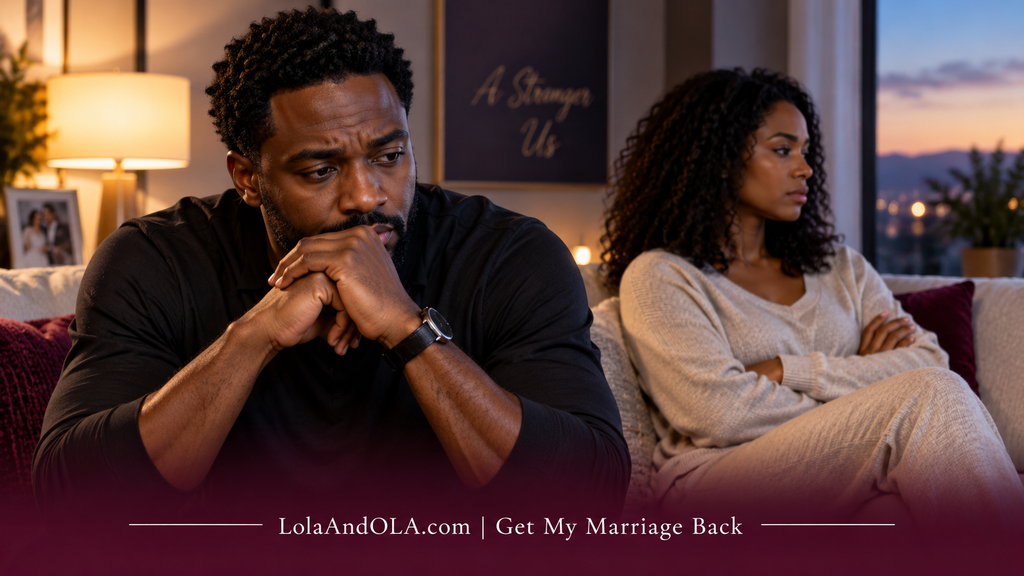

Feeling disrespected by your wife is one of the deepest, most isolating pains a husband can experience.
It cuts straight through your sense of self, your identity as a provider, and your daily emotional well-being.
But marital disrespect is not always loud, aggressive, or obviousโno shouting matches or slammed doors are required to cause profound damage to a relationship.
Instead, it is a slow, freezing erosion driven by subtle, daily patterns: the silent eye-rolls, the sharp sarcasm, the way she talks at you instead of to you, and a heavy undercurrent of criticism telling you that no matter what you do, it is never enough.
If you have found yourself trying to help around the house only to be told youโre doing it wrong, trying to lead your family only to be labeled controlling, or retreating into silence only to be accused of being cold and distant, you are stuck in a painful behavioral loop.
Understanding the root causes of these disrespectful wife signs, and learning how to respond rather than emotionally react, is the only way to break the pattern and reclaim your household’s peace.
Relational friction is normal, but systemic disrespect is a structural threat to your marriage.
To change the dynamic, you must first accurately identify the exact behaviors currently undermining your relationship.
1. Public and Private Emasculation
This occurs when your spouse systematically corrects, minimizes, or belittles your input in front of your children, friends, or extended family.
When private disagreements are weaponized into public performances, it signals a collapse of the marital team dynamic and destroys a husband’s authority in the home.
2. Chronic Dismissal of Your Personal Boundaries
A healthy marriage requires a mutual exchange of safety and consideration.
If your personal limits, your work schedule, or your explicit requests for calm, respectful communication are treated as non-existent, irrelevant, or laughable, your relational boundaries are actively being breached.
3. The Rejection of Household Leadership
If your financial plans, parenting boundaries, or long-term household decisions are instantly overridden or dismissed without a discussion, it forces you out of your natural frame.
You are left feeling less like an equal partner and more like an inconvenience.
4. Continuous Contempt, Sarcasm, and Passive-Aggressiveness
Contempt is the single greatest predictor of marital failure.
If your daily interactions are laced with mocking commentary, heavy sighing, sharp tones, or defensive stonewalling, the emotional bedrock of your connection is actively decaying.
5. Total Emotional and Physical Withdrawal
When respect exits a marriage, physical intimacy is almost always the next line of defense to fall.
This often triggers a devastating cascade where the relationship transitions into a completely platonic roommate arrangement, leading directly to the breakdown of the romantic covenant.
The Psychological Reality: Disrespect is a Dynamic
To change how your wife treats you, you must fundamentally change how you interpret and interact with her behavior.
Beneath the surface of a hostile marriage, three core relational truths are constantly at play:
Secret #1: Disrespect is a Feeling โ Not a Fact
The first thing to understand is that disrespect is not always about an objective truth.
Instead, it is about how an action lands on your nervous systemโit is a feeling based on perception.
For example, a husband sees an eye-roll or a sharp comment about budgeting as direct, malicious disrespect.
However, if you look beneath the surface, that tone is often an unmanaged expression of her own internal frustration, exhaustion, or fear.
She may see her tone not as disrespectful, but as desperate venting because she feels unsupported.
When you tie your entire sense of self-worth to your wife’s emotional state, you give away complete control over your peace of mind.
The moment you realize her attitude is a reflection of her internal worldโnot a factual verdict on your value as a manโyou stop reacting defensively and start leading with clarity.
Secret #2: Her Hostility is a Test โ Not the Final Grade
Many husbands dealing with a cold, critical spouse try everything to keep the peace.
They beg, they try to over-explain themselves, they try to buy gifts, or they retreat into total silence.
Nothing changes.
What they fail to realize is that her behavioral pushback is often an unconscious test of your emotional frame.
She is silently assessing your baseline stability.
She is asking:
Can I trust this man’s leadership, strength, and calm when a storm hits, or will he crumble into anger, match my hostility, or run away?
Reacting to disrespect with more disrespect simply fuels the cycle of dysfunction.
True leadership requires you to remain emotionally unshakeable, grounded in self-possession, while holding a firm, quiet line on your personal boundaries.
Secret #3: Her Behavioral Defenses are an Opportunity
A wife’s disrespectful behavior is almost always an erratic defense mechanism designed to prevent her from feeling dismissed, unseen, or rejected.
This creates a heartbreaking, vicious cycle: she pushes you away to protect herself from being hurt, and you respond by completely checking out or shutting down.
Breaking this cycle means leaning in with calm authority and deep empathy, not backing away in anger or trying to aggressively force her to change.
Listening for the underlying anxiety or pain driving the disrespect, while maintaining firm emotional boundaries, softens the conflict.
This approach transforms her defense mechanism back into mutual trust.
The Broader Marital Picture
A systemic breakdown of respect rarely happens in a vacuum.
If you are noticing these severe behavioral shifts, it is highly likely your relationship is showing other structural warning signs.
Do thisiIf you are trying to evaluate whether this toxic dynamic has pushed your relationship to the point of no return.
You can tell your wife is disrespecting you when minor disagreements consistently transition into contempt, sarcastic put-downs, or public emasculation.
What is the behavior of a toxic wife?
The behavior of a toxic wife is characterized by chronic manipulation, emotional stonewalling, continuous invalidation of her partner’s efforts, and the weaponization of affection or intimacy.
How to deal with a wife that doesn’t respect you?
To deal with a wife who doesn’t respect you, you must stop matching her emotional volume or retreating into silent compliance.
What does the Bible say about a husband that disrespects his wife?
The Bible explicitly commands husbands to love their wives selflessly, just as Christ loved the church (Ephesians 5:25). Scripture warns men that treating their wives with harshness, disrespect, or emotional neglect will fundamentally compromise their own spiritual well-being and directly hinder their prayers (1 Peter 3:7).
Few questions carry more emotional weight than this one:
“Is my marriage over?”
If you’re wondering signs a marriage is ending, you’re likely exhausted, confused, and carrying a heavy sense of uncertainty.
Maybe you’ve spent monthsโor even yearsโtrying to make things work.
Maybe you’re lying awake at night wondering whether what you’re experiencing is a rough season or the beginning of the end.
The truth is that marriages rarely end overnight.
Contrary to what movies portray, most relationships don’t collapse in a single dramatic explosion.
More often, they deteriorate through a gradual process of emotional disconnection, resentment, withdrawal, and exhaustion.
The bond slowly freezes until one or both partners no longer recognize the relationship they once fought so hard to build.
That doesn’t mean every struggling marriage is doomed.
Many couples recover from serious challenges through skillful communication, counseling, and a renewed commitment to change.
But there are certain patterns that relationship psychologists consistently identify as warning signs that a marriage may be approaching a breaking point.
Let’s examine five of the most significant indicators.
1. The Exhaustion Loop: The Same Fights Never End
Every healthy marriage experiences conflict.
The difference is that healthy couples eventually resolve disagreements, gain understanding, or find workable compromises.
In a marriage that’s breaking down, conflict becomes circular.
The same arguments happen over and over again.
Nothing gets resolved.
Old wounds never heal.
Every disagreement becomes an opportunity to revisit years of accumulated resentment.
At this stage, the goal often shifts from solving problems to protecting egos, proving who’s right, or inflicting emotional damage.
What This Looks Like…
Repeating the same arguments for months or years
Bringing up unrelated mistakes from the distant past
Constant criticism and defensiveness
Long periods of hostility after minor disagreements
Feeling emotionally drained after every interaction
A discussion about who left a cup on the kitchen counter turns into a 45-minute argument involving forgotten anniversaries, financial mistakes, parenting disagreements, and something that happened five years ago.
Three days later, nobody has apologized.
Nobody feels understood.
The original issue was never actually about the cup.
Relationship researchers have found that unresolved, chronic conflict can create emotional burnout.
Eventually, partners stop believing that change is possible.
When hope disappears, emotional investment often follows.
2. The Structural Freeze: Living Separate Lives
Sometimes couples need space.
A temporary separation can provide perspective, reduce tension, and create opportunities for healing.
But there’s a critical difference between a purposeful separation and a silent drift apart.
When partners begin living emotionallyโor physicallyโseparate lives without a clear plan for reconciliation, the marriage often enters what can be called a Structural Freeze.
Instead of repairing the relationship, both people gradually adapt to life without each other.
Warning Signs
Sleeping in separate bedrooms indefinitely
Living apart without discussing reconciliation
Spending little meaningful time together
Operating as independent individuals rather than a couple
Avoiding conversations about the future
A couple begins a “trial separation” that lasts six months.
Neither partner attends counseling.
Neither initiates conversations about rebuilding the relationship.
Instead, both quietly adjust to life as though they’re already single.
Distance alone doesn’t fix a marriage.
Healing requires intentional effort, communication, accountability, and a shared desire to reconnect.
When those elements disappear, separation often becomes a transition rather than a solution.
3. The Identity Shift: Your Spouse Feels Like the Enemy
One of the most damaging signs a marriage is ending is a complete shift in perception.
At some point, your spouse stops feeling like your partner.
They stop feeling like your teammate.
Eventually, they may start feeling like your opponent.
Psychologists sometimes refer to this pattern as negative sentiment overrideโa state where virtually everything your partner does is filtered through suspicion, resentment, or hostility.
Good intentions are no longer recognized as good intentions.
Everything feels threatening.
What This Looks Like
Assuming hidden motives behind kind gestures
Interpreting neutral comments as criticism
Feeling defensive before conversations even begin
Believing your spouse is actively working against you
Viewing interactions as battles rather than collaboration
Your spouse brings home your favorite dinner after work.
Instead of feeling appreciated, your immediate thought is:
“What do they want?”
Or:
“They’re only doing this because they feel guilty.”
The gesture itself hasn’t changed.
Your interpretation has.
Why It Matters
Marriages thrive on goodwill.
When trust erodes to the point where every action is viewed through a lens of suspicion, emotional intimacy becomes nearly impossible.
A relationship cannot survive long-term if both people see each other as adversaries.
4. Home Feels Like a Battlefield Instead of a Safe Place
A healthy marriage creates emotional safety.
Even during difficult seasons, home should feel like a place where you can relax, be yourself, and let your guard down.
In failing marriages, that sense of safety often disappears.
The home environment becomes tense, unpredictable, and emotionally exhausting.
Many people describe feeling like they’re constantly walking on eggshells.
Common Signs
Anxiety when your spouse comes home
Avoiding certain topics to prevent conflict
Monitoring your words carefully
Feeling judged or criticized regularly
Experiencing chronic stress inside your own home
You sit in your car for ten minutes after arriving home because you need time to mentally prepare yourself before walking through the front door.
The sound of your spouse’s keys in the lock immediately causes your stomach to tighten.
Relationships are supposed to reduce stressโnot become its primary source.
When your nervous system remains in a constant state of alertness around your spouse, the emotional foundation of the marriage has been severely compromised.
5. The Flatline: Emotional and Physical Intimacy Has Disappeared
Every marriage experiences fluctuations in intimacy.
Stress, health challenges, parenting responsibilities, career demands, and life transitions can all affect physical connection.
That’s normal.
The warning sign isn’t a temporary dry spell.
It’s a prolonged and complete absence of emotional and physical intimacyโwith little desire from either partner to restore it.
This is what many couples describe as becoming “roommates.“
If you are experiencing..
No physical affection
No hand-holding or casual touch
No meaningful eye contact
No emotional vulnerability
No romantic connection
Little or no physical intimacy for extended periods
A couple coordinates schedules, pays bills, discusses household logistics, and raises children together.
But they haven’t shared a genuinely affectionate embrace, deep emotional conversation, or physical intimacy in over a year.
The relationship functions.
The romance does not.
Intimacy is the lifeblood of marriage.
When both emotional and physical connection disappearโand neither partner feels motivated to rebuild themโthe relationship often loses its romantic identity altogether.
How to Know If Your Marriage Is Really Over
The presence of one warning sign doesn’t automatically mean your marriage is ending.
Even two or three signs don’t guarantee divorce.
The deeper question is this:
Are both partners still willing to fight for the relationship?
Many struggling marriages can recover when both people:
Acknowledge the problems honestly
Take responsibility for their behavior
Commit to meaningful change
Seek professional support when needed
Continue investing emotionally in the relationship
The strongest predictor of a marriage ending is not conflict.
It is indifference.
When one or both partners no longer care enough to repair the damage, communicate openly, or reconnect emotionally, the relationship enters dangerous territory.
If you recognize these signs in your marriage, don’t panicโbut don’t ignore them either.
The end of a marriage is rarely defined by a single moment. It’s usually the result of patterns that develop over time.
Ask yourself:
Is there still emotional investment?
Is there still mutual respect?
Is there still a willingness to work on the relationship?
Is there still hope?
If the answer is yes, healing may still be possible.
If the answer is no, then the clarity you’re seeking may already be emerging.
Either way, understanding what’s truly happening is the first step toward making a healthy, informed decision about your future.
And sometimes, the most courageous thing you can do is stop guessing and start facing the truth.
13 Signs That Your Husband Hates or May Resents You
Hate is a very strong word but the โup and downโ feelings that come with marriage can be extreme sometimes.
How To Save Your Marriage When Your Husband Hates You
With some patience, understanding, and a little bit of effort, you can turn your marriage around and get back to the loving relationship you once had.
Start by communicating with your husband and expressing your feelings in a calm and respectful mannerโEmotional intelligence is required here.
Show him that you are willing to listen and understand his point of view; I know it may seem unfair at this point but you have to be patient because itโs a process.
Itโs not time to be attempting to find ways to spend quality time together and do things that you both enjoy; this is not the space for that as it may come off as manipulation.
Finally, make sure to show your husband that you still love and care for him in action, even if he doesn’t show it in return; all of that is temporary.
With a little bit of effort, you can save your marriage and get back to the loving relationship you once had.
What To Do When Your Husband Hates You!
Timing is key here before making this move.
Ask him what is making him feel this way, and try to understand where he is coming from.
It’s also important to be patient and to show him that you still care about him.
If he is open to it, you could also suggest couples counseling.
It might be a good idea to take some time for yourself too, so you can focus on self-care and practice positive self-talk.
With a little bit of effort, you can work together to get through this difficult time and come out stronger than ever.
What To Say To Your Husband To Save Your Marriage
โI’m so glad we’re talking about this! I know our marriage has been struggling lately, but I’m hopeful that we can work through it together. I want us to be able to communicate openly and honestly with each other, and I’m willing to put in the effort to make sure that happens. I’m committed to our marriage, and I’m here when you do decide to talk. I want to make this work!โ
Also hate is the polar opposite of the same passion you probably felt when you first fell in love with that stranger.
So it probably makes sense that it feels like โhateโ at some point after the initial fake love in-love experience wears off.
The good news, in a twisted weird way, is that your relationship with your husband sounds pretty normal considering that…
About 50% of marriages in any society end up in shambles.
Additional goods news is that you can do something about it with the understanding you will get from this lesson today.
Feeling like your husband hates you is most likely an exaggerated version of the reality of what your marriage is going through right now.
Nevertheless, your feelings are valid enough for us to discuss in this lesson.
Where did you get the idea that your husband hates you from?
There are 2 possible ways…
1. He actually said it loud and audibly.
2. His actions reflect that of a person who hates you.
Either way, I want you to relax as we go through 13 signs that can make your husband say he hates you or make you feel that he hates you.
Keep in mind that if he actually hates you, he wouldnโt need to tell you. Most likely, he would be more indifferent than expressing it passionately with words.
Letโs talk about 3 situations that most people consider โfor sureโ common reasons for a husband to hate the wife.
Abusive behaviors can come as verbal, emotional, mental or physical.
When you are on the receiving end of this from a person that once loved you, you may find yourself interpreting it as hate from them.
Unfortunately, a person that loves you can hurt you without necessarily meaning to hurt or hate you; itโs deeper than intentions.
5, Arguments
A man that wouldnโt let you get away with being right even when you are wrong in a debate can also shoot off the vibe that he hates you.
Why wonโt he be โman enoughโ to allow you to be his lady without holding your feet down on every word?
Maybe he doesnโt hate you… just maybe he is simply petty and childish; something to consider.
6, Sarcasm
If your husband is just too tired and frustrated with the idea of communicating with you in love and kindness, he would settle for sarcastic remarks.
When a person is in true love, that package comes with patience and kindness so itโs little to no wonder why you may be wondering…
Does he hate you?
7, Condescension
He may also use a bad attitude to ask you condescending questions that he already has answers for.
This is a sign that he is not in love with you but he may still very much love you.
If he hates you, he would not be engaged in any communication with you.
Granted!
Condescending remarks are signs of terrible communication skills.
8, Sexlessness
A sexless marriage can make you start to feel that you are alone in the marriage.
Sex and intimacy are what differentiate a marriage from other types of relationships.
So if you have not engaged effective and successful communication about the lack of intimacy, you are in the darkness.
It is then only natural to wonder if your husband hates you so much that he doesnโt want it with you; you start to question his love.
9, Complacency
Complacency has its way of creeping into every marriage at some point.
The excitement of newness evaporates and then you can either feel it as hate from your husband…
Or you can tackle it as what it is… naturally taking each other for granted.
Nonetheless, it is still a form of falling out of love but not necessarily โhate.โ
10, No Quality Time
In the beginning, your husband couldnโt wait to spend quality time with you but he has since pulled back into a corner.
You, on the flip side, are forced to wonder if he hates you because of a series of events such as arguments, fights, etc.
11, No Respect
Behaviors that indicate lack of respect from your husband for, not โyouโ in particular, but for your relationship is obviously being received by you as an individual.
To you, that can come off as โdoes he hate me?โ.
As I have said, โhateโ is a very strong word and the feeling of it doesnโt always correlate with absence of love and respect.
12, Distant
Distance, they say, makes the heart fonder but I am guessing thatโs not what you bargained for when you got into a marriage.
Why would your husband want distance from you… ever? This is a stage in most relationships that can be quite frustrating
13, Manipulative & Controlling
Manipulation and controlling behaviors from your husband obviously doesnโt feel like love.
So if itโs not love, then it must be hate. Right?
I wish it was that simple but itโs not.
When your husband only sees from his point of view like most other immature people, they will exude narcissistic and selfish behavior.
Itโs mostly never an intentional behavior.
Itโs a common behavior from men after getting married. They tend to put their feet up and relax; not paying as much attention to how you feel and your desires.
And of course, this behavior can start to make you feel unheard and unloved.
Does โfeeling unlovedโ equals โhate?
Maybe not but itโs a sign you should consider taking seriously as a sign that you are on โlowโ with the love tank.
How do you stop feeling like your husband hates or get him to stop hating or hating on you?
Use this 5-steps sequential solution to attract your husband back to loving you again.
If communication and counseling has failed in helping you solve this dilemma of potential hatred between you and your husband,
It is now very important for you to consider that you have habits that are attracting this terrible energy.
Itโs not necessarily a โfaultโ or responsibility but it should be identified so that you can use it as leverage.
This is especially true if you were at least attracted to each other at some point.
Coaching is a much more extensive solution which often includes counseling but goes beyond just solving your present crisis.
It also equips you for handling inevitable future conflicts and crisis in your marriage
4, Separation
Sometimes in life, it has to crash all the way down to ground zero in order to build a new foundation of love with or without your present husband.
My hope is, of course, that you will be able to rekindle and get your husband to love you or make you feel loved again.
But distance does make the heart fonder and itโs not always a bad thing to back off and allow love and attraction to rebuild itself just like the day when the affair was tender.
Entertaining the idea of separation can create your best chances of seducing your husband back into your love world.
5, Divorce
The same thing applies to divorce.
There are many couples that get back together even after many years after officially filing for divorce.
The moral of the story is to not make divorce more of a big deal than it is.
Focus on whatever you need to do to seduce and build attraction back into the underlying relationship with your husband.
Start by identifying the underlying cause of the hostility, improving your personal communication skills, and seeking professional support if the relationship has become emotionally unsafe.
How do you survive a marriage when you hate your spouse?
Surviving a marriage when you hate your spouse can be a real challenge, but it is possible!ย The ideaย that you feel this is hate is just another way to express that a lot of passion is and was involved in the breakdown of your relationship.ย This awareness is half the battle won.
How do I save my marriage when my husband doesnโt want to?
There are still plenty of things you can do to try and work things out. It’s important to stay positive and remember that communication is key. If your husband doesnโt want to, I want you to realize that it is not necessarily a permanent decision.
How do you respond when your husband says he hates you?
When your husband says he hates you, try to stay positive and remain calm.ย If you have to respond, ask him โwhat do you mean by that?โ with an intention to hear more about where that feeling is coming from.
What is a toxic husband?
A toxic husband is someone who is not supportive or understanding of their partner’s needs and feelings. It’s someone who is selfish and controlling, and who causes emotional or physical harm to their partner. It’s important to recognize the signs of a toxic relationship and to take steps to protect yourself. It’s never too late to make a positive change in your relationship, and it’s worth it to take the time to make sure your relationship is healthy and supportive.
How do you save your marriage when it seems impossible?
To save your marriage, it takes hard work, dedication, and a lot of communication to make it happen. The first step is to recognize that there is a problem and to be honest with yourself and your partner about it. It’s important to be willing to compromise and to listen to your partner’s point of view. It’s also essential to make time for each other, to share your feelings, and to be understanding and supportive.
How do you know when your marriage is over?
It’s a tough question to answer, but it’s important to recognize when a marriage has reached its end. โEndโ is not necessarily an actual end.ย But there are no guarantees in life right?ย It’s a difficult decision to make, but if you and your partner are no longer able to communicate effectively, if you’re no longer able to trust each other, or if you’re no longer able to be happy together, then it might be time to consider that your marriage is overโฆ at least for now. It’s a difficult journey, but it’s important to remember that it’s okay to move on and find joy and happiness elsewhere.
So why do you get irritated when your husband touches you?
You’re not alone.
Many women experience periods in their marriage where physical affection that once felt comforting suddenly feels annoying, overwhelming, or even unwelcome.
The most important thing to understand is that irritation when your husband touches you is usually a symptom, not the root problem.
In many cases, the touch itself isn’t the issue.
Instead, the feeling is often connected to deeper emotional, relational, psychological, or even medical factors that have been building over time.
The good news is that if you’re asking questions and looking for answers, you’re already taking an important step toward understanding what’s happening and finding a path forward.
Your Husband’s Touch Is Often a Reflection of Bigger Issues
When women say things like:
“I don’t feel anything when my husband touches me.”
“I don’t want my husband to touch me anymore.”
“My husband repulses me sexually.”
“I feel disgusted when my husband touches me.”
The physical reaction is often connected to something larger happening beneath the surface.
For some couples, there has been a gradual emotional drift over the years.
The relationship may not feel as close, exciting, or connected as it once did.
Life responsibilities, stress, parenting, financial pressures, disappointments, and unresolved conflicts can slowly create distance between spouses.
As that emotional distance grows, physical affection may begin to feel different as well.
Rather than seeing the irritation as the problem itself, it can be helpful to view it as a signal that something deeper deserves attention.
Start With a Root Cause Analysis
If you’re wondering, why you might even cringe when your husband touches you, one of the most productive things you can do is perform an honest root cause analysis.
Ask yourself:
When did these feelings begin?
Was there a specific event that triggered them?
Has the relationship changed significantly over time?
Are there unresolved hurts or resentments?
Do you still feel emotionally connected to your husband?
Have outside influences affected how you view my marriage?
Understanding how you got here is often the first step toward deciding where you want to go next.
Many women discover that the irritation didn’t appear overnight.
Instead, it developed gradually as emotional needs went unmet, communication declined, or disappointment accumulated over time.
Comparison Can Quietly Create Relationship Drift
One often overlooked factor is comparison.
You may be comparing your husband to:
An ex-partner
Someone you know personally
A fictional character
Influencers on social media
Couples/Couple Goals portrayed online or on television
When comparison becomes a habit, real-life relationships can start to feel inadequate.
The reality is that social media and entertainment often show carefully curated versions of relationships.
Comparing your marriage to unrealistic standards can create dissatisfaction that affects attraction and emotional connection.
If you’ve found yourself thinking, why don’t you want you husband to touch or kiss you?, it may be worth examining whether unrealistic expectations or comparisons are contributing to your feelings.
Emotional Neglect Can Affect Physical Attraction
Sometimes the issue isn’t physical at all.
Your husband may not be meeting important emotional needs.
You may feel unheard, unappreciated, unsupported, or disconnected.
When emotional intimacy suffers, physical intimacy often follows.
For example, some women feel frustrated because:
Their husband doesn’t listen.
He rarely expresses appreciation.
He doesn’t understand their love language.
They feel emotionally alone in the marriage.
At the same time, it’s also important to examine your own role in the relationship.
Healthy marriages require, not necessarily starting as mutual effort, but eventually getting to “mutual”, understanding, and communication.
The goal isn’t assigning blame.
The goal is identifying patterns that may be contributing to the current situation.
When Touch Starts Feeling Like an Obligation
Some women find themselves thinking:
“My husband thinks he can touch me whenever he wants.” Wait… wasn’t that the deal?
In these situations, irritation can stem from feeling that personal boundaries aren’t being respected.
Even in a healthy marriage, consent and consideration matter; of course.
Affection tends to feel better when it comes from a place of connection rather than expectation.
If you’ve repeatedly expressed discomfort and feel unheard, resentment can begin to build.
Over time, that resentment may become associated with physical touch itself.
This can also lead to your husband getting mad when you don’t want to be touched, creating additional pressure and tension around intimacy.
Unresolved Resentment May Be Playing a Role
Resentment is one of the most common reasons physical affection becomes difficult to receive.
When hurt feelings remain unresolved, every interaction can become filtered through emotional pain.
You may notice yourself becoming irritated over things that didn’t bother you before.
Some women even report experiences such as blowing up on their husband for touching them.
While the reaction may seem sudden, the emotions behind it often have a much longer history.
The outburst itself may simply be the moment when accumulated frustration finally reaches the surface.
Overstimulation and Constant Physical Contact
Sometimes the issue isn’t dislike or lack of love.
For example, you may feel overwhelmed because:
You’re caring for young children.
You’re emotionally exhausted.
You’re mentally overloaded.
You rarely get personal space.
In these situations, you might think your your husband is always touching you.
When someone already feels overstimulated, even affectionate touch can feel draining rather than comforting.
This doesn’t necessarily mean the relationship is unhealthy. It may simply indicate a need for better communication about personal space, rest, and emotional recovery.
Medical and Hormonal Factors Matter Too
Not every explanation is relational.
There are legitimate medical and hormonal conditions that can affect how you experience touch, attraction, and intimacy.
Examples include:
Postpartum changes
Perimenopause
Menopause
Hormonal imbalances
Anxiety
Depression
Chronic stress
Certain medications
Physical discomfort or pain
A woman experiencing hormonal changes may suddenly find herself feeling irritated by physical contact even when her feelings toward her husband haven’t fundamentally changed.
In these cases, speaking with a healthcare professional may provide valuable insights and solutions.
Can Attraction Be Rebuilt?
In many cases, yes.
If the issue stems from emotional disconnection, resentment, unmet needs, poor communication, or life stress, attraction can often be rebuilt through intentional effort.
The first step is understanding the true source of the problem.
Rather than focusing solely on why you feel repulsed by your husband’s touch, it can be more helpful to ask:
What changed?
What needs are not being met?
What emotions have gone unaddressed?
What patterns need to improve?
Once those answers become clear, solutions become much easier to identify.
You’re Not Alone
Many women feel guilty when they realize they no longer enjoy physical affection from their spouse.
They worry something is wrong with them or that they’re the only person experiencing these feelings.
They might yield to concepts indicating their lack of control such as compatibility or spirituality.
The truth is that relationship challenges, emotional disconnection, stress, and life transitions affect many marriages.
The fact that you’re searching for answers suggests that you care enough to understand what’s happening.
And understanding the problem is often the first step toward creating a healthier, more connected relationship.
Conclusion
If you’ve been wondering, “why do I get irritated when my husband touches me?”, remember that the irritation is usually a symptom of something deeper rather than the actual problem itself.
Whether the cause is emotional distance, unresolved resentment, unrealistic comparisons, boundary issues, overstimulation, hormonal changes, or life stress, identifying the root cause is essential.
Once you understand your unique story and how you arrived at this point, you can begin creating a practical roadmap toward the relationship and level of connection you ultimately want.
Identify and address the underlying emotional, relational, or medical factors contributing to your irritation rather than focusing only on the physical touch itself.
Why do I feel repulsed by my husband’s touch?
Feelings of repulsion are often linked to unresolved resentment, emotional disconnection, unmet needs, stress, or hormonal changes rather than the touch alone.
Why do I get irritated when my husband touches me?
You may become irritated by your husband’s touch when deeper issues such as relationship drift, emotional distance, overstimulation, or personal stress are affecting your feelings.
Why do I cringe when my husband touches me?
Cringing at your husband’s touch can occur when physical affection has become associated with emotional discomfort, resentment, pressure, or unresolved relationship concerns.
So, when is the right time to walk away from a sexless marriage?
First, let’s define what a sexless marriage actually is.
We’re not talking about situations where two people have mutually agreed not to have sex.
That’s a completely different conversation.
Instead, we’re referring to a relationship where one partner feels deprived of sex and intimacy and their emotional and physical needs are consistently going unmet.
My Sexless Marriage Is Killing Me”: The Hidden Emotional Toll
Research suggests that sexless marriages are more common than many people realize.
Estimates range from around 10% of marriages in earlier years to as much as 40% or more among couples later in life.
In many cases, one spouse feels emotionally disconnected, rejected, or starved for intimacy, creating a growing divide within the relationship.
This is rarely a healthy dynamic.
A marriage thrives when both partners feel connected, valued, and understood.
When sex and intimacy disappears…
… and the issue remains unresolved, resentment, loneliness, and emotional distance often follow.
The good news is that a sexless marriage is not always caused by a lack of compatibility.
More often, it stems from challenges such as poor communication, declining attraction, unresolved conflict, stress, or simply taking one another for granted over time.
In the beginning of a relationship, intimacy often feels effortless.
You’re fascinated by each other, emotionally connected, and eager to spend time together.
But as the years pass, life happens.
Careers become demanding, children enter the picture, responsibilities increase, and everyday stress begins to take its toll.
As a result, conversations about sex and intimacy can become uncomfortable, awkward, or even completely avoided.
That’s why rebuilding intimacy requires more than desireโit requires awareness, communication, and relationship skills.
Before deciding when to walk away from a sexless marriage, it’s important to recognize the warning signs and understand what’s really causing the lack of intimacy.
That’s exactly what we’ll explore in this article.
When to walk away from a sexless marriage is probably one of the toughest decisions or questions to find an answer to. For crying out loud, you probably have a whole life set up with with person.
There can be a lot of confusion about this seemingly abusive place. Our goal is to make the navigation of this crisis a bit more easier.
For some people, the decision might be easy-if they’re not getting what they need from their spouse, they’ll end the marriage.
But for others, it might not be so simple.
Maybe they’ve been married for a long time and have kids, or maybe they’re afraid of being alone.
Whatever the reason, it’s important to know when enough is enough.
But before we get into all that, it’s more important to know if you can savage the situation; many and probably most couples have overcome dry spells.
In this article, we will cover the following lessons…
1. What is a sexless marriage?
2. Causes of a sexless marriage
3. Effects of a sexless marriage
4. How to deal with a sexless marriage
5. How to create a healthy sex life when in a sexless marriage
6. Can a marriage survive without sexual intimacy?
7. Does a sexless relationship lead to a sexless marriage?
Let’s dive right in…
What is a sexless marriage?
A sexless marriage is a marriage where the couple does not have sex.
This can be for a variety of reasons; the most common being that one or both spouses are not interested in sex.
When it comes to low sexual interest in marriage, there can be a lot of reasons why this might happen.
For one, it could be that one or both spouses have lost interest in sex altogether.
This could be due to boredom, fatigue, or simply not feeling attracted to their partner anymore.
Another possibility is that there may be an underlying physical issue causing the low interest in sex, such as hormonal imbalances or chronic illnesses.
Whatever the reason may be, if you’re experiencing low interest in sexual activity within your marriage, it’s important to talk to your spouse about it.
It’s possible that they’re unaware of the issue and may have no idea that you’re not interested in sex.
Before we talk about when to walk away from a sexless marriage, won’t you agree that you should learn the many causes of a sexless marriage?
One of the most common reasons is when one or both partners have lost interest in sex.
Yes… interest, desire and attraction are key elements in this.
While desire cannot be negotiated, it can definitely be influenced with some seduction skills if the cause is medical in nature.
Low level of interest can be due to a number of factors, such as stress, fatigue, boredom, or a lack of connection with their partner.
Another common cause of a sexless marriage is when one partner has a low sex drive.
This can be due to hormonal changes, medical issues, or stress.
If one partner consistently rejects sexual advances, this can also lead to a sexless marriage.
If you are in a sexless marriage, it is important to assess the situation and determine if it is something that you can work on or if it is time to walk away.
There is a big difference between sexual interest and sex drive.
Interest is what makes you want to have sex, while sex drive is what motivates you to act on that desire.
Interest can be sparked by things like sexy lingerie, kissing, or cuddling and long term effects of being in a good place and feeling safe with your spouse.
However, sex drive is more about the physical urges in moments and the need to release that tension.
It’s possible to have a high interest but a low sex drive, or vice versa.
Erectile Dysfunction Can Also Lead to a No Sex Marriage
If you’re dealing with erectile dysfunction, there are a few remedies you can try before calling it quits on your marriage.
First, you could talk to your doctor about medication or therapy that could help get your libido back up and running.
If that doesn’t work, you might want to consider couples counseling to help reignite the intimacy in your relationship.
Effects of a Sexless Marriage
You may be the spouse who hasn’t realized that when to walk away from a sexless marriage may be closer than you think.
May be you feel a low sexual interest towards your spouse and you are not seeing it as a matter of emergency.
A sexless marriage can have negative consequences on both spouses.
Effects of a Sexless Marriage on a Man
A lack of physical intimacy can lead to a decreased sense of self-worth and masculinity.
They may feel like they are not good enough for their wife and that they are not fulfilling their role as a husband.
And yes, it’s important that we all start to realize that feelings is one of the most important elements of life; even for a man.
This can cause a husband to withdraw from the relationship emotionally and even physically.
Effects of a Sexless Marriage on a Woman
A lack of physical intimacy can lead to feelings of loneliness and isolation.
She may feel like her husband no longer finds her attractive and desirable.
This can cause her to lose interest in the underlying relationship (in many respects, more important than the marriage) and become more withdrawn.
It is often not best to just walk away from the marriage because there is more to learn from the crisis just because one partner doesn’t desire sex.
The Importance of Physical Intimacy in Marriage
One of the most important aspects of a healthy and happy marriage is physical intimacy.
When this is lacking, couples can quickly find themselves drifting apart.
Like we already mentioned, this may be due to a lack of desire, mismatched libidos, or other physical issues, but the end result is the sameโa rift in the relationship.
Physical intimacy is not just about sex; itโs also about physical closeness, touch, and affection.
Couples who are physically intimate are more likely to feel connected to each other, and they are also more likely to have a stronger emotional bond.
And to stay on topic here, it significantly reduces the chances of ending up in a sexless marriage which is about 15-20% of marriages.
In fact, physical intimacy is often seen as a litmus test for the health of a relationship.
The Link Between Intimacy And A Coupe’s Sex Life
If you want a better sex life within marriage, focusing on physical sex may just work completely against that.
A Couple’s sex life is a function of many things including sex drives, the level of interest between you and your spouse presently and long term vibes.
A terrible couple’s sex life is usually the effect of complacency, resentments and nature.
As mentioned earlier, it can also be the effect of medical issues but that’s beyond the scope of this article.
The frequency of sexual intimacy between couples determines what most people use in gauging a healthy and active sex life.
An ideal sex life from our stand point requires a minimum of once a week and preferably 2-3 times per week.
Of course, there are exceptions to every rule but be sure that the exception agreeable to both parties.
It’s not enough to argue what makes an ideal and optimal sex life as an individual.
Ultimately, you need your spouse to feel satisfied in their own personal sex life as qualified in human being in a marriage.
Ideally, when to walk away from a sexless marriage is the moment either spouse feels like the other is so disconnected and selfish from their own emotional needs of love and connection.
How to Deal With a Sexless Marriage
If you are in a sexless marriage, it can be difficult to know what to do.
We have a few tips in addition to the fact that there are professionals such as sex therapist, coach and counselors that help make navigating things easier.
Sexual desire cannot be negotiated but it can be influenced with these short and few tips:
1. Talk to your partner about your concerns.
If you’re feeling unhappy in a sexless marriage, it might be time to talk to your spouse about it.
However, it’s important to approach the conversation in a constructive way. Here are a few tips:
– Don’t start by expressing how you feel.
Being honest and open about why you’re unhappy, and explaining that you want things to change may seem smart but it is anti-seductive.
instead, it’s better that you approach this from a stand point of searching for opportunities to add value.
Here is an example of how the conversation might go…
“Babe, you know how much I love an intimate time with you.
Is there anyway I can help to ease up your days and create more opportunities?”
Talk about the things that you can do to improve sexual desire.
Maybe there are certain activities or fantasies that you would be interested in trying.
– Make it clear that you’re not blaming your spouse for the problem.
Sexual desire is a complex issue, and it takes two people to create a healthy sexual relationship.
But the good news is that it take one to start the necessary dance.
That’s why we suggest approaching this from a stand point of seduction and not sex as a duty in a marriage.
– Be willing to compromise.
This works best if you’ve noticed being shut down in recent time; if the sexlessness has lasted much longer, consulting a sex therapist to help is not a bad idea.
2. Try to spice things up in the bedroom.
When it comes to marriage, there are a lot of things that need to be perfect in order for it to work.
One of the most important aspects of marriage is intimacy.
Intimacy is key to a healthy and happy marriage.
When intimacy starts to fade, it can be a sign that the marriage is in trouble.
If you’re in a sexless marriage, here are a few tips to help spice things up:
– Talk to your spouse about your needs and desires.
Communication is key in any relationship.
I take that back. There are too many people throwing the word “communication” around when it comes to relationships and marriages.
The Actual Key is Effective Communication.
And I am talking about effectiveness with respect to the context; the context here being the need to help a sexless marriage survive.
Most people think of communication as the act of talking; with respect to improving sexual desire and intimacy, listening must be involved in at least what you may consider as communication.
If you haven’t listened long and deep enough to understand why your spouse has been non-verbally communicating low interest in sex, attempting to express your own unhappiness may makes things worse.
– Experiment with new positions, fantasies, and activities.
This is useful if you are still about to make your way together to the bedroom occasionally.
It can help replace boredom and spice things up.
– Try reconnecting with your spouse on a more intimate level outside of the bedroom.
This will actually work a lot better than many of the other measures your natural instincts suggest.
As I earlier, your sex life is a function of so many activities and moments long before the bedroom.
If all else fails, consider seeking professional help such as sex therapist, counselor or marriage coach.
3. If things don’t improve, consider consulting with a sex therapist.
A sex therapist can help sexless marriages in a number of ways.
They can help to identify the root of the problem, and work with the couple to find a solution.
If one partner is not interested in sex, the therapist can help to explore the reasons for this and find ways to overcome any obstacles.
The therapist can also provide guidance on how to improve communication and intimacy in the relationship.
4. Don’t give up on your marriage.
When it comes to sexless marriages, there can be a lot of debate over whether or not to stay in the relationship.
Some people may say that you should always fight for your marriage, while others may say that if sex is not happening, then there is likely bigger problems in the relationship that need to be addressed.
From experience, we know it’s most likely the latter.
The truth is, there is no easy answer when it comes to deciding whether or not to stay in a sexless marriage.
However, it is important to remember that a sexless marriage does not have to mean a doomed marriage.
In fact, according to recent studies, sexless marriages are becoming more and more common due to the growth in alternative lifestyles; we don’t really cover that here.
But according to one study, nearly 20% of married couples are considered sexless.
So you are not alone.
In addition to that, it is important to know that common problems tend to have more than enough solutions.
Don’t give up on your marriage especially if that’s not what you want to do; avoid non-professional advices on the marriage matters.
Avoid advices from people who have worst case scenario experiences and people who tend to speak from published statistics when it comes to a marriage.
They tend to only help in projecting these experiences into your future personal life even when suggested issues may not even exist.
How to create a healthy sex life when in a sexless marriage
A lack of sex in a marriage can be very frustrating for both partners.
It’s important to figure out why the sex has stopped, and then work on fixing it.
If the lack of sex is due to an issue like mismatched libidos, there are things that you can do to increase the amount of sex that you have.
If the lack of sex is due to an unresolved conflict, then you’ll need to work on resolving the conflict before you can start having sex again.
Lack of effective communication, especially the part where a spouse feels heard can lead to lack of sex.
Not mastering the art of intimacy at a deeper level in your underlying relationship can also lead to lack of sex.
As I mentioned earlier, desire cannot be negotiated.
Nonetheless lack of sexual desire will eventually lead to lack of sex.
Desire however be created with influence and seduction which is a skill set within long term relationships and marriage.
Health and medical issues can also lead to lack of sex even in ways that are not necessarily obvious to either party.
Last but not least, lack of sex can be a result of stress and fatigue, so it is important to not forget about creating a lifestyle of fun.
If lack of sex is causing problems in your marriage, it’s important to address the issue head-on and not allow it to linger on.
A sexless marriage can be a difficult situation to deal with, but it is possible for the marriage to survive if the parties are on the same page.
It is highly unlikely in the hyper sexual society that we live in today; everywhere you look in the media, there are sexual content and motivation.
It is important to seek sex therapy to address the issue and find a way to regain sexual intimacy in the marriage.
One of the main things you can find in sex therapy is sex education.
Believe it or not, many people survived childhood without any form of sexual, attraction and seduction education ahead of marriage.
Sex therapy can help you learn about different sexual techniques, positions, and products that can help increase sexual interests in a romantic relationship.
Don’t let this issue linger to avoid your spouse from developing sexual interests outside of your marriage.
It’s also important to mention at this point that panic and anxiety will only make things worse.
FINALLY… The 17 Signs Of Walk Away From A Sexless Marriage?
Being in a marriage has its highs and lows and sometimes you can hit a stumbling block such as a sexless marriage.
A few moments of dryspell can happen and that is not unusual.
What can make it unusual is when that dry spell becomes permanent.
When intimacy is gone in a marriage, it can gradually lead to the death of a marriage.
So when do you know you are in a sexless marriage?
One survey says a sexless marriage is when a couple have sex once in a month.
But I believe this varies from people to people.
One Survey says that 1 in 5 couples are having a sexless marriage.
Did you know that the average married couple has sex 68.5 times a year which adds up to about once a week?
This is okay if both parties are on the same page.
But problem only occurs if one person desires sex and the other doesnโt.
So before you decide to walk away, you have to do a root cause analysis that addresses all the variables and scenarios that led you there.
5 potential causes of a sexless marriage to consider before walking away?
Consideration #1 – Stress from Work
When a partner gets too busy with work, he or she can become too tired to think about sex.
They don’t even have a moment to eat dinner together, much less talking about their day which is one of the ways that healthy couples connect.
This can cause the couple to be distant and cause a dry spell in the relationship.
Consideration #2 – Childbirth
After Childbirth, a womanโs body changes and needs time to balance again.
Doctors often advise not to have sex until after 6 weeks because of common issues such as vaginal dryness, bleeding, pain, fatigue, tear, low libido, pregnancy and more.
Breastfeeding lowers estrogen levels.
So if a woman is breastfeeding, it may take time for her libido to return to normal.
A man who doesn’t know all these may end up acting out of character because he feels neglected.
And this might lead to even more dry spells; a vicious cycle of sexless weeks, months and potentially years because it all starts from a woman feeling safe with a man .
Consideration #3 – Lack of Connection
Sex without emotional connection is a turn off.
An emotional connection is a bundle of subjective feelings that come together to create a bond between two people.
Most women want to be wined and dined,
They want to be heard, have intelligent and most importantly vulnerable conversations from the heart. They want to be noticed outside the bedroom.
If she is only being used for sex, she will eventually loathe it.
Likewise a typical man wants to feel like the hero in his marriage.
If he is feeling belittled, he may disconnect and his sexual attraction towards his woman can be tampered with effectively.
If you are sitting with your spouse and he is not engaging or responding to your conversations, you may start subconsciously learning how to disconnect.
It may seem like your spouse is just self-absorbed in whatever he is doing without ever asking how your day went; your spouse seems uninterested in you.
You all can become distant and start feeling neglected. This has led many to start fantasizing about life without each other.
You may even have found yourself sharing and enjoying conversations with others outside your marriage in an intimate way.
Obviously, one or both of you can effectively get comfortable with the reality of a sexless marriage and it all started with at least one person feeling lonely.
Consideration #5 – Toxic Relationship Issues
If you are not treating each other with kindness, every conversation is filled with sarcastic and rude remarks.
Likewise if at least one person is exercising controlling behaviours on the other, skyscrapers of resentments will be built.
And it is also not uncommon to accompany all of that with some disrespect to an extent where your sight repulses your partner or vice versa.
This type of negative behavior kills sex.
Who wants to have sex with someone who makes their skin crawl?
So Here are the 17 Signs of When to walk away from sexless marriage…
If your spouse is not interested in a way forward and doesn’t care that your needs are not being met, staying in that marriage may turn you into a bitter person.
All you both do now is argue.
You feel like your lack of sex is not even at the very least being compensated with a caring attitude. Instead, it’s filled with disrespect and insults. Some have even pushed themselves to the point of domestic violence.
So because you canโt imagine a happy life without sex, you may have even started indulging in inappropraite behaviours outside your marriage.
Sex has become a punishment tool for at least one of you.
And every time you do something wrong, your partner shuts down.
Your spouse has in fact told you severally that you are not wanted anymore and divorce is now being thrown in your face.
You have become depressed and uninterested in your purpose.
You can’t even get out of bed to do things you normally do and you feel drained.
You feel exhausted and burnt out.
You have become a raging jealous out-of-control monitoring spirit.
You find yourself tracking his or her every move.
You have his phone monitored.you follow him around.
You have lost your self respect. It’s time to move on and find yourself again.
Your spouse cheated on you and you resent him for it.
You dont to have sex with him but you want him to suffer. By the way, you are not making him suffer alone; you are killing yourself more.
If you are not open to counseling to help heal yourself, it’s time to let go and move on from this toxicity.
In Conclusion…
Most sexless marriages suffer because one or both parties have shut down and have refused to have real conversations about why they have reached this point.
They indulge in blaming and finger pointing.
Blame, guilt, judgement and condemnation, felt at any level will not make your spouse more interested in sex.
There are things you can do to get your marriage from a sexless stage to one filled with love and content.
How are you communicating these concerns with your spouse?
Are you talking to him or at him? Are you talking to her or at her? Try working on your communication skills.
Have you done a root cause analysis of why your marriage is sexless? There are usually some underlying issues.
You need to be clear of what happened in order to fix it or you will be totally lost in confusion.
If you are open, a good counselor can help figure that out.
The best thing you can do for yourself is figure out what the underlying cause of your problems are and work with your spouse on finding solutions together.
If this sounds like too much work, there may not be any hope for your marriage at all.
Here’s how to know when it might finally be time to walk away from a sexless marriage:
->You’ve tried everything – counseling, different types of sexual activity that used to turn both of you on but now only one person enjoys or participates in them often
->The two of you talk about having more enjoyable sexual encounters with each other, but after an initial spurt where things were great again they stop once more.
-> You both feel like your sex lives is going down the drains after engaging all the suggested helps in this article, yet passionate sex seems to be long gone.
If at least one person still desires the other enough to initiate sex even if it’s occasionally, there is hope.
We believe that after 3 months of no sexual activity between a couple outside of each other’s consent, the marriage is technically non-existence.
Have you ever heard a sexless marriages end because of more frequent sex? Maybe sex addition which is considered a sexual dysfunction.
You can also work on improving how you approach sex in general; too many people’s approach is anti-seductive.
I know what you are thinking.
What about vaginal dryness right? While that could be a result of medical reasons, it’s often the results of no arousal.
Lack of arousal can also be a function of many things such as low self esteem issues, watching porn too much, body image, lack of self confidence and more.
If you care about this marriage, be sure to address everything before walking away from it like most tend to do.
The grass always seems greener on the other side; but that’s because someone is watering the grass of that love life.
Frequently Asked Questions [FAQ]
Should I leave or walk away a sexless marriage?
It depends on how much effort you have put into assessing this situation from a root cause analysis standpoint. At some point, you can’t keep giving what you don’t have. But it’s worth the effort to try an sort through sexless phases with your partner.
How do you know when it’s time to leave a sexless marriage?
If at least one partner is not willing to work on better and fulfilling intimacy, it’s time to consider that you have your whole life ahead of you and consider your options.
How long is too long to stay in a sexless marriage?
On average, sexless phase more than 2 weeks outside of medical reasons will start to make at least of the partners resent at least quietly.
What happens to a man in a sexless marriage?
Sexless marriage tampers with a man’s ability to be faithful and his self esteem.
What percentage of sexless marriages end in divorce?
Studies and surveys suggest that approximately 15% to 25% of sexless marriages end in divorce, although outcomes vary based on the couple’s overall relationship satisfaction and commitment.
How unhealthy is a sexless marriage?
A sexless marriage can become unhealthy when the lack of intimacy causes persistent feelings of rejection, loneliness, resentment, or emotional disconnection between partners.
How to survive a loveless sexless marriage?
Surviving a loveless, sexless marriage typically requires honest communication, addressing underlying issues, seeking professional counseling, and determining whether both partners are willing to rebuild emotional and physical intimacy.