
Broken Marriage?
Fix it
Here FREE

Get My Marriage Back


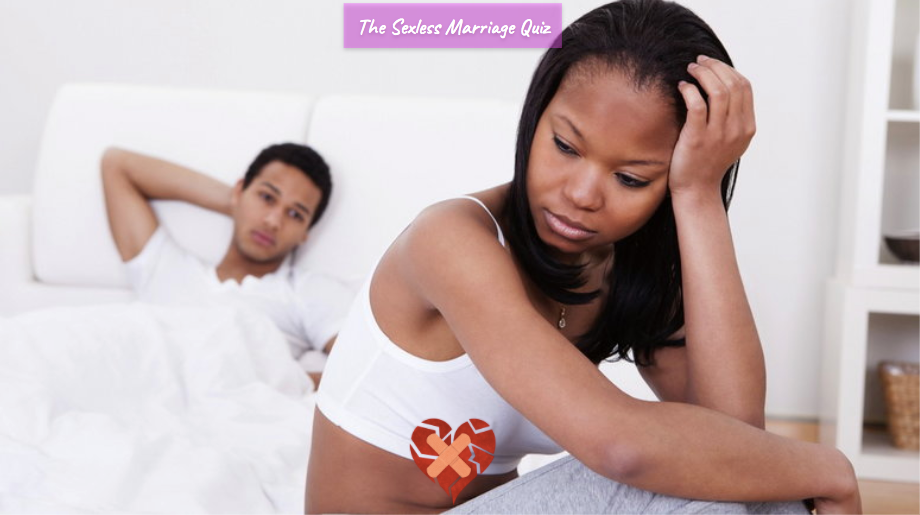
Sexless Marriage Quiz: Find Out What’s Really Happening

Take our free sexless marriage quiz and discover what’s driving intimacy loss and how to rebuild attraction and connection.

Question 1 of 15

If you’re here, chances are you’re looking for more than a label. You’re looking for clarity.

When physical intimacy fades, it’s easy to become trapped in confusion, resentment, self-doubt, or endless overthinking. One spouse may feel rejected. The other may feel pressured. Both can begin to feel lonely while living under the same roof.

The good news is that a lack of intimacy does not automatically mean your marriage is broken. In many cases, it signals deeper issues involving emotional connection, attraction, expectations, stress, pride, communication, or relationship dynamics that have been left unresolved.

That’s exactly why this 2-minute sexless marriage quiz was created. Instead of focusing solely on how often you’re having sex, it helps identify the underlying patterns that may be weakening attraction, creating emotional distance, and turning passionate partners into roommates.
Sexless Marriage Quiz

Here is a full article on The chances of survival in a sexless marriage

And Here is a free audio book on how we used attraction secrets to break the chains of sexless-ness in our marriage.

Sexless Marriage Quiz: Discover the Real Cause Behind the Intimacy Gap

What Is Considered a Sexless Marriage?

Most experts define a sexless marriage as a relationship where physical intimacy occurs fewer than 10 times per year. Others use a broader definition of less than once per month.

However, frequency alone doesn’t tell the whole story.

Some couples have sex infrequently but feel deeply connected, desired, and emotionally fulfilled. Other couples may have sex more often yet still feel disconnected and unsatisfied.

The real question isn’t simply:

“How often are we having sex?”

The more important question is:

“What is happening to the attraction, emotional connection, and relationship dynamic underneath the surface?”

That’s where this sexless marriage quiz becomes valuable.

Why Taking a Sexless Marriage Quiz Matters

Why Taking a Sexless Marriage Quiz Matters

When intimacy disappears, emotions usually become louder than reality.

You may find yourself:

  • Tracking every rejection
  • Overanalyzing your spouse’s behavior
  • Walking on eggshells
  • Starting arguments over unrelated issues
  • Feeling unwanted or unappreciated
  • Becoming emotionally withdrawn

The challenge is that emotional pain often clouds judgment.

Instead of identifying the real cause of the problem, couples begin treating symptoms. They focus on negotiating for more sex, demanding more affection, or assigning blame.

Unfortunately, attraction rarely grows through pressure.

Before you can solve the problem, you need an accurate diagnosis.

That’s why an objective assessment is often the best place to start.


The Hidden Truth About Most Sexless Marriages

Many people assume sexlessness is primarily a bedroom problem.

In reality, it is usually a relationship dynamic problem that eventually shows up in the bedroom.

Physical intimacy tends to decline when one or more of these four leverage points begin deteriorating:

1. Friendship

Strong marriages are built on genuine friendship.

When couples stop enjoying each other’s company, attraction often follows. Conversations become transactional. Fun disappears. The relationship becomes focused solely on responsibilities.

Over time, emotional distance creates physical distance.

2. Sex and Attraction

Desire thrives on emotional safety, mystery, polarity, confidence, and connection.

Many couples unknowingly replace attraction-building behaviors with attraction-killing behaviors such as neediness, criticism, pressure, resentment, or emotional reactivity.

The result is a cycle of pursuit and withdrawal.

3. Expectations

Unspoken expectations are one of the biggest relationship killers.

When one spouse constantly feels disappointed because reality doesn’t match their expectations, resentment begins accumulating.

Eventually, intimacy becomes emotionally expensive.

4. Pride and Ego

Many marriages suffer not because of a lack of love but because neither person wants to go first.

Pride prevents apologies.

And it prevents vulnerability.

Pride prevents reconnection.

When pride becomes more important than partnership, intimacy suffers.

Common Signs You May Be in a Sexless Marriage

Common Signs You May Be in a Sexless Marriage

The quiz is designed to identify patterns like these:

You Feel More Like Roommates Than Romantic Partners

Daily life revolves around logistics, children, work, bills, and responsibilities.

Romance feels like a distant memory.

Physical Touch Has Almost Disappeared

Hugs, kisses, cuddling, flirting, and affectionate gestures become rare.

The loss of non-sexual touch often precedes the loss of sexual intimacy.

Conversations About Intimacy Lead to Conflict

Instead of productive discussions, conversations quickly become arguments involving blame, criticism, or defensiveness.

One Partner Constantly Pursues While the Other Withdraws

This dynamic creates frustration for both spouses.

The pursuer feels rejected.

The withdrawer feels pressured.

Neither feels understood.

Resentment Is Growing

Resentment is one of the strongest attraction killers in long-term relationships.

When resentment grows, desire often shrinks.


Attraction Doesn’t Respond Well to Pressure

One of the biggest mistakes struggling couples make is trying to negotiate desire.

Unfortunately, attraction doesn’t work that way.

You cannot guilt someone into wanting you.

Neither can you argue someone into feeling chemistry.

And you cannot pressure someone into genuine desire.

Attraction responds more favorably to emotional intelligence, confidence, self-awareness, growth, leadership, and authentic connection.

That’s why the healthiest path forward often begins with self-leadership rather than control.

The 8 Attraction Killers That Often Create Intimacy Problems

The 8 Attraction Killers That Often Create Intimacy Problems

The quiz was designed around several patterns that frequently contribute to sexless marriages.

1. Neediness

Constantly seeking reassurance can unintentionally create pressure.

2. Emotional Reactivity

Being easily triggered creates emotional instability.

3. Moralizing

Treating your spouse like a student instead of a partner damages connection.

4. Lack of Patience

Demanding immediate change rarely produces lasting results.

5. Walking on Eggshells

Avoiding necessary conversations creates hidden resentment.

6. Excessive Criticism

People naturally move away from environments where they feel constantly judged.

7. Over-Pursuit

The harder one person chases, the more likely the other is to withdraw.

8. Poor Self-Leadership

When personal growth stops, attraction often declines as well.


The Emotional Needs That Influence Intimacy

Every person has core emotional needs that impact relationship satisfaction.

Some of the most important include:

Certainty

Feeling emotionally safe and secure.

Variety

Experiencing excitement, novelty, and spontaneity.

Significance

Feeling valued, appreciated, and respected.

Connection

Experiencing emotional closeness and belonging.

Growth

Seeing progress individually and together.

Contribution

Feeling useful and important within the relationship.

When multiple needs go unmet for extended periods, intimacy often suffers.

Can a Sexless Marriage Be Saved?

In many cases, yes.

The answer depends less on where the marriage is today and more on whether both spouses are willing to improve the relationship dynamic.

Many couples successfully rebuild intimacy by:

  • Improving communication
  • Reducing blame and criticism
  • Rebuilding friendship
  • Increasing emotional safety
  • Developing better emotional intelligence
  • Addressing unmet needs
  • Managing expectations realistically
  • Prioritizing personal growth

The first step is identifying where the breakdown is occurring.

That’s exactly what this sexless marriage quiz is designed to reveal.


What Your Quiz Results May Reveal

Mild Intimacy Drift

Your relationship may simply be experiencing a temporary dry season.

Small adjustments can often create significant improvements.

Moderate Attraction Loss

Emotional distance and resentment may be creating barriers to intimacy.

Intentional reconnection becomes important.

Roommate Syndrome

The relationship has likely become heavily focused on responsibilities while neglecting romance and attraction.

Rebuilding friendship and polarity becomes critical.

Severe Disconnection

Long-standing resentment, pride, emotional defensiveness, or unresolved issues may be preventing intimacy from recovering naturally.

A more structured recovery plan may be necessary.


The Most Important Shift You Can Make

The strongest marriages aren’t built by perfect people.

They’re built by people willing to take responsibility for what they can control.

You cannot control your spouse.

You can control:

  • Your attitude
  • Your growth
  • Your communication
  • Your emotional regulation
  • Your leadership
  • Your response to challenges

When both partners begin operating from that mindset, attraction often has room to return.


Take the Sexless Marriage Quiz Today

If intimacy has become rare, forced, or completely absent, don’t rely on assumptions.

Take the sexless marriage quiz and get a clearer picture of what is actually happening beneath the surface.

You may discover that the issue isn’t simply sex.

You may discover that the path back to intimacy begins with rebuilding attraction, emotional connection, friendship, and healthy relationship dynamics.

Awareness creates options.

And options create change.

Check this out: The Ultimate Marriage Quiz


Frequently Asked Questions

How unhealthy is a sexless marriage?

A sexless marriage is not automatically unhealthy, but it can become damaging when it creates loneliness, resentment, rejection, or emotional disconnection. The real concern is whether both partners feel connected, valued, and fulfilled despite the lack of intimacy.

What is the rule for success with intimacy in marriage?

There is no single rule, but consistent emotional connection combined with intentional effort is one of the strongest predictors of long-term intimacy. Successful couples protect friendship, communicate honestly, and prioritize attraction rather than assuming it will maintain itself.

What is the #1 thing that destroys marriages?

Mismanaged expectations and pride are among the most destructive forces in marriage because they fuel blame, resentment, and emotional distance. When partners become more committed to being right than staying connected, intimacy and trust often decline.

How long can marriage survive without intimacy?

A marriage can survive for years without sex, but survival is different from thriving. The longer emotional and physical intimacy remain neglected, the greater the risk of resentment, disconnection, and relationship dissatisfaction.


What Does Emotional Neglect Do to a Wife? The Silent Killer of Marriage

Emotional neglect is one of the most destructive forces a marriage can face because it rarely announces itself with drama.

There are no explosive arguments, public betrayals, or obvious scandals. Instead, it works in silence.

what does emotional neglect do to a wife

If you’re wondering what does emotional neglect do to a wife, the answer is simple but devastating: it slowly convinces her that she is alone, even while sitting next to the person she married.

This invisible wound is often an act of omission.

It’s not necessarily about what a husband does wrong but often about what never happens at all.

It’s the conversation that never takes place.

The comfort that is never offered.

The curiosity that never shows up.

The emotional connection that slowly fades until the relationship becomes little more than a shared address.

And because emotional neglect often isn’t intentional, many husbands don’t recognize the danger until the damage is already severe.

what does emotional neglect do to a wife - The Silent Sniper That Destroys Marriages

The Silent Sniper That Destroys Marriages

Think of emotional neglect as a slow sniper.

It doesn’t attack all at once.

It takes aim quietly and patiently.

Month after month, year after year, it chips away at trust, intimacy, attraction, and emotional safety.

Many husbands believe their marriage is secure because they are good people.

They don’t cheat.

No yelling.

They don’t gamble.

They provide financially and stay faithful.

Those things matter.

But being a decent man is not the same as being emotionally connected.

A marriage can still suffer when a wife consistently feels unseen, unheard, or emotionally alone.

The danger is that emotional neglect creates a crack in the wall of the relationship.

Once that crack appears, resentment, disappointment, loneliness, and detachment find their way in.

Over time, those forces begin devouring the foundation of the marriage from the inside out.

What Is Emotional Neglect in a Marriage?

Emotional neglect occurs when one spouse consistently fails to acknowledge, validate, or respond to the emotional needs of the other.

This doesn’t always involve cruelty.

In fact, emotional neglect often happens between two good people.

Common examples include:

  • Ignoring emotional concerns
  • Dismissing feelings as “overreacting”
  • Rarely asking meaningful questions
  • Offering solutions instead of empathy
  • Avoiding vulnerable conversations
  • Failing to provide comfort during difficult times
  • Being physically present but emotionally unavailable

A wife may not necessarily need her husband to fix every problem.

What she often wants is to feel understood.

When understanding is absent long enough, the relationship begins to suffer.

what does emotional neglect do to a wife - What Does Emotional Neglect Do to a Wife?

What Does Emotional Neglect Do to a Wife?

The effects extend far beyond temporary frustration.

Emotional neglect impacts a wife’s identity, emotional well-being, physical health, and even her attraction toward her husband.

1. It Erodes Her Self-Worth

One of the most painful consequences of emotional neglect is the gradual erosion of self-esteem.

When a wife’s emotions are repeatedly ignored, minimized, or dismissed, she begins questioning her own reality.

She may start telling herself:

  • “Maybe I’m asking for too much.”
  • “Maybe my feelings don’t matter.”
  • “Maybe I’m the problem.”

Over time, her inner dialogue becomes increasingly negative.

Instead of feeling valued, she feels like a burden.

Instead of feeling cherished, she feels tolerated.

No marriage thrives when one partner feels emotionally insignificant.

2. It Creates Profound Loneliness

Many neglected wives describe a unique kind of loneliness.

It’s not the loneliness of being physically alone.

It’s the loneliness of being emotionally abandoned while sharing life with someone.

This is why many women say they feel “lonelier married than single.

Human beings are biologically wired for emotional attachment.

When a spouse becomes unavailable emotionally, the nervous system interprets that absence as a threat.

The result is chronic emotional distress that can become overwhelming over time.

3. It Triggers Stress and Physical Symptoms

Emotional neglect isn’t just psychological.

It affects the body as well.

A wife’s nervous system seeks safety, connection, and reassurance from her primary attachment figure.

When those needs remain unmet, the body can stay stuck in a prolonged state of stress.

Common symptoms include:

  • Insomnia
  • Chronic fatigue
  • Anxiety
  • Digestive issues
  • Increased irritability
  • Difficulty concentrating
  • Frequent feelings of overwhelm

What appears to be “stress” on the surface may actually be the body’s response to prolonged emotional disconnection.

4. It Forces Her Into Emotional Burnout

Many wives become the sole caretakers of the relationship’s emotional health.

They initiate conversations.

Date nights.

They bring up concerns.

And they attempt to reconnect.

They try to keep intimacy alive.

When these efforts aren’t reciprocated, emotional exhaustion follows.

A wife should not have to beg for empathy.

Nor should she carry the entire responsibility for maintaining connection.

Eventually, the constant emotional labor becomes unsustainable.

Burnout takes over.

5. It Damages Attraction

Attraction is often misunderstood.

Many people assume attraction is purely physical.

In long-term marriage, emotional connection plays a massive role in sustaining desire.

When a wife consistently feels emotionally neglected, attraction often declines naturally.

Why?

Because emotional safety fuels intimacy.

Being understood creates closeness.

Feeling cherished creates desire.

Feeling ignored creates distance.

The strongest marriages understand that emotional connection isn’t separate from attractionโ€”it is one of attraction’s primary engines.

Check out this video…

The Walkaway Wife Syndrome

One of the most misunderstood consequences of emotional neglect is what many experts call the “walkaway wife syndrome.

For years, a wife communicates her needs.

She asks for more connection.

And she raises concerns.

She also expresses hurt.

She attempts to repair.

Then one day she stops.

To many husbands, this feels like improvement.

The complaints disappear.

The arguments decrease.

Things seem calmer.

In reality, something far more dangerous may be happening.

She’s no longer fighting for the relationship.

She’s emotionally detached.

Internally, she may have reached a private point of no return.

By the time she physically leaves, she emotionally left months or even years earlier.

Why Emotional Neglect Often Goes Unnoticed

Unlike obvious forms of relationship dysfunction, emotional neglect hides in plain sight.

There is often no villain.

No dramatic incident.

No single moment to point toward.

That’s why awareness matters.

Many husbands unintentionally neglect their wives because they assume the absence of bad behavior automatically equals the presence of a healthy relationship.

It doesn’t.

A marriage requires more than avoiding harm.

It requires actively creating connection.

How to Rebuild Connection Before It’s Too Late

The good news is that emotional neglect can be reversed.

The key is intentional emotional leadership.

Become Curious Again

Ask meaningful questions.

Don’t settle for “How was your day?

Ask:

  • What’s been weighing on you lately?
  • What have you been excited about recently?
  • How are you feeling about us?

Curiosity creates connection.

Validate Before Solving

Many husbands rush to solutions.

Most wives first want understanding.

Try:

“I can see why that hurt.”

“That makes sense.”

“Tell me more.”

Validation builds emotional safety.

Create Consistent Emotional Check-Ins

Don’t wait for problems.

Regularly discuss:

  • Emotional connection
  • Relationship satisfaction
  • Stress levels
  • Intimacy
  • Attraction

Proactive conversations prevent silent drift.

Prioritize Emotional Presence

Sometimes the most attractive thing a husband can offer is his full attention.

Put away distractions.

Listen actively and deeply.

Respond thoughtfully.

Presence communicates value.

Stay Sensitive to Connection Levels

The healthiest husbands don’t assume everything is fine.

They remain aware of emotional distance before it becomes emotional abandonment.

And they check in.

They notice changes.

And they act early.

This awareness protects the relationship from becoming vulnerable to resentment and detachment.

what does emotional neglect do to a wife - Stay Sensitive to Connection Levels

So, what does emotional neglect do to a wife?

It slowly strips away her emotional safety.

And damages self-worth.

It creates profound loneliness.

And fuels stress and burnout.

Also, it weakens attraction.

And if left unchecked, it can quietly push a marriage toward permanent disconnection.

The tragedy is that emotional neglect is often unintentional.

The opportunity is that it is also preventable.

A thriving marriage isn’t built solely by avoiding major mistakes.

It’s built through consistent emotional attunement, genuine curiosity, and a commitment to helping your wife feel seen, heard, desired, and deeply valued.

The husbands who master those skills don’t simply preserve their marriages.

They create relationships where connection and attraction continue to grow year after year.

Check this out: 5 Subtle Signs Your Separated Wife Wants to Reconcile

Frequently Asked Questions

What does emotional neglect do to a woman?

Chronic emotional neglect can damage a woman’s self-esteem, emotional security, and overall well-being. Over time, she may feel invisible, unimportant, isolated, and emotionally disconnected from her partner.

What is considered emotional neglect in a marriage?

Emotional neglect is the consistent failure to acknowledge, validate, or respond to a spouse’s emotional needs and bids for connection. It often appears as emotional unavailability, dismissiveness, or lack of engagement.

Can a marriage recover from emotional neglect?

Yes. Many marriages recover when both spouses eventually recognize the problem and intentionally rebuild emotional connection through empathy, communication, validation, and consistent emotional presence. The cycle can be broken by just one partner. Don’t wait.

Is emotional neglect a form of abuse?

While emotional neglect differs from active emotional abuse, it can still cause serious emotional harm. Long-term neglect often leaves deep psychological wounds and can significantly impact relationship satisfaction.

What are examples of emotional neglect in marriage?

Examples include ignoring emotional concerns, failing to provide comfort, avoiding meaningful conversations, dismissing feelings, showing little curiosity about a spouse’s inner world, and consistently prioritizing other things over connection.

What is the #1 thing that destroys marriages?

While many factors contribute to divorce, the gradual erosion of emotional connection is one of the most common. When connection disappears, resentment, indifference, and emotional distance often take its place.

How does emotional neglect affect attraction?

Emotional neglect reduces emotional safety and intimacy, both of which are critical ingredients for lasting attraction. When a wife feels unseen or unheard, emotional and physical closeness often decline together.

35 Habits That Destroy Marriages and Quietly Kill Attraction

Most marriages do not end because of one catastrophic event.

They die slowly.

Not from a single affair. Definitely not from one explosive argument. Not from one bad year.

Instead, they deteriorate through repeated daily habits that gradually destroy emotional safety, sexual attraction, trust, friendship, and respect.

This is why many couples wake up one day feeling like roommates instead of lovers.

The connection did not disappear overnight. It was eroded by hundreds of small moments where contempt replaced admiration, pride replaced partnership, and emotional neglect replaced intentional connection.

If you want to prevent a communication breakdown, avoid a sexless marriage, and maintain attraction over the long term, you must identify the habits that destroy marriages before they become your normal.

habits that destroy marriages

Why Attraction Dies Before Marriage Ends

Many people think marriage survives primarily on love.

In reality, long-term marriages survive on three critical pillars:

1. Friendship

A healthy marriage requires genuine companionship, teamwork, and emotional safety.

2. Intimacy

Sexual connection is not merely physical. It is a powerful barometer of emotional closeness, trust, and attraction.

3. Expectations & Pride Management

Most marital conflicts ultimately come back to two issues:

  • Mismanaged expectations
  • Mismanaged pride

When these are left unchecked, resentment begins accumulating underneath the surface.

Eventually, attraction follows resentment out the door.

The Hidden Truth About Marital Collapse

One of the biggest mistakes couples make is viewing their spouse as the villain.

In most cases, your partner is not evil.

They are simply operating from unconscious habits, emotional wounds, pride, fear, unmet needs, or poor relationship skills.

The goal is not blame.

The goal is awareness.

Because awareness creates leverage.

And leverage creates change.

The 35 Habits That Destroy Marriages

The 35 Habits That Destroy Marriages

Category 1: Verbal & Psychological Attacks

These habits poison emotional safety and create lasting emotional scars.

1. Blaming Your Spouse

Making your partner the cause of every problem instead of taking ownership of your role.

2. Shaming Your Spouse

Attacking who they are rather than addressing what they did.

3. Insulting Your Spouse

Name-calling and personal attacks destroy respect.

4. Judging Harshly

Viewing your partner through a constant lens of criticism.

5. Guilt-Tripping Your Spouse

Using emotional manipulation to gain compliance.

6. Using Sarcasm as Punishment

Disguising hostility as humor.

7. Talking Down to Them

Treating your spouse like a child rather than a respected partner.


Category 2: Pride, Defensiveness & Ego

Pride is one of the fastest ways to destroy attraction.

Nobody feels emotionally connected to someone who constantly needs to be right.

8. Always Needing to Win

Treating disagreements as competitions.

9. Ignoring Their Feelings

Dismissing emotional experiences because they seem irrational.

10. Assuming Bad Intentions

Believing your spouse is trying to hurt, disrespect, or inconvenience you.

11. Mismanaging Expectations

Expecting mind-reading instead of communicating clearly.

12. Letting Pride Lead

Prioritizing ego over connection.

13. Refusing to Apologize

Protecting your image rather than repairing the relationship.

14. Rejecting Feedback

Becoming defensive whenever concerns are raised.

15. Avoiding Ownership

Immediately pointing out your spouse’s faults whenever yours are mentioned.

Conflict Escalation Habits - habits that destroy marriages

Category 3: Conflict Escalation Habits

Conflict itself does not destroy marriages.

Poor conflict management does.

16. Avoiding Hard Conversations

Delaying necessary discussions until resentment builds.

17. Overreacting Emotionally

Allowing emotions to dictate behavior.

18. Escalating Conflict

Turning minor disagreements into major battles.

19. Creating Unnecessary Drama

Adding emotional chaos where none is required.

20. Holding Grudges

Keeping score instead of healing.

21. Refusing Forgiveness

Punishing your spouse indefinitely for past mistakes.

22. Communicating Destructively

Yelling, stonewalling, contempt, and emotional withdrawal.


Category 4: Emotional & Sexual Neglect

Many marriages do not collapse because of conflict.

They collapse because of neglect.

Attraction requires ongoing investment.

23. Withholding Affection

Using emotional or physical distance as punishment.

24. Withholding Appreciation

Failing to acknowledge your spouse’s contributions.

25. Neglecting Intimacy

Allowing sexual connection to disappear without addressing it.

26. Neglecting Companionship

Stopping the friendship portion of marriage.

27. Neglecting Emotional Needs

Ignoring your spouse’s internal world.

28. Avoiding Vulnerability

Never allowing your spouse to truly know you.

habits that destroy marriages

Category 5: Trust & Partnership Erosion

Trust is built through consistency.

It is destroyed through repeated violations.

29. Controlling Your Spouse

Attempting to dominate their choices, relationships, or independence.

30. Disrespecting Boundaries

Ignoring clearly communicated limits.

31. Neglecting Responsibilities

Leaving your spouse carrying the relationship alone.

32. Taking Without Giving

Receiving support without reciprocating effort.

33. Breaking Commitments

Failing to follow through on promises.

34. Undermining Trust

Engaging in secrecy, deception, or hidden behaviors.

35. Prioritizing Ego

Protecting your pride instead of protecting the marriage. Check this video out.


Why These Habits Also Kill Attraction

Many people separate relationship health from attraction.

That is a mistake.

Attraction thrives when these emotional needs are consistently met:

  • Certainty
  • Variety
  • Significance
  • Connection
  • Growth
  • Contribution

When destructive habits dominate the relationship:

  • Certainty becomes anxiety.
  • Connection becomes distance.
  • Significance becomes criticism.
  • Growth becomes stagnation.
  • Contribution becomes resentment.

The result?

Less admiration.

And less desire.

Less respect.

Definitely… less intimacy.

Eventually, less attraction.

This is why attraction is not merely about appearance.

Attraction is heavily influenced by emotional intelligence, self-leadership, emotional safety, confidence, respect, and partnership.


How Emotionally Intelligent Couples Protect Their Marriage

Healthy couples intentionally practice the opposite habits.

They:

  • Take ownership quickly.
  • Apologize sincerely.
  • Communicate directly.
  • Manage expectations clearly.
  • Express appreciation regularly.
  • Prioritize friendship.
  • Protect intimacy.
  • Extend grace.
  • Give constructive feedback.
  • Repair conflicts quickly.
  • Choose partnership over pride.

Most importantly, they understand that attraction is maintained, not assumed.

They continue dating each other long after the wedding day.


Break the Cycle Before It Becomes Permanent

Recognizing the habits that destroy marriages is the first step.

Eliminating them is where transformation begins.

A healthy marriage is not built by avoiding divorce.

It is built by intentionally creating respect, attraction, emotional safety, companionship, intimacy, and trust every single day.

The couples who thrive are not the couples who never make mistakes.

They are the couples who consistently repair them.

Check this out: Behaviors That Cause Divorces: 10 Marriage Killers to Avoid

Frequently Asked Questions

What is the #1 thing that destroys marriages?

Contempt is the strongest predictor of divorce because it destroys respect, emotional safety, and attraction.

What are the four habits that destroy marriages?

Criticism, defensiveness, contempt, and stonewalling are the four habits most associated with marital breakdown.

What are the four behaviors that cause 90% of all divorces?

Criticism, defensiveness, contempt, and stonewalling are the four behaviors most strongly linked to divorce.

What are the 4 dark horsemen of marriage?

The four dark horsemen are criticism, defensiveness, contempt, and stonewalling.

Can a marriage survive years of destructive habits?

Yes, if both spouses consistently replace destructive patterns with accountability, respect, and healthy communication.

How do you break toxic habits in a marriage?

Break toxic habits by identifying the pattern, taking ownership, and repeatedly practicing a healthier response.

Behaviors That Cause Divorces: 10 Marriage Killers Most Couples Ignore

Most divorces do not happen because of one dramatic event.

They usually happen because of repeated behaviors that slowly damage trust, respect, friendship, attraction, and emotional connection.

behaviors that cause divorces

A marriage may survive one bad argument.

It may survive a hard season.

It may even survive a serious mistake if both people are willing to repair the damage.

But when small harmful habits keep happening over and over, the relationship begins to weaken.

A little sarcasm becomes normal.

A little blame becomes a pattern.

A little emotional distance becomes a lifestyle.

A little pride keeps two people from saying:

“I was wrong.”

“I miss you.”

“Let’s fix this.”

That is how many marriages begin to break down.

The good news is that many of the same behaviors that cause divorces can be replaced with better habits.

Couples can learn how to communicate with more care, repair conflict faster, rebuild attraction, and meet each other’s emotional needs with more skill.

If you want a marriage that feels safe, passionate, respectful, and alive, you must understand the main causes of divorce before they become too big to ignore.

understanding behaviors that cause divorces

Why Understanding Behaviors That Cause Divorces Matters

Many people think divorce starts with infidelity, money problems, addiction, or constant fighting.

Those issues are serious, but they are often the final result of deeper problems that were ignored for too long.

Before many affairs, there was emotional distance.

Before many money fights, there were hidden expectations.

Before many explosive arguments, there were years of resentment.

Before one person finally leaves, they may have spent a long time feeling unseen, unheard, undesired, or unimportant.

This is why it is not enough to ask, “What ended the marriage?”

A better question is:

“What slowly weakened the marriage?”

Most strong marriages are not strong because the couple never has problems.

They are strong because both people learn how to deal with problems without destroying the bond.

They know how to repair after conflict.

They know how to stay friends.

They know how to protect trust.

They know how to keep attraction alive instead of assuming love will carry everything by itself.

Marriage needs love.

But love alone is not enough.

A healthy marriage also needs respect, patience, self-control, honesty, friendship, affection, shared purpose, and emotional intelligence.

When these things are missing for too long, even two people who once loved each other deeply can begin to feel like strangers.

Most Divorces Begin Long Before the Divorce

When people talk about the top causes of divorce, they often mention lack of commitment, infidelity, money problems, poor communication, and constant conflict.

These are real problems.

But they usually do not appear out of nowhere.

Most divorces begin with slow emotional erosion.

One spouse stops feeling appreciated.

The other stops feeling respected.

One stops feeling desired.

The other stops feeling understood.

One person wants peace.

The other wants passion.

One wants support.

The other wants space.

Over time, both people may begin to protect themselves instead of protecting the marriage.

This is where pride and expectations become dangerous.

Pride says:

“I should not have to change.”

Expectations say:

“You should already know what I need.”

Pride refuses to apologize.

Expectations create disappointment when they are never spoken clearly.

Together, they turn normal marriage stress into emotional distance.

In many struggling marriages, the real enemy is not the husband or the wife.

The real enemy is the pattern the couple keeps repeating.

A healthy marriage requires both people to ask a brave question:

“What am I doing that is making this harder?”

That question is not about blame.

It is about power.

When you focus only on what your spouse is doing wrong, you feel stuck.

When you focus on what you can change, you get your power back.

top 10 behaviors that cause divorces

The Top 10 Behaviors That Cause Divorces

1. Contempt: The Most Dangerous Behavior in Marriage

Contempt is one of the most harmful behaviors that cause divorces because it attacks the dignity of the other person.

It is more than being upset.

It is more than disagreeing.

Contempt carries a message of disgust, superiority, or disrespect.

It can show up through eye-rolling, mocking, sarcasm, name-calling, belittling, or talking to your spouse like they are beneath you.

Sometimes contempt is loud.

Other times, it is quiet but still painful.

A cold look, a cruel joke, or a dismissive tone can say:

“I do not respect you anymore.”

Respect is one of the roots of attraction.

It is hard to desire someone you secretly look down on.

It is also hard to feel emotionally safe with someone who makes you feel small.

Once contempt becomes normal, the marriage becomes emotionally unsafe.

Both people may start defending themselves instead of opening up.

The home becomes a courtroom instead of a safe place.

The better path is to practice admiration on purpose.

This does not mean pretending problems do not exist.

It means refusing to reduce your spouse to their worst habit or weakest moment.

Instead of saying:

“You are useless.”

Say:

“I feel unsupported, and I need us to work on this.”

Instead of attacking their character, speak to the issue.

Respect does not mean avoiding hard truth.

It means telling the truth without trying to destroy the person.

2. Constant Criticism Instead of Constructive Feedback

Every marriage needs honest feedback.

No one can grow if nothing can ever be discussed.

The problem begins when feedback becomes constant criticism.

Criticism attacks identity.

It says:

“You are selfish.”

“You are lazy.”

“You never do anything right.”

“You are impossible to live with.”

Over time, the criticized partner stops hearing the issue and only hears rejection.

People do not usually become better when they feel attacked.

They become defensive, quiet, angry, or distant.

Even if the criticism has some truth in it, the delivery can make repair almost impossible.

Healthy communication focuses on behavior, not identity.

There is a big difference between:

“You never care about me.”

and

“I felt hurt when you did not check on me yesterday.”

One attacks the whole person.

The other explains the pain and opens the door for repair.

In strong marriages, correction is mixed with warmth.

A spouse should not only hear what they are doing wrong.

They should also hear what they are doing right.

If every conversation feels like a performance review, attraction will suffer.

Nobody wants to feel like they are married to a judge.

3. Defensiveness and Refusing Accountability

Defensiveness is one of the most common reasons for divorce because it blocks growth.

When a person becomes defensive, they are no longer listening to understand.

They are listening to escape blame.

Defensiveness sounds like:

“Well, you do it too.”

“It is not my fault.”

“You are too sensitive.”

“I would not act this way if you did not make me.”

Sometimes it even sounds logical.

But the deeper message is:

“I do not want to take responsibility.”

A marriage cannot heal if both people are always defending themselves.

Someone has to become mature enough to pause, listen, and own their part.

This does not mean taking blame for everything.

It means having the strength to say:

“I can see how that hurt you.”

or

“I could have handled that better.”

Those words can soften conflict quickly because they show humility.

Many couples stay stuck because both people are waiting for the other person to go first.

But leadership in marriage often begins when one person decides to rise above pride and create a better pattern.

The person who takes ownership is not weak.

They are often the strongest person in the room.

4. Stonewalling and Emotional Withdrawal

Stonewalling happens when one spouse shuts down, avoids the conversation, gives the silent treatment, or refuses to engage emotionally.

Sometimes it happens because the person feels overwhelmed.

Other times, it becomes a way to punish or control.

Either way, emotional withdrawal can be deeply painful.

A marriage cannot stay close when important conversations are constantly avoided.

Over time, the other spouse may stop trying.

They may decide it is safer to be quiet than to keep reaching for someone who will not respond.

This is how loneliness can grow inside a marriage.

The couple may still live in the same home.

They may still handle bills, children, chores, and family events.

But emotionally, they begin living separate lives.

The healthier approach is not to force a conversation when emotions are too high.

Sometimes a break is wise.

But the key is to return.

Saying:

“I need 30 minutes to calm down, but I will come back so we can talk.”

is very different from disappearing emotionally.

Emotional availability builds trust.

When your spouse knows you will not abandon the conversation forever, it becomes easier to feel safe, even during conflict.

taken for granted - behaviors that cause divorces

5. Taking Your Spouse for Granted

One of the most overlooked behaviors that cause divorces is neglect.

Not dramatic betrayal.

Not explosive fighting.

Just the slow habit of assuming your spouse will always be there, no matter how little attention, affection, or appreciation they receive.

In the beginning of most relationships, people notice the little things.

They say thank you.

They compliment each other.

They make an effort.

They listen more closely.

They want to impress each other.

But over time, many couples stop doing the things that helped create the relationship.

A husband who once thanked his wife for her support may begin to treat it as expected.

A wife who once admired her husband’s effort may begin to focus only on what he is not doing.

Neither person may mean harm.

But both slowly stop feeding the bond.

People want to feel important.

They want to feel chosen.

They want to feel like their effort matters.

When appreciation disappears, resentment often grows.

The solution is simple.

But it requires consistency.

Notice what your spouse does right.

Say thank you.

Give sincere compliments.

Show affection without being asked.

Do not wait until your spouse feels invisible before reminding them they matter.

Check this out: When Can You Tell a Marriage Is Over? [5 Signs]

Frequently Asked Questions

What are the behaviors that cause divorce?

The most common behaviors that cause divorce are contempt, criticism, defensiveness, emotional withdrawal, dishonesty, neglect, blame, unresolved conflict, and loss of attraction.

What are the top causes of divorce?

The top causes of divorce are lack of commitment, infidelity, constant conflict, poor communication, emotional disconnection, unmet expectations, and financial stress.

What is the #1 thing that destroys marriages?

The #1 thing that destroys marriages is ongoing disrespect because it weakens trust, safety, attraction, friendship, and emotional connection.

What are the marriage killers?

Marriage killers include contempt, criticism, blame, sarcasm, defensiveness, pride, dishonesty, emotional neglect, lack of intimacy, and unresolved resentment.

What are the signs of a toxic relationship?

Signs of a toxic relationship include constant disrespect, manipulation, control, emotional abuse, gaslighting, fear, blame, dishonesty, and a lack of emotional safety.

At what point is a marriage not salvageable?

A marriage becomes difficult to salvage when one or both partners refuse accountability, repair, honesty, safety, change, or any real investment in rebuilding the relationship.

What is the misery stage of marriage?

The misery stage of marriage is a painful season where resentment, emotional distance, disappointment, and hopelessness feel stronger than love, friendship, affection, and connection.


Broken Marriage?
Fix it
Here FREE

Get My Marriage Back