
Broken Marriage?
Fix it
Here FREE

Get My Marriage Back


Sexless Marriage Quiz: Find Out What’s Really Happening

Take our free sexless marriage quiz and discover what’s driving intimacy loss and how to rebuild attraction and connection.

Question 1 of 15

If you’re here, chances are you’re looking for more than a label. You’re looking for clarity.

When physical intimacy fades, it’s easy to become trapped in confusion, resentment, self-doubt, or endless overthinking. One spouse may feel rejected. The other may feel pressured. Both can begin to feel lonely while living under the same roof.

The good news is that a lack of intimacy does not automatically mean your marriage is broken. In many cases, it signals deeper issues involving emotional connection, attraction, expectations, stress, pride, communication, or relationship dynamics that have been left unresolved.

That’s exactly why this 2-minute sexless marriage quiz was created. Instead of focusing solely on how often you’re having sex, it helps identify the underlying patterns that may be weakening attraction, creating emotional distance, and turning passionate partners into roommates.

Sexless Marriage Quiz

Here is a full article on The chances of survival in a sexless marriage

And Here is a free audio book on how we used attraction secrets to break the chains of sexless-ness in our marriage.

Sexless Marriage Quiz: Discover the Real Cause Behind the Intimacy Gap

What Is Considered a Sexless Marriage?

Most experts define a sexless marriage as a relationship where physical intimacy occurs fewer than 10 times per year. Others use a broader definition of less than once per month.

However, frequency alone doesn’t tell the whole story.

Some couples have sex infrequently but feel deeply connected, desired, and emotionally fulfilled. Other couples may have sex more often yet still feel disconnected and unsatisfied.

The real question isn’t simply:

“How often are we having sex?”

The more important question is:

“What is happening to the attraction, emotional connection, and relationship dynamic underneath the surface?”

That’s where this sexless marriage quiz becomes valuable.

Why Taking a Sexless Marriage Quiz Matters

Why Taking a Sexless Marriage Quiz Matters

When intimacy disappears, emotions usually become louder than reality.

You may find yourself:

  • Tracking every rejection
  • Overanalyzing your spouse’s behavior
  • Walking on eggshells
  • Starting arguments over unrelated issues
  • Feeling unwanted or unappreciated
  • Becoming emotionally withdrawn

The challenge is that emotional pain often clouds judgment.

Instead of identifying the real cause of the problem, couples begin treating symptoms. They focus on negotiating for more sex, demanding more affection, or assigning blame.

Unfortunately, attraction rarely grows through pressure.

Before you can solve the problem, you need an accurate diagnosis.

That’s why an objective assessment is often the best place to start.


The Hidden Truth About Most Sexless Marriages

Many people assume sexlessness is primarily a bedroom problem.

In reality, it is usually a relationship dynamic problem that eventually shows up in the bedroom.

Physical intimacy tends to decline when one or more of these four leverage points begin deteriorating:

1. Friendship

Strong marriages are built on genuine friendship.

When couples stop enjoying each other’s company, attraction often follows. Conversations become transactional. Fun disappears. The relationship becomes focused solely on responsibilities.

Over time, emotional distance creates physical distance.

2. Sex and Attraction

Desire thrives on emotional safety, mystery, polarity, confidence, and connection.

Many couples unknowingly replace attraction-building behaviors with attraction-killing behaviors such as neediness, criticism, pressure, resentment, or emotional reactivity.

The result is a cycle of pursuit and withdrawal.

3. Expectations

Unspoken expectations are one of the biggest relationship killers.

When one spouse constantly feels disappointed because reality doesn’t match their expectations, resentment begins accumulating.

Eventually, intimacy becomes emotionally expensive.

4. Pride and Ego

Many marriages suffer not because of a lack of love but because neither person wants to go first.

Pride prevents apologies.

And it prevents vulnerability.

Pride prevents reconnection.

When pride becomes more important than partnership, intimacy suffers.

Common Signs You May Be in a Sexless Marriage

Common Signs You May Be in a Sexless Marriage

The quiz is designed to identify patterns like these:

You Feel More Like Roommates Than Romantic Partners

Daily life revolves around logistics, children, work, bills, and responsibilities.

Romance feels like a distant memory.

Physical Touch Has Almost Disappeared

Hugs, kisses, cuddling, flirting, and affectionate gestures become rare.

The loss of non-sexual touch often precedes the loss of sexual intimacy.

Conversations About Intimacy Lead to Conflict

Instead of productive discussions, conversations quickly become arguments involving blame, criticism, or defensiveness.

One Partner Constantly Pursues While the Other Withdraws

This dynamic creates frustration for both spouses.

The pursuer feels rejected.

The withdrawer feels pressured.

Neither feels understood.

Resentment Is Growing

Resentment is one of the strongest attraction killers in long-term relationships.

When resentment grows, desire often shrinks.


Attraction Doesn’t Respond Well to Pressure

One of the biggest mistakes struggling couples make is trying to negotiate desire.

Unfortunately, attraction doesn’t work that way.

You cannot guilt someone into wanting you.

Neither can you argue someone into feeling chemistry.

And you cannot pressure someone into genuine desire.

Attraction responds more favorably to emotional intelligence, confidence, self-awareness, growth, leadership, and authentic connection.

That’s why the healthiest path forward often begins with self-leadership rather than control.

The 8 Attraction Killers That Often Create Intimacy Problems

The 8 Attraction Killers That Often Create Intimacy Problems

The quiz was designed around several patterns that frequently contribute to sexless marriages.

1. Neediness

Constantly seeking reassurance can unintentionally create pressure.

2. Emotional Reactivity

Being easily triggered creates emotional instability.

3. Moralizing

Treating your spouse like a student instead of a partner damages connection.

4. Lack of Patience

Demanding immediate change rarely produces lasting results.

5. Walking on Eggshells

Avoiding necessary conversations creates hidden resentment.

6. Excessive Criticism

People naturally move away from environments where they feel constantly judged.

7. Over-Pursuit

The harder one person chases, the more likely the other is to withdraw.

8. Poor Self-Leadership

When personal growth stops, attraction often declines as well.


The Emotional Needs That Influence Intimacy

Every person has core emotional needs that impact relationship satisfaction.

Some of the most important include:

Certainty

Feeling emotionally safe and secure.

Variety

Experiencing excitement, novelty, and spontaneity.

Significance

Feeling valued, appreciated, and respected.

Connection

Experiencing emotional closeness and belonging.

Growth

Seeing progress individually and together.

Contribution

Feeling useful and important within the relationship.

When multiple needs go unmet for extended periods, intimacy often suffers.

Can a Sexless Marriage Be Saved?

In many cases, yes.

The answer depends less on where the marriage is today and more on whether both spouses are willing to improve the relationship dynamic.

Many couples successfully rebuild intimacy by:

  • Improving communication
  • Reducing blame and criticism
  • Rebuilding friendship
  • Increasing emotional safety
  • Developing better emotional intelligence
  • Addressing unmet needs
  • Managing expectations realistically
  • Prioritizing personal growth

The first step is identifying where the breakdown is occurring.

That’s exactly what this sexless marriage quiz is designed to reveal.


What Your Quiz Results May Reveal

Mild Intimacy Drift

Your relationship may simply be experiencing a temporary dry season.

Small adjustments can often create significant improvements.

Moderate Attraction Loss

Emotional distance and resentment may be creating barriers to intimacy.

Intentional reconnection becomes important.

Roommate Syndrome

The relationship has likely become heavily focused on responsibilities while neglecting romance and attraction.

Rebuilding friendship and polarity becomes critical.

Severe Disconnection

Long-standing resentment, pride, emotional defensiveness, or unresolved issues may be preventing intimacy from recovering naturally.

A more structured recovery plan may be necessary.


The Most Important Shift You Can Make

The strongest marriages aren’t built by perfect people.

They’re built by people willing to take responsibility for what they can control.

You cannot control your spouse.

You can control:

  • Your attitude
  • Your growth
  • Your communication
  • Your emotional regulation
  • Your leadership
  • Your response to challenges

When both partners begin operating from that mindset, attraction often has room to return.


Take the Sexless Marriage Quiz Today

If intimacy has become rare, forced, or completely absent, don’t rely on assumptions.

Take the sexless marriage quiz and get a clearer picture of what is actually happening beneath the surface.

You may discover that the issue isn’t simply sex.

You may discover that the path back to intimacy begins with rebuilding attraction, emotional connection, friendship, and healthy relationship dynamics.

Awareness creates options.

And options create change.

Check this out: The Ultimate Marriage Quiz


Frequently Asked Questions

How unhealthy is a sexless marriage?

A sexless marriage is not automatically unhealthy, but it can become damaging when it creates loneliness, resentment, rejection, or emotional disconnection. The real concern is whether both partners feel connected, valued, and fulfilled despite the lack of intimacy.

What is the rule for success with intimacy in marriage?

There is no single rule, but consistent emotional connection combined with intentional effort is one of the strongest predictors of long-term intimacy. Successful couples protect friendship, communicate honestly, and prioritize attraction rather than assuming it will maintain itself.

What is the #1 thing that destroys marriages?

Mismanaged expectations and pride are among the most destructive forces in marriage because they fuel blame, resentment, and emotional distance. When partners become more committed to being right than staying connected, intimacy and trust often decline.

How long can marriage survive without intimacy?

A marriage can survive for years without sex, but survival is different from thriving. The longer emotional and physical intimacy remain neglected, the greater the risk of resentment, disconnection, and relationship dissatisfaction.

Your Husband Doesn’t Listen to You? 7 Ways to Feel Heard Again

If you’ve been thinking or feeling that your husband doesn’t listen to you, chances are you’re not just frustrated.

You’re hurt.

You feel unseen.

You feel like your thoughts, feelings, and concerns are constantly competing with work, his phone, the TV, hobbies, stress, or simply his lack of attention.

After repeating yourself enough times, it can begin to feel like you’re speaking to a brick wall.

But before we jump to conclusions, let’s slow down and get clear on something important:

What exactly do you mean when you say your husband doesn’t listen to you?

Because there is listening.

There is active listening.

And then there is simply waiting for your turn to speak.

Understanding the difference could completely change how you approach this challenge and dramatically improve your marriage.

Not All “Listening Problems” Are the Same

One of the biggest mistakes people make is treating every communication issue as if it’s the same problem.

In reality, there are several possibilities.

He Doesn’t Listen Because He Doesn’t Agree

Sometimes “he doesn’t listen” really means:

  • He doesn’t do what you suggested
  • He pushes back
  • He disagrees
  • He says no

If that’s the case, the issue may not be listening at all.

Healthy marriages are partnerships, not dictatorships.

A husband who understands your perspective but chooses a different course of action isn’t necessarily ignoring you.

The better question becomes:

Why is he disagreeing?

Have you taken the time to understand his reasoning?

He Hears Your Words but Misses Your Feelings

This is where many wives find themselves.

You don’t necessarily need him to agree.

But you need him to understand… right?

You want him to:

  • Hear your concerns
  • Understand your emotions
  • Acknowledge your experience
  • Make you feel important

This is active listening.

This is what most people mean when they say they don’t feel heard.

He Listens Only to Respond

Some people aren’t listening to understand.

They’re listening to defend themselves.

They’re preparing their counterargument before you’ve even finished talking.

When that happens, conversations become debates rather than connections.

And nobody feels heard.

my husband doesn't listen to me

Why Your Husband May Have Stopped Listening

Contrary to popular belief, most husbands don’t wake up one morning and decide to ignore their wives.

In many cases, listening problems are symptoms of something deeper.

Emotional Burnout

If every interaction feels like a complaint, criticism, or confrontation, some men begin emotionally checking out.

Not because they don’t care.

Because they feel defeated.

Defensiveness Has Become a Habit

One of the most common relationship traps is criticism.

Even when your intentions are pure, repeated criticism often creates defensiveness.

And defensiveness destroys listening.

Many marriages become trapped in this cycle:

  • Wife feels unheard
  • Wife complains
  • Husband feels attacked
  • Husband withdraws
  • Wife feels even more unheard

The cycle repeats.

Complacency Has Set In

Comfort can become complacency.

Many husbands assume everything is fine because the marriage is still functioning.

Bills are paid.

The household is running.

Nobody is leaving.

Meanwhile, emotional connection slowly deteriorates.

Unmet Emotional Needs

Every human being seeks six core emotional experiences:

  • Certainty
  • Variety
  • Significance
  • Connection
  • Growth
  • Contribution

When these needs aren’t being fulfilled, emotional distance tends to follow.

Communication breakdown is often just the visible symptom.

stop chasing - my husband doesn't listen to me

Stop Chasing and Start Understanding

This advice may sound counterintuitive.

If you’re not being heard, your instinct is probably to talk more.

Explain more.

Push harder.

Repeat yourself louder.

But that approach often backfires.

The harder one person pushes, the more the other retreats.

Instead, consider this:

What if the first step toward being heard is becoming curious?

Ask yourself:

  • What is my husband experiencing?
  • What pressures is he under?
  • What makes him shut down?
  • What causes him to become defensive?

Understanding is influence.

And influence is often far more powerful than pressure.

The Surprising Connection Between Listening and Attraction

Most communication advice ignores a critical reality:

Attraction and communication are deeply connected.

People naturally pay attention to what captivates them.

This doesn’t mean manipulating your spouse.

It means understanding human nature.

When attraction, admiration, friendship, and emotional connection are thriving, communication becomes easier.

When those things decline, listening often declines with them.

Friendship Comes First

One of the strongest predictors of marital success isn’t romance.

It’s friendship.

Ask yourself:

  • Do we enjoy being around each other?
  • Do we laugh together?
  • Do we still have fun together?

Many couples lose friendship long before they lose the marriage.

Avoid Anti-Seducer Behaviors

Many relationship problems worsen because one or both spouses become trapped in unattractive patterns.

Common attraction killers include:

  • Neediness
  • Constant criticism
  • Moralizing
  • Reacting emotionally to everything
  • Talking without listening
  • Trying to control outcomes

When attraction weakens, attention often weakens alongside it.

Rebuild Emotional Safety

People listen better when they feel safe.

Not judged.

…shamed.

Condemned.

And not blamed.

The more emotional safety exists, the easier meaningful conversations become.

my husband doesn't listen to me - marriage killers

The Two Marriage Killers Most Couples Miss

Many couples think their marriage struggles stem from communication alone.

In reality, two issues drive most long-term relationship breakdowns:

1. Mismanaged Expectations

Unspoken expectations become hidden resentments.

Your husband cannot meet expectations he doesn’t know exist.

And even when he knows them, they must be realistic.

2. Mismanaged Pride

Pride prevents accountability.

It prevents humility.

Pride prevents growth.

And it keeps couples focused on proving who’s right instead of solving problems together.

Many communication issues are actually pride and expectation issues wearing different clothes.

9 Ways to Get Your Husband to Listen More

1. Check Your Timing

Don’t start important conversations when he’s distracted, exhausted, or mentally occupied.

Ask if it’s a good time first.

2. Use “I Feel” Instead of “You Never”

Instead of:

“You never listen to me.”

Try:

“I feel disconnected when we don’t have meaningful conversations.”

3. Focus on One Topic

Avoid overwhelming him with a list of grievances.

One issue is easier to process than ten.

4. Listen First

If you want understanding, model understanding.

Curiosity often opens doors criticism cannot.

5. Appreciate What He Does Right

People naturally move toward appreciation and away from criticism.

Recognition can be surprisingly powerful.

6. Build Friendship Intentionally

Create positive experiences outside of problem-solving conversations.

Friendship strengthens influence.

7. Rebuild Attraction

Physical attraction matters.

Emotional attraction matters.

Intellectual attraction matters.

Never underestimate the power of becoming the most grounded, confident version of yourself.

8. Stop Trying to Win

Marriage isn’t a courtroom.

The goal is connection, not victory.

9. Take Ownership Without Taking Blame

Ownership means focusing on what you can control.

It does not mean carrying responsibility for everything wrong in the relationship.

Leadership and Partnership Can Coexist

Healthy marriages are partnerships.

But every marriage occasionally requires leadership.

Someone has to rise above the emotional noise.

…interrupt the cycle.

Someone has to focus on solutions instead of blame.

That doesn’t make one person superior.

It makes them temporarily responsible for helping move the relationship forward.

Often, the person willing to lead emotionally creates the breakthrough both spouses desperately need.

The Goal Isn’t Just Communicationโ€”It’s Connection

When most people say:

“My husband doesn’t listen to me.”

What they’re really saying is:

“I don’t feel seen.”

“Don’t feel understood.”

“I don’t feel important.”

And that’s a much deeper issue than words.

The solution isn’t simply talking more.

It’s rebuilding the emotional environment where listening becomes natural again.

Focus on friendship, attraction, understanding.

…And emotional intelligence.

Because when two people genuinely feel connected, they rarely have to fight to be heard.

35 Warning Signs Your Wife Is Cheating (Is It Insecurity?)

Frequently Asked Questions

What are the first signs a marriage is ending?

The earliest signs are often emotional withdrawal, loss of friendship, chronic resentment, and indifference toward repairing problems. Couples typically drift apart emotionally long before they physically separate.

What is the rule of success for marriage?

Successful marriages are built on mutual respect, emotional connection, trust, and a commitment to continuous growth. Managing expectations and pride effectively is often more important than avoiding conflict altogether.

What are the four habits that destroy marriages?

The four most destructive habits are criticism, defensiveness, contempt, and stonewalling. These behaviors gradually erode emotional safety, trust, and attraction when they become recurring patterns.

What are the signs of a disrespectful husband?

Common signs include dismissing your feelings, belittling your opinions, chronic dishonesty, contemptuous behavior, and refusing to consider your perspective. Healthy disagreement is normal, but repeated devaluation of your thoughts and emotions is not.

Wife Is Not Affectionate? 7 Reasons and How to Rebuild Attraction

Few experiences are more frustrating in marriage than feeling like your wife is not affectionate anymore.

The hugs disappear. The hand-holding fades. The kisses become routine or nonexistent. Eventually, even simple acts of warmth feel forced.

Most men respond to this situation in one of two ways:

  • They chase harder.
  • They complain louder.

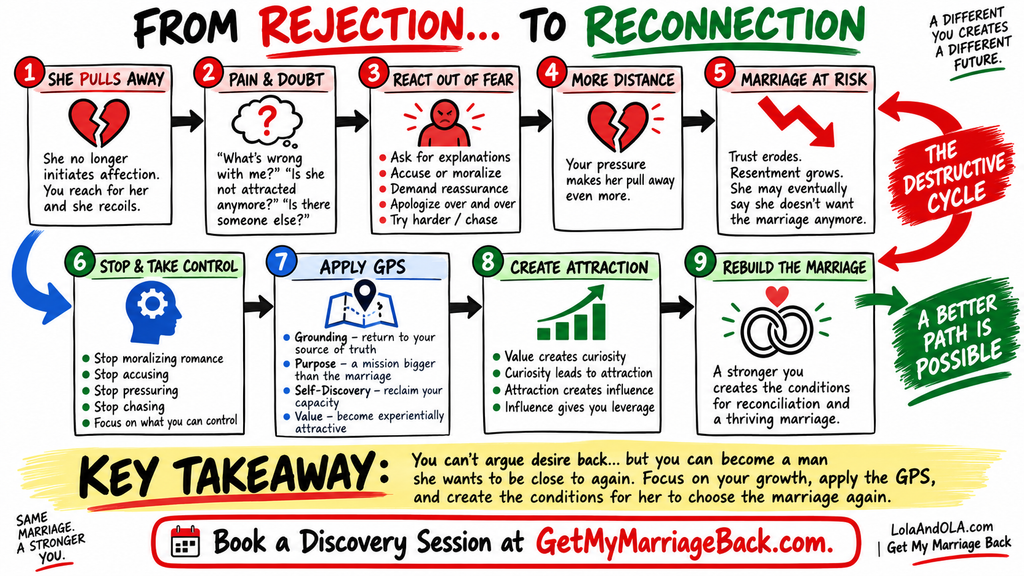
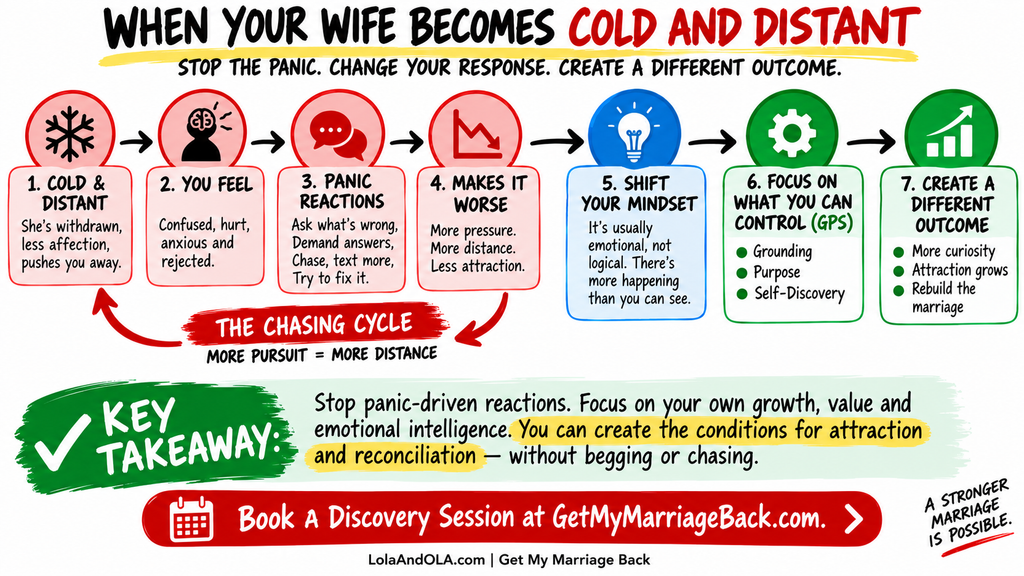
Ironically, both approaches usually make the problem worse.

Affection cannot be negotiated, demanded, guilted, or pressured into existence. Genuine affection is usually a byproduct of emotional connection, attraction, trust, and freedom.

If your wife is not affectionate, the goal is not to force affection. The goal is to understand what may be causing the withdrawal and create the conditions where affection can naturally return.

Let’s explore the most common reasons and what you can do about them.

💔 5 Steps to Reverse โ€œI Donโ€™t Love You Anymoreโ€

First, Don’t Make Her Lack of Affection Your Identity

One of the biggest mistakes men make is taking a wife’s reduced affection as proof that they are unloved, unattractive, or unwanted.

Sometimes that is not the case at all.

A lack of affection is often a symptom rather than the actual problem.

Before assuming the worst, ask yourself:

  • Is this a recent change?
  • Has she always been less affectionate?
  • Has anything significant happened recently?
  • Is she under unusual stress?
  • Have unresolved conflicts been piling up?

The answers matter because solutions are rarely found on the surface.

1. Emotional Disconnection Has Taken Root

In many marriages, affection disappears long before love does.

When emotional connection weakens, physical affection often follows.

A wife may still care deeply for her husband while feeling emotionally distant from him.

This can happen when:

  • Conversations become transactional.
  • Conflicts remain unresolved.
  • Appreciation disappears.
  • Friendship fades.

Many husbands focus exclusively on fixing physical intimacy while overlooking emotional intimacy.

Yet for many women, emotional safety and emotional connection are major drivers of affectionate behavior.

What To Do

Rebuild friendship first.

Talk without an agenda. Listen without defending yourself. Become curious about her world again instead of trying to convince her why she should be more affectionate.

Connection often precedes affection.

โ€œMy Wife Is NOT ATTRACTED To Me Anymoreโ€
wife is not affectionate

2. She Feels Pressured Rather Than Desired

Many men unintentionally turn affection into an obligation.

Every hug becomes a test.

And every kiss becomes a negotiation.

Every act of affection feels like it comes with expectations attached.

When affection feels loaded with pressure, it often stops feeling free.

This creates a cycle:

  • Husband feels rejected.
  • Husband pursues harder.
  • Wife feels pressured.
  • Wife withdraws further.

What To Do

Create low-pressure moments.

Hold her hand because you enjoy the connection, not because you’re expecting something afterward.

The less affection feels like a transaction, the more naturally it can return.

3. Burnout Is Draining Her Emotional Energy

If your wife is carrying the weight of work, children, family obligations, caregiving, or personal stress, affection may not be her priority.

This doesn’t necessarily mean she doesn’t love you.

It may simply mean her emotional and physical resources are depleted.

Many wives spend their entire day meeting everyone else’s needs.

By evening, they have little left to give.

What To Do

Pay attention to her reality.

Ask how you can reduce pressure in practical ways.

Sometimes attraction grows when a spouse feels supported rather than scrutinized.

4. Keeping Score Has Poisoned the Dynamic

One of the fastest ways to kill affection is keeping score.

Statements like these create emotional distance:

  • “I always do more.”
  • “You never appreciate me.”
  • “Why should I try when you don’t?”

Once marriage becomes a competition, romance starts disappearing.

Affection thrives in generosity.

It struggles in environments filled with resentment and scorekeeping.

What To Do

Stop focusing on who is winning or losing.

Focus instead on creating a partnership where both people feel seen, respected, and valued.

Healthy leadership in marriage often means refusing to escalate the competition.

wife is not affectionate - the place of priorities

5. Life Changes Have Shifted Her Priorities

Major life events can dramatically affect affection levels.

Examples include:

  • Pregnancy
  • Childbirth
  • Hormonal changes
  • Health challenges
  • Career transitions
  • Family crises

Many men interpret these shifts personally when they may have little to do with the relationship itself.

The issue is not always attraction.

Sometimes it’s exhaustion, recovery, or adaptation.

What To Do

Respond with patience rather than panic.

The ability to stay grounded during difficult seasons is often more attractive than emotional overreaction.

6. Attraction Has Been Replaced by Neediness

This can be difficult to hear, but it matters.

Affection and attraction rarely flourish when one partner becomes excessively needy, reactive, or emotionally dependent.

One of the strongest attraction killers is desperation.

When your entire emotional state depends on her validation, the relationship starts carrying too much weight.

This often creates pressure rather than desire.

What To Do

Refocus on yourself.

Strengthen your purpose.

Invest in your health.

Develop meaningful friendships.

Pursue growth.

A grounded man who enjoys his life is often far more attractive than a man whose happiness depends entirely on his wife’s behavior.

More Video on our YouTube Channel

7. Unresolved Hurt Is Blocking Affection

Sometimes affection disappears because trust has been damaged.

The cause may be:

  • Past betrayals
  • Broken promises
  • Constant criticism
  • Emotional neglect
  • Repeated conflicts

Affection often struggles to survive in an environment where resentment remains unresolved.

A wife who feels hurt may withdraw affection as a form of self-protection.

What To Do

Focus on repair rather than defense.

Instead of arguing about whether her feelings are justified, focus on understanding them.

People become more open when they feel understood.

wife is not affectionate - attraction principles

The Attraction Principle Most Men Miss

Many husbands believe that if they can just convince their wives to be more affectionate, everything will improve.

The reality is usually the opposite.

When attraction, emotional safety, friendship, and connection improve, affection tends to follow naturally.

Affection is often an outcome.

It is rarely the starting point.

That’s why chasing affection directly can backfire.

Instead of obsessing over what she isn’t giving, focus on becoming the strongest version of yourself.

A marriage is often transformed when one spouse chooses leadership over victimhood, growth over resentment, and emotional intelligence over emotional reaction.

Focus on What You Can Control

You cannot force affection.

Can you control another person’s feelings?

You cannot negotiate attraction.

What you can control is:

  • Your attitude
  • Your emotional stability
  • Your leadership
  • Your communication
  • Your purpose
  • Your patience

In many cases, the spouse who complains the most actually holds the most leverage because they are the first person willing to make meaningful changes.

When you stop chasing and start growing, you create space for attraction to breathe again.

If your wife is not affectionate, don’t immediately assume the marriage is over.

In many cases, affection has not disappeared because love died.

It disappeared because emotional connection weakened, stress increased, resentment accumulated, or attraction became buried under unhealthy dynamics.

The solution is rarely more pressure.

The solution is creating an environment where affection can return freely.

Lead with patience. Focus on growth. Strengthen friendship. Manage expectations. Let go of scorekeeping.

Those are often the first steps toward rebuilding the connection you both miss.

SEX STARVATION? 🔥 Low Attraction or ED? 5 TIPS

FAQ (Frequently Asked Questions)

How do I deal with an unaffectionate wife?

Start by understanding the reason behind the lack of affection rather than taking it personally. Focus on rebuilding emotional connection, reducing pressure, and becoming the best version of yourself instead of chasing validation.

Why is my wife not affectionate to me?

A wife may become less affectionate due to emotional disconnection, stress, burnout, unresolved conflict, hormonal changes, or a decline in attraction. The lack of affection is often a symptom of deeper issues rather than the core problem itself.

Should I stay in a marriage without affection?

That depends on the overall health of the relationship and whether both partners are willing to work on the issues involved. Many marriages successfully rebuild affection when the underlying causes are addressed with patience, communication, and effort.

What is the rule for being or becoming a successful wife?

A successful wife contributes to a relationship built on respect, partnership, emotional connection, and mutual growth. Just as importantly, a successful marriage requires both spouses to consistently invest in each other’s well-being, trust, and happiness.

Is It Normal to Lose Attraction to Your Partner? What to Do Next

There are few relationship fears more unsettling than looking at your spouse and realizing the attraction you once felt isn’t as automatic as it used to be.

The butterflies are gone. The excitement feels muted. Physical intimacy may feel forced, infrequent, or completely absent.

Naturally, the question arises:

is it normal to lose attraction to your partner

Is it normal to lose attraction to your partner?

The short answer is yes.

In long-term relationships and marriages, attraction naturally rises and falls. What is not normal is assuming that attraction should remain effortless forever. Many people mistakenly believe that if the spark fades, they must have chosen the wrong person. In reality, attraction is less like a permanent condition and more like a living system that requires attention, maintenance, and leadership.

The good news is that losing attraction does not automatically mean your marriage is failing. In many cases, it is simply a signal that something important needs attention.

The Truth About Attraction: It Was Never Designed to Stay the Same

The intense chemistry of a new relationship is fueled by novelty, uncertainty, anticipation, and biological hormones.

Over time, relationships transition from excitement-driven attraction to stability-driven attachment. The challenge is that certainty creates security, but too much certainty can eliminate mystery, anticipation, and desire.

This is why many married couples find themselves confused.

They love each other.

Trust each other.

They care about each other.

Yet attraction feels weaker than before.

That doesn’t necessarily mean love is gone. It often means the relationship has become overly predictable and neglected the emotional conditions that help attraction thrive.

Attraction Is More Than Physical

One of the biggest mistakes people make is reducing attraction to physical appearance alone.

Attraction has multiple dimensions:

Physical Attraction

This includes appearance, grooming, health, fitness, and how someone carries themselves.

Sexual Attraction

This involves chemistry, polarity, flirtation, desire, and anticipation.

Emotional Attraction

This comes from feeling understood, appreciated, respected, and emotionally safe.

Personal Attraction

This is attraction to someone’s confidence, purpose, competence, leadership, ambition, humor, and character.

A spouse may still be physically attractive while emotional attraction has disappeared because resentment has accumulated.

Likewise, someone may gain weight and yet remain highly attractive because they maintain confidence, playfulness, and emotional connection.

When attraction fades, it is important to identify which type of attraction has declined.

is it normal to lose attraction to your partner

Why People Lose Attraction in Marriage

1. The Relationship Becomes a Business Partnership

Many couples gradually become managers of responsibilities instead of romantic partners.

Conversations become centered around bills, schedules, children, work stress, and obligations.

Romance gets replaced by logistics.

Friendship remains, but seduction disappears.

When this happens, spouses often begin feeling more like roommates than lovers.

2. Unresolved Resentment Kills Desire

It is difficult to feel attraction toward someone you secretly resent.

Years of criticism, disappointment, blame, judgment, or emotional neglect can quietly poison attraction.

Many people think they lost attraction because of physical reasons when the true issue is emotional baggage that was never addressed.

Resentment is one of the most powerful attraction killers in marriage.

3. Pride and Expectations Are Being Mismanaged

Many marriages struggle because both partners become experts at tracking what they are not receiving.

They stop focusing on influence and start focusing on entitlement.

When expectations rise while appreciation falls, attraction often follows.

In many marriages, the real problem is not lack of love.

It is the accumulation of unmet expectations combined with wounded pride.

4. Life Stress Is Draining Desire

Financial pressure, parenting demands, career struggles, health issues, and burnout can significantly impact attraction.

Stress does not just affect your energy.

It affects your emotional availability.

Many people mistakenly assume they have lost attraction when they have actually lost bandwidth.

5. One or Both Partners Have Stopped Growing

Growth is one of the six core human emotional needs.

People are naturally drawn toward progress, purpose, and vitality.

When individuals stop challenging themselves, stop pursuing goals, and stop investing in personal development, attraction often declines.

Confidence is attractive.

Purpose is attractive.

Momentum is attractive.

Stagnation is not.

The Biggest Mistake People Make When Attraction Fades

Many people immediately begin wondering if there is someone else who would make them happier.

This is understandable but often misguided.

If someone leaves every time attraction naturally fluctuates, they may simply repeat the same cycle with a new partner.

The initial excitement will eventually settle again.

Then the same questions return.

Different face.

Same problem.

More emotional baggage.

Heartbreak.

Trauma.

More complexity.

Attraction is not something you permanently find.

It is something healthy couples learn how to continuously cultivate.

Can You Force Someone to Be Attracted to You?

No.

And this is where many people waste years of their lives.

You cannot negotiate attraction.

Guilting someone into desire doesn’t work.

You cannot lecture someone into chemistry.

And you cannot force emotional connection.

What you can do is increase the conditions that make attraction more likely.

This is where emotional intelligence and healthy seduction become valuable.

Seduction is not manipulation.

It is the art of creating positive emotional experiences that naturally draw people closer.

How to Rebuild Attraction in Marriage

Rebuild the Friendship First

Many couples focus exclusively on fixing sex.

That is often backwards.

Strong attraction is frequently built upon strong friendship.

Become curious about each other again.

Talk beyond logistics.

Laugh together.

Create shared experiences.

Friendship often becomes the bridge back to attraction.

Stop Acting Like Roommates

Couples who maintain attraction intentionally create separation from routine.

Go on dates.

Dress with intention.

Flirt again.

Create moments of anticipation.

Predictability builds comfort.

But attraction also needs variety.

Focus on Self-Leadership

One of the most attractive qualities in any person is ownership.

Instead of asking:

“What is my spouse doing wrong?”

Ask:

“What can I improve about myself?”

Your energy.

Health.

Your confidence.

And purpose.

Your emotional control.

Your communication.

The partner with stronger self-leadership often becomes the catalyst for positive change.

Eliminate Attraction Killers

Many people unintentionally destroy attraction through behaviors that create emotional exhaustion.

Common attraction killers include:

  • Neediness
  • Constant criticism
  • Overreacting
  • Moralizing
  • Lack of patience
  • Emotional volatility
  • Chronic negativity
  • Poor self-control

These behaviors create pressure instead of desire.

Attraction thrives when people feel emotionally safe, respected, and free.

Create More Positive Emotional Experiences

Attraction grows where positive emotions consistently exist.

Small moments matter:

  • Genuine compliments
  • Playful teasing
  • Shared adventures
  • Physical affection
  • Appreciation
  • Thoughtfulness

Relationships rarely collapse because of one massive event.

They usually decline through thousands of small missed opportunities.

The reverse is also true.

Attraction is often rebuilt through hundreds of small positive interactions.

When Loss of Attraction Signals a Bigger Problem

Sometimes attraction fades because deeper issues exist.

Examples include:

  • Persistent disrespect
  • Chronic dishonesty
  • Emotional abuse
  • Addiction
  • Repeated betrayal
  • Fundamental incompatibility

In these situations, rebuilding attraction is not the first priority.

Addressing the underlying issue is.

No amount of flirting can compensate for broken trust.

Trust and respect remain the foundation upon which attraction stands.

is it normal to lose attraction to your partner - THE GOAL

The Real Goal Is Not Constant Attraction

Many people pursue a fantasy version of marriage where attraction remains at maximum intensity forever.

That is not realistic.

Healthy marriages experience seasons.

Some seasons feel passionate.

And some feel routine.

Some feel deeply connected.

Of course, some feel distant.

The objective is not to maintain permanent butterflies.

The objective is learning how to navigate the inevitable cycles without panicking.

Strong marriages understand that attraction is not a fixed state.

It is a skill.

A practice.

A process.

And like any valuable process, it requires patience, emotional intelligence, self-awareness, and consistent effort.

The couples who thrive long-term are not the ones who never lose attraction.

They are the ones who know how to rebuild it when they do.

“I Feel Disgusted When My Husband Touches Me” – [5 Solutions]

Frequently Asked Questions

What is the rule to success in relationships?

There is no single rule, but successful relationships consistently balance friendship, intimacy, trust, and mutual growth. The strongest couples focus less on changing each other and more on improving the quality of their connection and communication.

What are the 4 signs a relationship is failing?

Four common warning signs are chronic criticism, unresolved resentment, emotional disconnection, and loss of mutual respect. When these issues persist without being addressed, attraction and intimacy often begin to deteriorate as well.

Can attraction be regained?

Yes, attraction can often be regained when the underlying causes of disconnection are identified and addressed. Couples who rebuild friendship, improve communication, create novelty, and invest in personal growth frequently see attraction return over time.

Why am I losing interest in my girlfriend?

You may be experiencing stress, emotional disconnection, unmet needs, unresolved resentment, or simply the natural transition from infatuation to long-term attachment. Understanding the root cause is essential because the solution depends on why the attraction is fading in the first place.

What Is Infidelity? Meaning, Types, Causes, and How to Heal

Infidelity is one of the most painful experiences a person can face in a marriage or committed relationship. Yet many people still struggle to define exactly what it is.

What is Infidelity in a Marriage? DEADLY

So, what is infidelity?

Infidelity is the violation of the agreed-upon trust, loyalty, and exclusivity within a committed relationship. While many people immediately think of sexual affairs, infidelity can also be emotional, digital, financial, or any behavior that secretly redirects intimacy, energy, attention, or commitment away from the primary relationship.

At its core, infidelity is not just about sex. It is about betrayal of trust and the breaking of relationship agreementsโ€”spoken or unspoken.

Understanding infidelity at a deeper level is essential because healing a marriage requires more than identifying who was wrong. It requires clarity, emotional intelligence, healthy boundaries, and a commitment to rebuilding attraction, respect, and trust.

The Real Meaning of Infidelity

Most people define infidelity as cheating.

While that’s true, the deeper reality is that infidelity occurs whenever someone violates the emotional, romantic, sexual, or relational agreements that form the foundation of a committed partnership.

For one couple, exchanging flirtatious messages may be considered harmless. For another, it may represent a serious betrayal.

The specific behavior matters, but the larger issue is this:

Infidelity happens when secrecy replaces transparency and loyalty is replaced by hidden attachments.

When trust is broken, emotional safety disappears. That loss of safety often causes more damage than the act itself.

Infidelity can be emotional and even more painful.

What Is Infidelity in Marriage?

In marriage, infidelity occurs when a spouse forms an inappropriate romantic, emotional, sexual, or intimate connection outside the marriage that violates the trust and expectations of the relationship.

Marriage is built upon several pillars:

  • Friendship
  • Trust
  • Emotional connection
  • Physical intimacy
  • Shared expectations

When one of these pillars is compromised through deception or secrecy, the marriage begins to suffer.

The pain of infidelity is often amplified because marriage is designed to provide certainty, connection, significance, growth, and contributionโ€”some of the most fundamental emotional needs humans possess.

When betrayal enters the relationship, those needs suddenly feel threatened.

Types of Infidelity

Many people assume all affairs are physical. In reality, infidelity appears in several forms.

1. Physical or Sexual Infidelity

This is the most commonly recognized form of infidelity.

It involves sexual or intimate physical activity with someone outside the committed relationship.

Examples include:

  • Sexual intercourse
  • Kissing
  • Physical intimacy
  • Ongoing affairs
  • One-night stands

Because physical affairs are visible and tangible, they often receive the most attention. However, they are not always the most damaging form of betrayal.

2. Emotional Infidelity

Emotional infidelity occurs when someone develops a deep emotional bond with another person while hiding it from their spouse.

Signs may include:

  • Sharing personal secrets with someone else
  • Prioritizing another person emotionally
  • Constant texting or communication
  • Seeking emotional support outside the marriage
  • Romantic feelings without physical contact

Many betrayed spouses report that emotional affairs hurt just as muchโ€”or moreโ€”than physical affairs because emotional intimacy is often the foundation of long-term attraction.

3. Digital Infidelity

Technology has created new opportunities for secrecy.

Digital infidelity may involve:

  • Secret conversations
  • Sexting
  • Dating apps
  • Hidden social media relationships
  • Online affairs
  • Secretive pornography habits that violate relationship agreements

The device may be digital, but the betrayal is real.

4. Financial Infidelity

Financial infidelity happens when one partner hides money matters from the other.

Examples include:

  • Secret bank accounts
  • Hidden debt
  • Undisclosed purchases
  • Gambling losses
  • Concealed investments

Trust extends beyond romance. When financial transparency disappears, emotional trust often follows.

what is infidelity - it hurts

Why Does Infidelity Hurt So Much?

The pain of infidelity goes far beyond the affair itself.

Most people experience:

  • Shock
  • Anger
  • Sadness
  • Anxiety
  • Loss of self-esteem
  • Obsessive thoughts
  • Fear of future betrayal

The reason is simple.

Infidelity attacks multiple emotional needs simultaneously:

  • Certainty becomes uncertainty.
  • Connection becomes distance.
  • Significance becomes rejection.
  • Growth becomes stagnation.

Many betrayed spouses become trapped trying to understand every detail of what happened.

Unfortunately, endless investigation often prolongs suffering rather than creating healing.

At some point, recovery requires shifting focus from the affair itself to personal clarity, self-respect, and healthy relationship boundaries.

What Causes Infidelity?

There is rarely one single cause.

Infidelity is usually the result of multiple factors interacting over time.

Common causes include:

Low Emotional Connection

When couples stop nurturing friendship and emotional intimacy, distance often develops.

Unmet Emotional Needs

Humans naturally seek certainty, variety, significance, connection, growth, and contribution. When these needs are chronically neglected, vulnerability to temptation may increase.

Poor Boundaries

Most affairs do not begin in a hotel room.

They often begin with:

  • Private conversations
  • Emotional dependency
  • Excessive familiarity
  • Hidden communication

Low Self-Esteem

Some individuals seek external validation to compensate for internal insecurities.

Revenge or Retaliation

In some cases, infidelity becomes a misguided attempt to punish a spouse for past hurts.

Opportunity and Circumstances

Temptation exists for most people. Character, boundaries, and purpose determine how individuals respond when opportunities arise.

Importantly, understanding causes is not the same as excusing behavior.

Every affair remains a personal choice.

35 Warning Signs Your Wife Is Cheating (Is It Insecurity?)

what is infidelity - is it the end?

Is Infidelity Always the End of a Marriage?

No.

Many marriages survive infidelity.

Some even become stronger after both partners confront the deeper issues that existed before the betrayal.

However, survival requires more than forgiveness.

It requires:

  • Genuine remorse
  • Radical honesty
  • Accountability
  • Consistent action
  • Time
  • Emotional maturity

Trust is not rebuilt through promises.

Trust is rebuilt through repeated experiences of reliability.

How to Rebuild Trust After Infidelity

Healing takes time, but it is possible.

1. Stop Chasing Explanations Forever

Understanding is helpful.

Obsession is not.

At some point, healing requires accepting that no explanation will completely erase the pain.

2. Establish Clear Boundaries

Healthy boundaries create emotional safety.

Examples include:

  • Full transparency
  • Ending inappropriate relationships
  • Open communication
  • Consistent accountability

3. Focus on Self-Respect

Many betrayed spouses become consumed by monitoring their partner.

Ironically, the more empowering path is rebuilding yourself.

Invest in:

  • Physical health
  • Emotional health
  • Spiritual grounding
  • Personal goals
  • Meaningful friendships

Self-respect creates clarity.

Clarity creates power.

4. Rebuild Friendship First

Long-term attraction grows from emotional connection.

Many couples attempt to fix sex before repairing friendship.

The stronger approach is rebuilding trust, communication, and companionship first.

5. Avoid the Blame Cycle

Blame, guilt, shame, condemnation, and constant judgment rarely create healing.

They often create defensiveness and emotional withdrawal.

This does not mean avoiding accountability.

It means addressing problems without destroying the possibility of future connection.

what is infidelity - can attraction return?

Can Attraction Return After Infidelity?

Absolutely.

Attraction is not merely physical.

It is emotional, psychological, and behavioral.

Many couples mistakenly believe attraction should happen automatically after trust is restored.

The reality is that attraction often grows when both spouses become healthier versions of themselves.

That means:

  • Developing emotional intelligence
  • Managing pride and ego
  • Improving communication
  • Becoming more confident
  • Rekindling friendship
  • Creating positive experiences together

Respect, trust, and emotional safety are often earned gradually through consistent behavior.

What Is the Difference Between Infidelity and Adultery?

People frequently use the terms interchangeably, but they are not identical.

Adultery specifically refers to sexual relations involving a married person and someone who is not their spouse.

Infidelity is the broader category that includes emotional affairs, digital affairs, financial deception, and sexual betrayal.

In simple terms, adultery is one form of infidelity, but not all infidelity is adultery.

Moving Forward After Infidelity

Whether you stay together or separate, healing begins when you stop allowing the betrayal to define your entire future.

The healthiest path forward involves:

  • Accepting reality
  • Setting boundaries
  • Rebuilding self-respect
  • Strengthening emotional intelligence
  • Focusing on personal growth
  • Creating clarity about what you want next

You cannot control another person’s choices.

You can control your standards, your response, and the direction of your life moving forward.

That is where true healing begins.

Success statistics of marriage counseling

Frequently Asked Questions

What is the difference between adultery and infidelity?

Adultery specifically refers to sexual relations between a married person and someone other than their spouse. Infidelity is a broader term that includes emotional affairs, digital cheating, financial deception, and sexual betrayal.

What is considered infidelity?

Infidelity is any behavior that violates the agreed boundaries of trust, loyalty, or exclusivity within a relationship. This can include physical affairs, emotional affairs, secret online relationships, sexting, or other hidden intimate connections.

Which gender cheats more?

Research has historically shown slightly higher rates of reported sexual infidelity among men, although the gap has narrowed significantly in recent decades. The likelihood of cheating is influenced more by individual circumstances, values, opportunity, and relationship dynamics than by gender alone.

Are most men faithful to their wives?

Yes, most married men do not report engaging in extramarital affairs. While infidelity receives significant attention because of its emotional impact, the majority of husbands remain faithful throughout their marriages.


Broken Marriage?
Fix it
Here FREE

Get My Marriage Back