
Broken Marriage?
Fix it
Here FREE

Get My Marriage Back


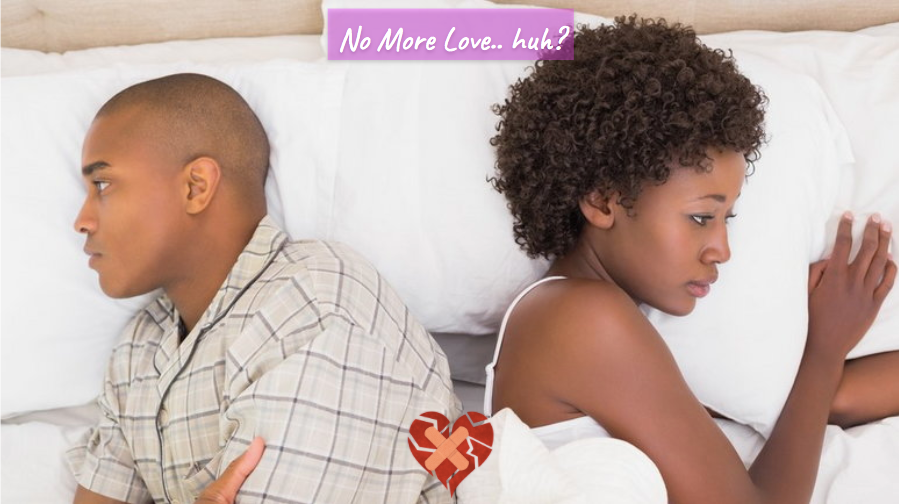
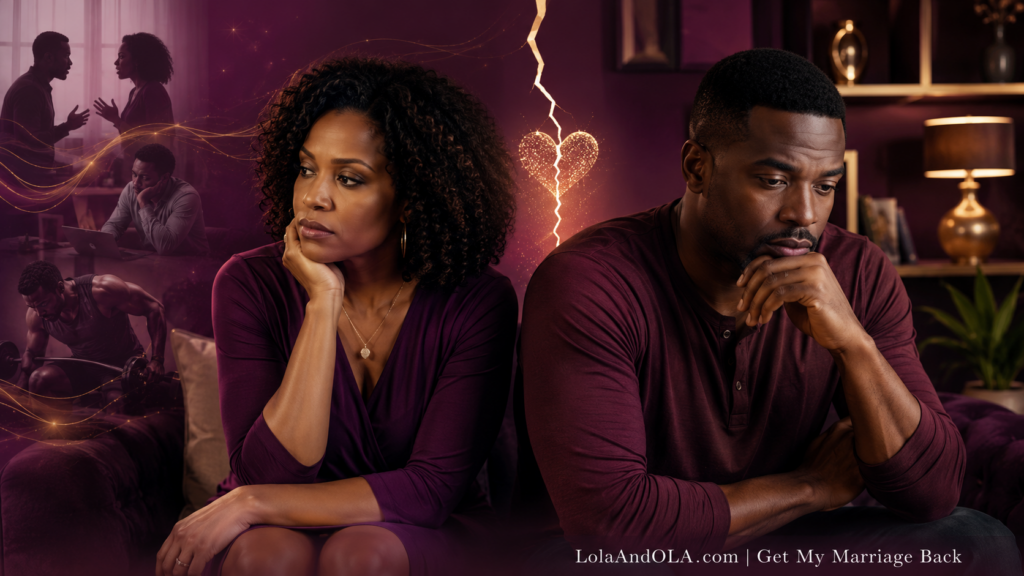
Why Is My Husband Suddenly Cold and Distant? How to Break the Silence

Few things cause more immediate panic than waking up to realize your husband has been cold and distant towards you.

It is an isolating, late-night experience that drives many women to search for answers, trying to decode a sudden shift in their partnerโ€™s behavior.

The confusion multiplies when the change happens without an obvious catalyst.

You find yourself wondering why your husband is suddenly cold and distant but everything on the surfaceโ€”the household chores, the finances, the co-parentingโ€”seems completely fine.

why is my husband suddenly cold and distant

When your husband is distant and moody, the instinctual response is often to treat the distance as a threat to be managed.

This is where fear-based relationship dynamics take root.

When a woman feels her husband is cold and unaffectionate, she may inadvertently step into a control-oriented posture, attempting to force reassurance out of a man who is currently emotionally offline.

To understand why your husband is so distant all of a sudden, we have to look past the surface-level silence and examine the underlying mechanics of how couples handle vulnerability.

The Panic Spiral: “Why Is My Husband Suddenly Cold and Distant?”

When a marriage enters a cold season, modern relationship discourse is quick to hand out viral labels.

Terms like “red flag,” “narcissist,” “simp,” or “pick-me” dominate social media feeds, reducing complex human connections to simple buzzwords.

When a husband becomes cold and emotionless, internet forums often offer scripts for walking away rather than frameworks for understanding.

The irony is that most people weaponizing these labels offer no framework for creating, maintaining, or protecting attraction.

True relationship mastery requires a framework of G.A.M.E.โ€”Giving Authentically and Mindfully with Emotional Intelligence.

It rejects manipulation, performative indifference, or withholding affection to gain leverage.

Instead, it focuses on understanding the dynamics of attraction and participating in them intentionally.

why is my husband suddenly cold and distant [ Emotional Withdrawal ] โ”€โ”€โ–บ [ Wife's Panic/Anxiety ]
              โ–ฒ                               โ”‚
              โ”‚                               โ–ผ
   [ Further Retraction ] โ—„โ”€โ”€ [ Hyper-Vigilant Control ]

When a wife faces a husband who is suddenly cold and distant after an argument, a stressful career shift, or an unexpected life change, she faces a choice between two opposing mindsets: fear management and confident connection.

Meeting his reactive withdrawal with your own reactive panic simply locks both partners into a defensive standoff.

7 Core Differences in Relationship Dynamics That You Can use To Break That Toxic “Cold & Distant” Cycles

By examining the behavioral differences below, we can see why certain relationship styles foster resilient, long-term attraction while others inadvertently lock emotional distance into place.

DynamicThe Control-Oriented Approach (Fear Management)The Connection-Oriented Approach (G.A.M.E.)
1. FocusCharacter Certification (Seeking future guarantees)Relationship Experience (Appreciating current data)
2. FoundationMorality & Rules (“He must fulfill his duties”)Attraction & Compatibility (“We are a team”)
3. AtmospherePressure & Public Contracts (Reputation management)Freedom & Autonomy (Letting the partner choose)
4. MindsetCertainty-Based (“I need to know you won’t change”)Confidence-Based (“I trust us to handle change”)
5. Core TopicTemptation & Prevention (Focus on bad outcomes)Connection & Shared Values (Focus on good outcomes)
6. EnergyReactive Control (Hyper-vigilance and tracking)Proactive Admiration (Gratitude and safety)
7. PostureVulnerability Avoidance (“Don’t let him see you hurt”)Emotional Openness (High emotional intelligence)

1. Character Certification vs. Relationship Experience

There is a massive psychological difference between issuing a “character certificate” for a partner and expressing appreciation for the shared experience.

Declaring that a partner “is incapable of hurting me” is a statement about future behavior that no one can truly guarantee.

When a wife feels her husband has become cold and emotionless, her immediate response may be to look for absolute proof of his character.

G.A.M.E., however, focuses on the present realityโ€”such as compatibility, friendship, and your personal self-respect (and not necessarily mutual respect).

This centers the relationship on active appreciation.

Genuine appreciation is much harder to invalidate because it anchors itself in current data rather than future promises.

2. Morality vs. Attraction

Many relationship conversations revolve strictly around what a partner does not do (e.g., he doesn’t cheat, he doesn’t lie, he provides).

This fixes the conversation entirely on a baseline of morality.

However, basic fidelity and financial support are merely the floor of a relationship, not the ceiling.

Faithfulness is a minimum requirement; the advanced level of a partnership involves maintaining attraction level over time.

When your husband is cold and unaffectionate, the underlying issue is rarely a sudden collapse of his moral character; it is usually a stagnation of the attraction dynamics.

Obsessing over the moral baseline while neglecting the relational skills required to keep an emotional connection alive leaves a relationship vulnerable to a deep, silent freeze.

3. Pressure vs. Freedom

Attempting to force an emotionally withdrawn partner into engaging often feels like a contract or a public challenge.

When a woman panics because her husband is suddenly cold and distant, she may double down on expectations, demanding that he talk.

A more secure approach shifts the responsibility of character back to the individual.

Operating from a place of, “My partner’s emotional choices are ultimately up to him; I do not manage his character,” grants a partner autonomy.

Outside of influence, that responsibility belongs entirely to him.

This creates an atmosphere of freedomโ€”and freedom is fundamentally attractive.

why is my husband suddenly cold and distant - Fear Management (Pressure)  โ”€โ”€โ–บ "You must talk to me right now and prove you care."
Confident Connection (Freedom) โ”€โ”€โ–บ "I am here when you are ready to connect."

4. Certainty-Based vs. Confidence-Based

  • Certainty says: “I know exactly what you will do in the future, and I need proof.”
  • Confidence says: “Based on everything I know today, I trust you and our connection.”

The first mindset attempts to eliminate uncertainty entirely, while the second accepts it as an inescapable reality of human nature.

When a husband shows no emotion when you cry, it can feel like a devastating confirmation that certainty has been lost.

The temptation is to demand an emotional performance to restore that certainty.

True confidence, however, accommodates the moments of emotional offline processing without letting fear dictate a reactive behavior.

5. Temptation vs. Connection

Control-oriented dynamics structure the relationship narrative around feared outcomes, centering the conversation on temptation, infidelity, and emotional abandonment.

Connection-oriented dynamics keep shared values, mutual enjoyment, and partnership at the center.

When a woman finds herself wondering why her husband suddenly cold and distant, her focus often drifts toward worst-case scenarios.

A relationship generally grows where its attention goes.

Focusing on what is missing or what could go wrong builds a vastly different emotional environment than intentionally focusing on creating low-pressure opportunities for connection.

6. Reactive vs. Proactive Energy

Many people mistakenly believe that loyalty testing, suspicion, and tracking emotional shifts protect a marriage.

In reality, these fear-based strategies are reactive attempts to control the uncontrollable.

If your husband is distant and moody, meeting his reactive withdrawal with your own reactive panic simply locks both partners into a defensive standoff.

I’m not judging you if you want to do that but it won’t work out well.

Proactive behaviorsโ€”such as active admiration, gratitude, and clear, calm emotional boundariesโ€”do not eliminate the risk of distance, but they create an emotionally safe environment where attraction actually has room to thaw.

7. The Relationship to Vulnerability

The popular online advice concerning when to leave an emotionally unavailable husband often stems from the critics’ own fears.

Modern culture promotes a hyper-defensive internal narrative:

Never trust someone enough to be embarrassed later.

Never love or care more than the other person.

Never be the vulnerable one.

While these ideas masquerade as self-protective wisdom, they are actually forms of self-sabotage.

When a wife pulls back her warmth because she feels her husband has been cold and distant towards her, she isn’t protecting her relationship (and yes you can argue that he isn’t too)โ€”she is managing her own fear of rejection.

The Illusion of Fear Management

The popular modern advice to “never love or invest more than your partner” is not wisdom; it is fear management.

Healthy relationships are not built by constantly calculating who holds the power, who carries the leverage, or who is more detached.

They are built by people who know how to give authentically and mindfully, without resorting to blind desperation or fear-driven withholding.

When a marriage enters a cold season, the temptation to look for opportunities to compete with your partner is real; avoid it.

Wives typically begin scanning for confirmation of their fears, asking fear-based questions, effectively preparing for a breakup while still living under the same roof.

Can a partner pull away permanently?

Yes. Can a marriage break down? Absolutely.

That possibility exists in every relationship on Earth.

Refusing to offer warmth or celebrate a partner out of fear of looking foolish does not reduce that risk; it simply reduces the amount of appreciation and positive reinforcement available inside the home.

The ultimate goal of a mature partnership is not a guarantee of absolute certainty.

The goal is to cultivate attraction, genuine connection, healthy influence, and emotional intelligenceโ€”creating conditions where positive outcomes are highly likely, without pretending they are guaranteed.

Check this out: How to Save My Marriage

Frequently Asked Questions

What are the first signs a marriage is ending?

The earliest signs that a marriage is structurally deteriorating go beyond simple arguments and instead manifest as chronic emotional detachment, contempt, and the total replacement of vulnerability with defensive stonewalling. When a relationship is ending, partners stop fighting for connection and instead choose quiet coexistence, where appreciation is entirely withheld and both individuals begin living parallel, independent lives under the same roof. This shift from a connection-oriented partnership to a risk-mitigation strategy indicates that the emotional foundation has eroded past the point of simple adjustment.

Why is my husband so distant all of a sudden?

A sudden emotional withdrawal from a husband typically occurs when he feels overwhelmed, misunderstood, or relationally unsafe, causing him to retreat into his internal processing space to handle stress, shame, or perceived failure. Because men frequently lack the relational vocabulary to articulate complex emotional pressuresโ€”whether stemming from career stress, financial anxiety, or marital tensionโ€”they manifest their overwhelm by shutting down entirely, becoming cold and unaffectionate as a primitive form of emotional self-defense rather than a deliberate rejection of their spouse.

What are the three signs a relationship won’t last?

The three definitive signs that a relationship lacks the structural integrity to survive long-term are a complete absence of emotional responsiveness (such as when a partner consistently shows no emotion when you cry), the normalization of chronic contempt over mutual respect, and a protective habit of withholding vulnerability to avoid future embarrassment. When a couple transitions permanently into a certainty-based, control-oriented dynamic where protecting oneself from pain matters more than giving authentically and mindfully, the relationship loses its capacity for attraction and inevitably collapses under the weight of its own emotional defenses.

Is Physical Attraction Overrated in Marriage? Hereโ€™s the Real Truth

Is physical attraction in marriage overratedโ€”or just misunderstood?

In a world of filters, gym bodies, and picture-perfect couples on Instagram, many couples enter marriage with high expectations about physical chemistryโ€ฆ only to find that attraction isnโ€™t always enough to sustain the relationship.

So what happens when the spark fades? Is that the endโ€”or just the beginning of something deeper?

In this post, weโ€™ll explore the complex role physical attraction plays in marriage through three real-world truths (aka secrets) that every couple should understand.

If you’re struggling with the emotional or physical disconnection in your relationship, this will shift your mindsetโ€”and possibly save your marriage.


Secret #1: No, Itโ€™s Not Overratedโ€”If Only One Person Is Asking

Letโ€™s start with one of the most common scenarios:

โ€œI just donโ€™t feel attracted to them anymore.โ€

We hear this far more than we should. But the truth behind it isnโ€™t what most people think. In many cases, physical attraction doesnโ€™t just disappear because someone โ€œlet themselves go.โ€ Whatโ€™s really going on is a breakdown in emotional connection.

When only one spouse starts questioning attraction, it’s often a symptom of emotional disconnectionโ€”not just physical disinterest. We once coached a couple where the husband admitted his attraction had faded. Meanwhile, the wife had been trying everythingโ€”intimacy, compliments, even new outfitsโ€”to no avail.

The problem?
He had emotionally checked out.

And hereโ€™s the twist: she was still deeply attracted to him.

This disconnect highlights an uncomfortable truthโ€”when emotional intimacy fades, physical desire usually follows. According to a 2022 study in the Journal of Social and Personal Relationships, emotional closeness is a far better predictor of long-term physical attraction than appearance.

The Shift:

Once this couple rebuilt emotional safety, the spark returned. He literally said, โ€œShe looks more beautiful than ever.โ€ And yet, nothing changed physically.

This proves that real attraction grows from inside the heart, not just whatโ€™s on the surface. Emotional intimacy is the fuel that keeps physical attraction aliveโ€”not the other way around.


Secret #2: Yes, Itโ€™s Overratedโ€”If Thatโ€™s All You Have as a Bond

We all know that one couple who looks perfect online.

Flawless wedding photos. Gym-fit bodies. Daily โ€œcouple goalsโ€ selfies.

But behind the scenes, things often look very different.

One stunning couple we worked with seemed to have it allโ€”looks, chemistry, passion. But six months into the marriage, they couldnโ€™t even hold a conversation without arguing.

They were bonded by passion, not purpose.

They said things like:

โ€œWeโ€™re just so attracted to one another.โ€

And while that sounds romantic, it doesnโ€™t hold water long-term.

Hereโ€™s why:

Real marriage starts after the butterflies fade.
When life gets realโ€”bills, kids, disappointmentsโ€”you need more than vibes to survive.

This couple lacked emotional safety, shared values, and friendship. Their initial attraction had turned into unmet expectations, and eventually, resentment.

The Shift:

They realized that physical compatibility isnโ€™t enough. They needed to build respect, emotional resilience, and intellectual intimacy.

They had to unlearn the myth that passion guarantees longevity and relearn that peace is the real platform for lasting love.

Now, they’re still togetherโ€”still beautifulโ€”but now theyโ€™re building with bricks, not vibes.

Check this out: Does My Wife Miss Me During Separation?


Secret #3: Maybe Itโ€™s Overratedโ€”If Youโ€™re in an Arranged Marriage

Letโ€™s address a different angle thatโ€™s rarely talked aboutโ€”arranged marriages.

A woman we mentored was married off at 23. There were no butterflies, no late-night convos, no โ€œahaโ€ moment. She didnโ€™t even know if she loved him. Attraction? Practically non-existent.

Fast-forward six years and two children, she said:

โ€œI think I love the man heโ€™s become with me.โ€

That one sentence speaks volumes.

In her case, attraction came after trust.

Physical attraction was a byproduct of emotional intimacy, not a prerequisite. And while many assumed her marriage was destined to be cold and distant, what she found was the opposite:

Attraction grew.

It grew through shared struggles, parenting, kindness, and everyday effort.

He became her โ€œtypeโ€ over timeโ€”not because of physical changes, but because of the emotional connection they cultivated.

The Shift:

When both partners commit to learning and growing together, attraction can blossomโ€”slowly, organically, and deeply.

This reminds us that physical attraction is not always instant. For some couples, itโ€™s a slow burnโ€”not a spark. And that burn can be far more enduring than fleeting passion.


Letโ€™s Recap the Real Truth About Physical Attraction in Marriage

Physical attraction isnโ€™t bad. Itโ€™s not the enemy. But itโ€™s not the savior of your marriage either.

Itโ€™s a signal. Not the whole story.

Hereโ€™s what weโ€™ve learned after years of coaching couples:

  • If only one person is questioning attraction, itโ€™s likely an emotional issueโ€”not a physical one.
  • If attraction is the only bond, the foundation will eventually crumble.
  • In some marriages, especially arranged ones, attraction grows with shared purpose and effort over time.

So is physical attraction overrated?

Sometimes.
But the better question isโ€”what’s underneath it?

If youโ€™re relying on looks to sustain your love, youโ€™ll be in for a rude awakening when life starts lifing. But if you prioritize building connection, safety, and emotional closeness, attraction can not only returnโ€”but deepen in ways you never imagined.


The Takeaway: Physical Attraction Is Just a Piece of the Puzzle

You donโ€™t need to have six-pack abs or glowing skin 24/7 to be attractive to your partner.

What you need is:

  • Emotional safety
  • Mutual respect
  • Consistent effort
  • Shared laughter
  • Deep, honest conversations

When those are present, physical attraction becomes more than skin deepโ€”it becomes a natural extension of your emotional intimacy.

Check this out: How to Keep Attraction in Marriage Without Losing Yourself


Ready to Rekindle Connection and Attraction in Your Marriage?

If your marriage feels distant…

If youโ€™ve lost the spark…

If you’re wondering whether the love is still there…

Weโ€™ve been there. We know what itโ€™s like to feel like roommates with rings.

Thatโ€™s why we wrote Get My Marriage Backโ€”a guide that breaks down the tools, mindset shifts, and strategies we used to rebuild our connection from the ground up.

🎯 Download it for FREE here: www.GetMyMarriageBack.com

Itโ€™s 100% free because we believe no marriage should die from assumptions.


Final Thought

Attraction matters. But how you define itโ€”and how you fuel itโ€”matters more.

What does โ€œattractionโ€ mean to you in marriage?

Is it physical, emotional, spiritualโ€”or all of the above?

Letโ€™s talk about it. Drop your thoughts in the comments. Share this with someone who needs it.

And remember…

Peace, not passion, is the real foundation.

You Will Like These Too…

FAQ: How to Maintain Physical Attraction in Marriage

Is it normal to lose physical attraction to your partner?

Yes, itโ€™s common for physical attraction to fade over time, especially when emotional connection weakens.

Why am I no longer physically attracted to my husband?

Loss of attraction is often rooted in emotional disconnection, not physical changes alone.

Can a marriage work without physical attraction?

A marriage can survive temporarily without physical attraction, but long-term success usually requires rebuilding emotional and physical intimacy.

Can a relationship last if there is no physical attraction?

While some relationships can last without strong initial attraction, lasting bonds typically grow when emotional safety and mutual effort are present.

7 Deadly Disadvantages with Secret Tests in Relationships vs The Art of Seduction

Are secret tests in relationships healthy? In the complex world of modern dating and relationships, finding true love can often feel like an elusive quest.

Many individuals, driven by past experiences and a desire for certainty, resort to testing their partners, overlooking the essence of genuine connection.

I have even heard of stories where a spouse yells at their partner as a test and to see how they would respond.

The Secret Tests in Relationships: Unveiling the Hidden Dynamics

Relationships are complex webs of emotions, trust, and vulnerabilities.

In the pursuit of lasting love, individuals often unknowingly resort to “secret tests” to evaluate their partners’ commitment and compatibility.

These covert assessments are usually subtle, yet they can significantly impact the dynamics of a relationship.

Let’s explore the concept of secret tests in relationships, their potential consequences, and how to foster a healthier and more trusting connection.

1. The Subtle Nature of Secret Tests

Secret tests are unspoken evaluations that people perform on their partners to gauge their feelings, loyalty, or trustworthiness.

These tests are often subconscious and stem from past experiences, insecurities, or fears of getting hurt.

Common examples include intentionally creating situations to elicit a specific reaction or withholding information to observe their partner’s response.

2. The Negative Impact of Secret Tests in Relationships on Trust

While secret tests may provide temporary reassurance, they erode the foundation of trust in a relationship.

When one partner feels tested or scrutinized without their knowledge, it can lead to feelings of betrayal, invasion of privacy, and a sense of manipulation.

Ultimately, this erodes the mutual trust that is vital for a healthy and thriving relationship.

3. Open Communication: An Antidote to Secret Tests

The key to overcoming the harmful impact of secret tests lies in open and honest communication.

Partners must feel safe expressing their concerns, fears, and vulnerabilities without resorting to covert tactics.

Transparent dialogue fosters a deeper understanding of each other’s needs and helps build a more profound emotional connection.

4. Addressing Insecurities and Past Baggage

Recognizing and addressing personal insecurities and past emotional baggage is essential for breaking free from the cycle of secret tests.

It’s vital to confront these issues honestly, either through self-reflection or with the help of a therapist, to prevent them from negatively affecting the current relationship.

5. Building Trust Through Consistency

Trust is a fundamental pillar of any successful relationship.

Building and maintaining trust involves consistent actions and behaviors that reinforce reliability and dependability. Instead of resorting to secret tests, focus on demonstrating love, respect, and loyalty through everyday actions.

6. Embracing Vulnerability and Emotional Intimacy

Emotional intimacy requires vulnerability and the courage to share one’s true self with a partner.

Embrace openness and create a safe space where both partners can express their feelings, hopes, and fears without fear of judgment.

Cultivating emotional intimacy strengthens the bond between partners and alleviates the need for secret tests.

7. Recognizing Healthy vs. Unhealthy Relationship Behavior

Differentiating between healthy relationship behaviors and red flags is crucial.

Healthy relationships are built on mutual respect, support, and communication, while unhealthy ones are characterized by manipulation, power struggles, and secret testing.

Knowing the difference can help individuals make informed decisions about their relationships.

In the intricate dance of relationships, secret tests can cast a shadow of doubt and insecurity on even the strongest connections.

Recognizing and understanding the existence of secret tests is the first step towards fostering a healthier, more trusting bond with a partner.

Open communication, addressing insecurities, building trust, and embracing emotional intimacy are essential elements for overcoming the allure of secret tests and creating a relationship grounded in love and authenticity.

By striving for honesty, vulnerability, and mutual respect, partners can forge a strong and lasting connection that withstands the tests of time. Watch this video!

In this section, we’ll delve into the pitfalls of such an approach and shed light on five deadly relationship mistakes that hinder the path to authentic love.

1. The Dangerous Game of Testing

When it comes to dating, some might feel inclined to treat potential partners as subjects for evaluation.

However, this “testing” approach can prove to be invasive, manipulative, and ultimately counterproductive.

Instead of building a foundation of trust and understanding, testing places undue pressure on both parties, hindering the natural course of a budding relationship.

2. Back to Basics: The True Essence of Seduction

Rather than fixating on instant results, it’s essential to rediscover the art of seduction.

Unlike manipulation, genuine seduction revolves around offering value and leading with authenticity.

By understanding that love takes time to blossom, we can build stronger connections and set the stage for lasting, meaningful relationships.

3. The Marriage Myth: Seduction Matters More Than Ever

Marriage is not a destination where seduction becomes irrelevant; it’s an ongoing journey where keeping the spark alive is crucial.

Neglecting the importance of seduction within marriage can lead to complacency and an erosion of passion.

Cultivating feelings of love and care through consistent acts of seduction strengthens the marital bond, making it more enduring and fulfilling.

4. The Trap of Neediness and Obsession

Neediness and obsession can be detrimental to any relationship.

While stemming from a place of vulnerability, such behavior can drive partners away and create a sense of suffocation.

Embracing self-assurance and independence allows love to flourish organically, unburdened by the weight of possessiveness.

5. Communication: More Than Just Talking

Communication is undoubtedly crucial in any relationship, but true communication goes beyond mere words.

Effective communication entails conveying emotions, understanding, and needs clearly and “empathetically“.

Engaging in meaningful dialogue ensures that the intended message is delivered and understood, fostering a deeper emotional connection.

Secret Tests in Relationships

Is Testing Your Partner Manipulative? Understanding the Impact on Relationships

In the realm of dating and relationships, individuals often find themselves grappling with doubts and uncertainties.

In an attempt to gain reassurance or evaluate their partner’s commitment, some resort to “testing” their significant others.

While these tests may seem harmless or even justified, it’s crucial to explore whether such actions could be considered manipulative and their potential implications on the relationship.

Defining “Testing” in Relationships

“Testing” in relationships refers to intentionally creating situations or scenarios to observe how a partner reacts or responds.

These tests are usually done without the partner’s knowledge and are motivated by a desire to confirm their feelings, loyalty, or dedication.

The tests can be as overt as creating a jealousy-inducing situation or as subtle as withholding information to gauge the partner’s interest.

The Manipulative Nature of Secret Tests

Secret testing can be seen as manipulative due to its covert and deceptive nature.

When someone tests their partner without their knowledge, it disrupts the foundation of trust and openness that healthy relationships are built upon.

Manipulation involves attempting to control or influence another person’s feelings or actions for personal gain, and secret testing aligns with this behavior.

The Impact on Trust and Emotional Security

Testing a partner without their consent can have severe repercussions on the relationship.

It erodes the trust between partners, leading to feelings of betrayal, invasion of privacy, and emotional insecurity.

Partners may feel that their emotions are being played with or that they are constantly under scrutiny, which can create a toxic atmosphere of mistrust.

Communication and Consent: The Alternative Approach

Instead of resorting to secret testing, fostering open communication is essential in any relationship.

Honest and transparent conversations allow partners to express their needs, concerns, and insecurities without resorting to manipulative tactics.

By discussing feelings openly, both partners can work together to address any issues and build a stronger, more trusting bond.

Addressing Insecurities and Trust Issues

Insecurities and trust issues are common in relationships, but addressing them openly is far more effective than conducting secret tests.

By acknowledging and discussing individual fears and vulnerabilities, partners can support each other and work towards creating a more secure and emotionally healthy relationship.

-Building Trust Through Actions and Consistency

Trust is not gained through secret testing; it is built through consistent actions and behaviors over time.

Demonstrating reliability, honesty, and loyalty fosters a strong foundation of trust between partners. Actions that reflect respect and consideration for each other’s feelings are more powerful than any secret test.

Conclusion

In the pursuit of love, it’s essential to steer clear of these five deadly relationship mistakes.

Avoiding the pitfalls of testing, embracing the art of seduction, nurturing relationships inside and outside of marriage, and overcoming neediness and ineffective communication are steps towards fostering healthier and more fulfilling connections.

So, whether you’re single or in a relationship, let go of the urge to test and control, and instead, embark on a journey of genuine connection and authentic love.

The practice of “secret tests in relationships” raises significant ethical concerns and can have detrimental effects on the trust and emotional security within a partnership.

While it’s natural to experience moments of uncertainty or doubt, resorting to secretive and manipulative tactics to gauge a partner’s loyalty or commitment undermines the foundation of a healthy relationship.

Instead, fostering open communication, addressing insecurities, and building trust through consistent actions and respect are essential for cultivating a strong and authentic connection.

By nurturing a relationship based on honesty, transparency, and mutual understanding, partners can create a bond that thrives on trust and withstands the tests of time.

Frequently Asked Questions

Is testing your partner manipulative?

Yes, testing your partner can be considered manipulative as it involves covertly assessing their feelings or reactions without their knowledge.

Is it wrong to test your boyfriend?

Yes, it is ethically questionable to test your boyfriend as it breaches trust and honesty in the relationship.

Is it normal to test your partner?

While it may happen, testing your partner is not a healthy or recommended approach in a relationship.

Is it okay to test someone’s love?

No, testing someone’s love is not a respectful or constructive way to gauge their feelings.

How do you test your partner’s love for you?

Instead of testing, fostering open communication and understanding each other’s emotions is a more positive approach to strengthening your relationship.

10 Signs Your Girlfriend Just Slept With Someone Else

Obviously, the dynamics of a non-legal relationship and marriage are different.  But at the core, itโ€™s the same skills required to sustain whatever it is. 

After researching a little online just to see what the blind is teaching the blind out there, I found these 10 signs.

In this article, I will share why these signs may not be what you think after reading those crazy articles out there.

https://youtu.be/jIoTrKwdoZo

1. Her behavior changes when she is around you.

Remember that she may simply be acting differently around you for a variety of reasons that have nothing to do with cheating. 

She may be feeling overwhelmed, stressed, or anxious, or she may be going through a difficult time in her life. 

It is also possible that she is trying to protect her feelings and is simply not as open with you as she used to be. 

Whatever the reason, it is important to remember that her behavior may not necessarily be a sign that she has slept with someone else.

10 signs your girlfriend just slept with someone else

2. She displays signs of nervousness like fidgeting or avoiding eye contact.

Everyone is different and reacts to situations differently. 

It is possible that she is feeling uncomfortable or embarrassed for another reason and that has nothing to do with infidelity. 

It is important to keep an open mind and consider all possibilities before jumping to any conclusions.

3. She is not as attentive as she used to be.

It’s understandable to be concerned if your girlfriend seems less attentive, but it may not necessarily be a sign that she has slept with someone else. 

You have to remember that there can be many reasons why someone may be less attentive, such as stress, work, or even just being tired. 

It’s best to talk to your girlfriend and try to understand what is going on before jumping to conclusions.

4. Suddenly, she is always busy and occupied.

Of course, it is quite possible that your girlfriend is suddenly busy all the time for a variety of reasons that have nothing to do with her being unfaithful. 

There are many other explanations for her being busy, such as having a lot of work or school commitments, or spending time with friends and family. 

It is important to keep an open mind and not jump to conclusions without first talking to your girlfriend and getting the full story.

5. She is very possessive of her phone.

Sure she wants to be protective of one’s phone, as it contains a lot of personal information.

So, it is not necessarily a valid sign that your girlfriend has slept with someone else. 

Everyone has their own reasons for wanting to keep their phone private, and it could be for any number of reasons that have nothing to do with any kind of infidelity. 

There are many factors that can contribute to someone’s behavior, and it is important to look at the whole picture before jumping to any conclusions.

6. She seems to pay more attention to her looks.

Focusing more on one’s appearance is just that.  

It does not necessarily mean that your girlfriend has slept with someone else. 

Everyone has their own individual preferences when it comes to how they want to look and feel, and it is possible that your girlfriend is simply taking extra care of her appearance for her own reasons. 

It could be that she is feeling more confident and wants to look her best, or perhaps she is just trying out a new style. 

Whatever the reason may be, it is important to remember that this is not a valid sign that she has been unfaithful.

7. She alters her hygiene habits.

Again, changes in hygiene routines do not necessarily mean that your girlfriend has slept with someone else. 

Everyone’s hygiene routines can change for a variety of reasons, such as changes in lifestyle or preferences. 

What if your girlfriend has simply decided to switch up her routine, and this is not necessarily a sign of infidelity. 

It is important to remember to trust your partner and to have an open and honest conversation if you have any questions or concerns.

8. She shows concern about your schedule.

It makes sense to be concerned about someone’s schedule if it has changed drastically or if they are not being as communicative as they usually are. 

However, this concern alone should not be taken as a sign that your girlfriend has slept with someone else. 

It’s important to talk to your girlfriend and get to the root of why she is concerned about your schedule. 

This can help you both to understand each other better and to make sure that your relationship is healthy and happy.

9. She is not interested in sexual activities.

Not wanting to have sex does not necessarily mean that your girlfriend has slept with someone else. 

There are different reasons for not wanting to be intimate, and it is important to take the time to talk to your girlfriend and understand why she may not be interested. 

It could be due to stress, fatigue, or any number of other factors. 

It is important to be respectful and understanding of your partner’s feelings, and to not jump to conclusions.

10. She avoids making plans for the future with you.

It’s totally understandable to feel concerned if your girlfriend isn’t making future plans with you.

There could be a variety of other reasons why she isn’t making plans for the future. 

Again, maybe she’s feeling overwhelmed with work or school, or maybe she’s just not sure what she wants right now. 

It’s important to talk to her about your concerns and try to get to the bottom of the issue.

But wait.  I could help but notice that some of these signs could show us for many arrays of reasons that may have nothing to do with infidelity.

If you notice any of these signs, what you should be doing is leaning in and listening to your partner to find out the root cause of their behavior if you find it strange.

Your best teacher about your relationship is your partner.  Not weird gurus who came out of bad relationships without finding healing first.

Frequently Asked Question

Can you physically tell if your girlfriend is cheating?

While there may be physical signs that could suggest something is going on, it is important to remember that it is not always the case. It is best to talk to your girlfriend and express your concerns in a friendly manner. If she is honest with you, she will be able to answer your questions and help you understand the situation.

How do you tell if your GF is into someone else?

It is important to approach the conversation in a friendly and non-confrontational manner. Pay attention to her behavior and look for signs that she is not as interested in you as she once was. Has she been distant or withdrawn lately? Is she spending more time with her friends or on her phone? Does she seem to be more excited to talk about someone else? If you notice any of these changes in her behavior, it may be worth having an open and honest conversation with her about your concerns.

Stages of Divorce Grief

What are the Stages of Divorce Grief?

The stages of divorce grief are similar to the stages of grief that occur when someone dies.

The stages are shock and disbelief, pain and sorrow, anger and resentment, bargaining and guilt, and acceptance and hope. The order in which the stages occur may vary from person to person.

Some people may skip some of the stages or move through them more quickly than others.

It is important to allow yourself to grieve the loss of your marriage and not try to rush through the process.

1. Shock and disbelief: This is often the first stage after learning that your divorce is final. You may feel numb, have difficulty processing what has happened, and experience many other emotions, including sadness, anger, fear, and relief.

2. Pain and sorrow: As the reality of your divorce sets in, you will likely experience deep feelings of loss and grief.

You may find yourself crying often, feeling depressed, and struggling to cope with the changes in your life.

3. Anger and resentment: It is common to feel a range of negative emotions during this stage, including anger, bitterness, resentment, and frustration. You may lash out at your former spouse, friends, and family members.

4. Bargaining and guilt: During this stage, you may find yourself trying to negotiate with your former spouse or hoping for a reconciliation. You may also feel guilty about the divorce and blame yourself for the situation.

5. Acceptance and hope: In this final stage, you accept that the divorce is final and begin to move on with your life.

You may still feel sad and miss your former spouse, but you are able to start rebuilding your life. You may also feel hopeful about the future and find new meaning in your life.

Tips on Coping with Separation and Divorce

1. Recognize That Your Marriage Is Over: This can be difficult to accept, but it is an important step in the grieving process. Once you come to terms with the fact that your marriage is over, you can begin to move on.

2. Be Patient โ€” Grief Takes Time: The stages of grief do not always happen in a linear fashion. You may move back and forth between stages or even skip some altogether.

3. Surround Yourself With People Who Support You โ€” And Let Them Help: It can be helpful to talk to friends and family members who have gone through a divorce. They can offer guidance and support.

4. Practice Excellent Self-Care: During this difficult time, it is important to take care of yourself both physically and emotionally. Make sure to eat healthy foods, get enough sleep, and exercise regularly.

5. Feel Your Feelings: It is normal to feel a range of emotions after your divorce. Allow yourself to grieve the loss of your marriage.

6. Find Out Whatโ€™s There Besides Anger, Sadness, And Fear: As you move through the grieving process, you may find that you have new insights about yourself and your life. Allow yourself to explore these new perspectives.

7. Timebox Your Grief: Set aside specific times each day to grieve the loss of your marriage. This can help you to avoid becoming overwhelmed by your emotions.

8. Donโ€™t Hide Your Divorce Grief From Your Kids (But Donโ€™t Freak Them Out, Either)

It is important, to be honest with your children about your divorce. However, you should avoid sharing too much information or putting them in the middle of the situation.

9. Write It Out, Work It Out, Or Just plain Talk It Out: Journaling, therapy, and talking to friends and family members can all be helpful ways to cope with your divorce.

10. Stop Blaming Your Ex and Start Forgiving Them (and Yourself) One of the most important things you can do for yourself is to let go of any resentment and blame you may feel. This can be difficult, but it is an essential part of healing.

11. Remember: You Will Still Be a Part of Your Kidโ€™s Life Even After Divorce Although your family may be changing, you will still be an important part of your childrenโ€™s lives. Try to maintain a positive relationship with your former spouse for the sake of your kids.

12. Consider Professional Help Many people find it helpful to seek out professional help during the divorce process. A therapist can provide support and guidance as you navigate this difficult time.

If you are facing divorce, it is important to understand the grieving process. By recognizing the stages of grief, you can better prepare yourself for the journey ahead.

Remember, every divorce is unique and there is no right or wrong way to grieve. If you find yourself struggling, donโ€™t hesitate to seek out professional help. With time and patience, you will eventually reach the acceptance and hope stage.

Donโ€™t Suppress Your Feelings While Grieving

Everyone is different and everyone can experience each one of these stages very differently. Allowing yourself the freedom to grieve during a divorce doesnโ€™t make you weak.ย  In fact, it can actually make you stronger. If you try to bottle up your emotions, they may eventually come out in destructive ways. Itโ€™s okay to cry, be angry, and feel sad. These are all normal reactions to loss.

Divorce is a process, not an event. Just as there is no one right way to grieve the death of a loved one, there is no one right way to grieve the loss of a marriage. Allow yourself the time and space to experience all the emotions that come with this major life change. Seek out support from friends and family members, or consider professional help if you need it. With time and patience, you will eventually reach the acceptance and hope stage.

Coping With the Hard Feelings

Coping with grief during a divorce is exceedingly difficult. Feeling all the emotions mentioned in each stage during the process of divorce is common and necessary for moving forward. It is important to surround yourself with people that love you and support you to help you through this painful time. If you are feeling lost, consider professional counseling to help you regain a sense of self and hope for the future.

ย 

ย 

ย 

ย 

ย 

ย 

ย 

ย 

ย 

ย 

ย 

ย 

ย 

ย 

ย 

ย 

ย 

ย 


Broken Marriage?
Fix it
Here FREE

Get My Marriage Back