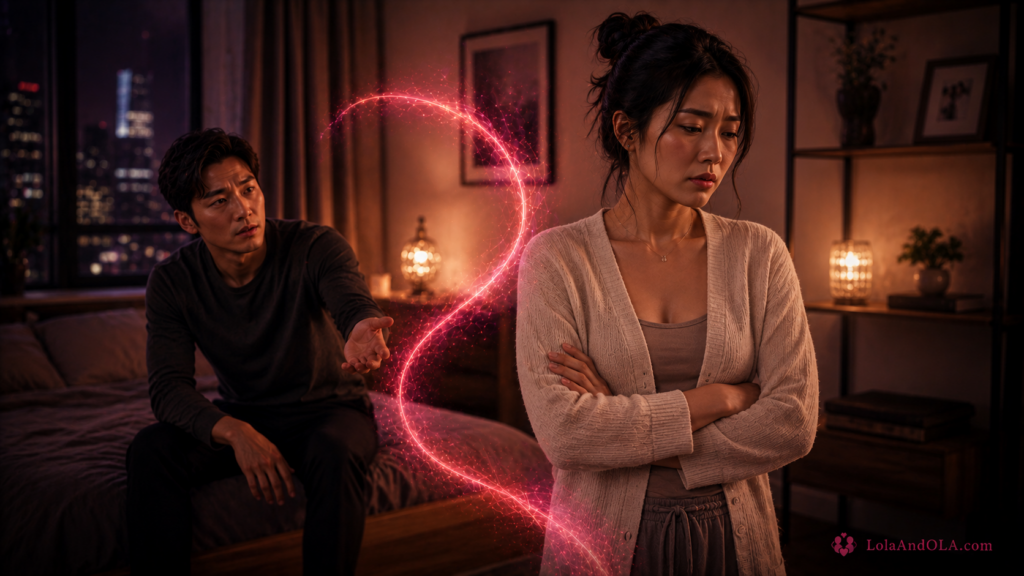


If you’ve caught yourself thinking, “my husband repulses me sexually,” you’re probably carrying a mixture of guilt, confusion, frustration, and even fear.
You may love your husband as a person. And may respect him as a father. You may even want your marriage to work.
Yet when he reaches for your hand, initiates intimacy, or tries to kiss you, your body seems to pull away.
That reaction can be alarming.
Many women assume this means the marriage is over, their husband has become unattractive forever, or they have simply fallen out of love.
But in many cases, sexual repulsion is not the actual problem.
It is the symptom.
It is often your mind and body signaling that something deeper has been neglected for too long.
The good news is that attraction is far more dynamic than most people realize. Before making permanent decisions based on temporary emotions, it’s important to understand what is really happening beneath the surface.

Sexual Repulsion Is Usually the Final Symptom, Not the Root Cause
Most healthy marriages do not move from passion to repulsion overnight.
The journey is usually gradual.
Small disappointments become resentments.
Unspoken frustrations become emotional distance.
Emotional distance becomes indifference.
And eventually, physical intimacy starts to feel uncomfortable, forced, or even repulsive.
Many women mistakenly focus on fixing the sexual symptoms while ignoring the emotional infection underneath.
Trying to force intimacy when resentment is unresolved is like spraying perfume over a wound instead of treating it.
The real question isn’t:
“Why am I sexually repulsed by my husband?”
The better question is:
“What happened between us that made my body stop feeling emotionally safe, connected, or attracted?”
7 Hidden Reasons Your Husband Repulses You Sexually
1. Deep Emotional Resentment Has Been Building
Resentment is one of the biggest attraction killers in marriage.
Perhaps you feel unheard.
Maybe you feel unappreciated.
Perhaps you’ve carried the emotional load of the family while your husband remained unaware.
Over time, unresolved resentment creates emotional debt.
The problem is that resentment rarely stays emotional.
Eventually, it becomes physical.
Your body starts rejecting the person your mind feels hurt by.
Until resentment is addressed, sexual attraction often struggles to return naturally.
2. Your Marriage Has Become Predictable and Emotionally Flat
Human beings have six fundamental emotional needs:
- Certainty
- Variety
- Significance
- Connection
- Growth
- Contribution
Many marriages become overly focused on certainty while neglecting variety and growth.
The relationship becomes functional but no longer exciting.
You become roommates, co-parents, or business partners rather than romantic partners.
When novelty disappears entirely, attraction frequently follows.
This doesn’t mean you need drama.
It means healthy attraction requires ongoing curiosity, growth, and emotional engagement.
3. You No Longer Respect Him the Way You Once Did
This is uncomfortable to admit, but it matters.
Attraction often follows admiration.
When a woman repeatedly sees behaviors that erode trust, confidence, leadership, integrity, or emotional maturity, attraction can decline.
This doesn’t necessarily mean your husband is a bad man.
It simply means the version of him you’re experiencing today may not be inspiring the same feelings he once did.
Instead of focusing entirely on what he lacks, ask yourself:
- Have these issues been discussed clearly?
- Have realistic expectations been established?
- Has pride prevented productive conversations?
Many marriages deteriorate because expectations remain unspoken while resentments continue growing.
4. Constant Criticism Has Poisoned the Emotional Climate
One of the fastest ways to destroy attraction is through a cycle of:
- Blame
- Judgment
- Condemnation
- Sarcasm
- Guilt
- Insults
Whether it comes from you, him, or both of you, these behaviors create emotional hostility.
Nobody feels naturally attracted to someone they constantly fight with.
When emotional safety disappears, sexual desire often follows.
The bedroom is usually reflecting what is happening everywhere else in the relationship.
5. He Has Stopped Pursuing the Relationship
Many women become emotionally disconnected when they feel invisible.
If your husband no longer:
- Notices your efforts
- Prioritizes quality time
- Shows curiosity about your life
- Initiates meaningful connection
You may gradually begin feeling taken for granted.
Feeling unseen creates emotional loneliness.
Emotional loneliness eventually creates physical disinterest.
However, before assuming neglect is intentional, it is important to explore what may be happening in his world as well.
Stress, depression, burnout, health challenges, and career pressure often impact connection more than many couples realize.
6. You’ve Lost Yourself in the Marriage
This reason surprises many women.
Sometimes your husband isn’t the entire problem.
Sometimes you’ve become disconnected from yourself.
You stopped pursuing your goals.
Stopped nurturing friendships.
You stopped growing outside the marriage.
Creating a life that energizes you.
When your entire identity revolves around the relationship, emotional dependency often develops.
Ironically, dependence frequently kills attraction.
One of the most attractive qualities in any person is vitality.
When you reconnect with your purpose, passions, and personal growth, attraction often begins shifting again.
What Does God Say About a Harsh Husband?
7. There May Be Underlying Physical or Hormonal Factors
Not every attraction issue is psychological.
Hormonal changes, perimenopause, menopause, medication side effects, depression, anxiety, chronic stress, and health conditions can significantly impact desire and physical responses.
If your loss of attraction feels sudden or extreme, consulting a healthcare professional can provide valuable clarity.
Never assume every intimacy issue is purely relational.
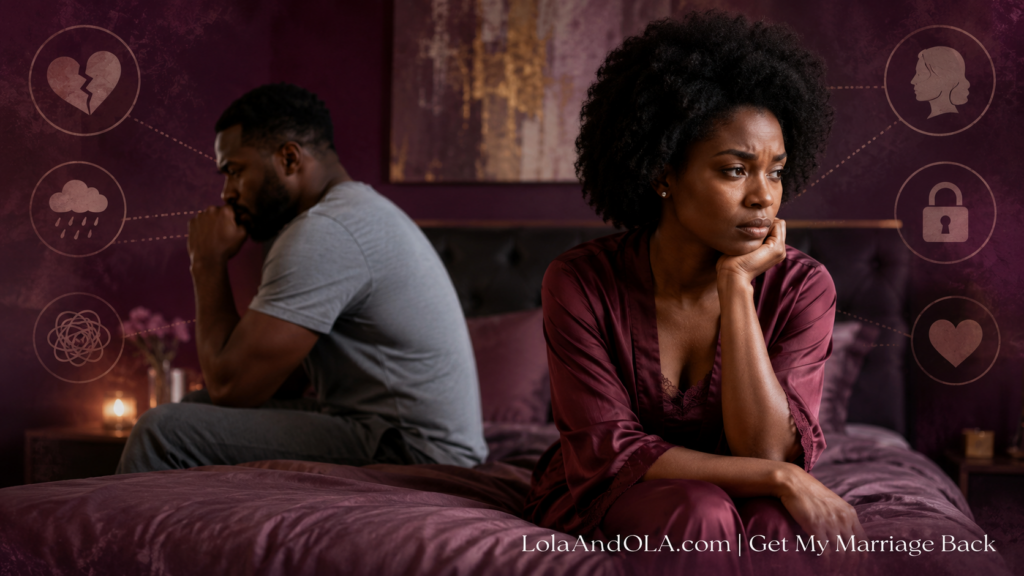
What Not to Do If Your Husband Repulses You Sexually
Don’t Force Yourself Into Intimacy
Many women try to “push through it.”
Unfortunately, forcing yourself into unwanted intimacy often strengthens the negative association.
Instead of rebuilding attraction, it can deepen aversion.
Pressure rarely creates desire.
Safety creates desire.
Don’t Turn Him Into the Villain
While your pain is valid, turning your husband into the sole problem often keeps you stuck.
Healthy relationships require curiosity before conclusions.
Most struggling marriages involve patterns, not villains.
Understanding the pattern gives you power to change it.
Don’t Make Permanent Decisions During Emotional Exhaustion
When emotions are running high, everything feels permanent.
Take time to evaluate what is actually happening before making life-altering decisions.
Many marriages recover after identifying and addressing the real issues beneath the surface.
13 Signs That Will Make You Say “My Husband Hates Me” to Yourself
How to Rebuild Attraction Skillfully
Start With Honest Self-Awareness
Ask yourself:
- What specifically triggers the repulsion?
- When did it begin?
- What changed before it started?
- Is the issue emotional, physical, relational, or all three?
Clarity creates options.
Confusion creates suffering.
Rebuild Friendship First
One of the most overlooked attraction principles is friendship.
Strong marriages are built on:
- Shared experiences
- Emotional safety
- Playfulness
- Respect
- Positive interactions
Trying to fix sex before rebuilding friendship often creates more frustration.
Friendship lays the emotional foundation attraction grows from.
Focus on Your Own Growth
One of the most powerful shifts you can make is returning to your own life.
Reconnect with:
- Your goals
- Your purpose
- Your health
- Your confidence
- Your spirituality
- Your personal interests
Our GPS framework emphasizes:
G – Grounding: Stay connected to gratitude, faith, and emotional stability.
P – Purpose: Build a meaningful life beyond relationship problems.
S – Self-Awareness: Understand your patterns, triggers, and responsibilities.
The stronger you become emotionally, the more clearly you can evaluate your marriage.
Have Difficult Conversations Without Blame
Instead of:
“You never make me feel loved.”
Try:
“I’ve been feeling disconnected lately and I want us to understand what’s happening.”
Blame creates defensiveness.
Curiosity creates cooperation.
Consider Professional Guidance
Sometimes the emotional knots are too tangled to untangle alone.
A qualified therapist can help identify:
- Hidden resentments
- Communication breakdowns
- Attachment patterns
- Unmet emotional needs
- Sexual aversions
Professional support often accelerates healing by providing clarity and structure.
Can Attraction Come Back?
Absolutely.
Many couples experience seasons where attraction fades.
The key is understanding that attraction is often a reflection of emotional dynamics, personal growth, unresolved pain, and relationship patterns.
When the underlying issues are addressed, attraction frequently returns in ways that feel more mature, intentional, and sustainable.
The goal isn’t to force chemistry.
The goal is to remove the barriers that are blocking it.
Wife or Husband Denying You Sex? DO THIS!!!

So, if you think“your husband repulses you sexually,” try not to panic.
Sexual repulsion is often less about physical appearance and more about emotional reality.
Instead of focusing solely on the bedroom, look at the broader relationship.
Examine the friendship.
…The resentment.
Examine the expectations.
Examine your own personal growth.
Many marriages don’t collapse because love disappeared.
They collapse because emotional disconnection went unaddressed for too long.
When you address the deeper issues with honesty, courage, emotional intelligence, and self-respect, you give yourself the best chance of discovering whether attraction can be rebuilt—or whether a different path is ultimately needed.
Check This Out Now: My Husband Hates Me: 5 Steps to De-escalate Marital Hostility
Frequently Asked Questions (FAQ)
Research commonly suggests that approximately 15% to 20% of married couples experience what is often defined as a sexless marriage, meaning little to no sexual activity over an extended period. However, frequency alone does not determine relationship satisfaction because emotional connection and mutual agreement about intimacy matter just as much.
There is rarely a single cause behind a sexless marriage. The most common contributors include unresolved resentment, emotional disconnection, chronic stress, health issues, poor communication, mismatched desire levels, and unmet emotional needs.
Relationship researcher John Gottman identified four highly destructive patterns often called the “Four Horsemen”: criticism, contempt, defensiveness, and stonewalling. When these behaviors become habitual and remain unresolved, they can gradually erode trust, respect, and emotional intimacy.
A prolonged lack of intimacy can increase feelings of loneliness, stress, emotional insecurity, and disconnection. For many women, healthy intimacy supports bonding hormones, emotional regulation, and a stronger sense of connection within the relationship.