
Broken Marriage?
Fix it
Here FREE

Get My Marriage Back


9 Signs Your Marriage Can Still Be Savedโ€”and What to Do Next

Looking for the signs your marriage can still be saved is often the last thing you do before giving up.

You may be exhausted from arguing, confused by your spouseโ€™s emotional distance, or terrified that one bad season has permanently destroyed the relationship. Perhaps trust has been damaged, affection has disappeared, or every conversation seems to become another fight.

You want an honest answer: Is there still hope, or are you fighting for something that is already gone?

The truth is that hope does not come from one romantic gesture, a temporary mood change, or your spouse saying the perfect words. A marriage becomes salvageable when emotional connection still exists, the underlying foundation remains intact, and at least one person is willing to stop feeding the destructive cycle.

That does not mean one spouse can single-handedly create a healthy marriage. Mutual participation is ultimately necessary. But one grounded person can often interrupt the patterns that keep both partners defensive, resentful, and disconnected.

Before you decide the marriage is over, look for these nine meaningful signsโ€”and be prepared to respond to them with emotional intelligence rather than panic.

Beyond Hope: Saving a Marriage Requires More Than Positive Signs

Beyond Hope: Saving a Marriage Requires More Than Positive Signs

Searching for signs can provide perspective, but signs alone do not repair a relationship.

You can have shared values, children, history, and lingering feelings while still repeating the same behaviors that are destroying attraction. Begging for affection, monitoring your spouseโ€™s moods, forcing heavy conversations, keeping score, and trying to police their behavior may feel like fighting for the marriage, but these actions often create more emotional pressure.

The question is not only whether your marriage contains hope.

The deeper question is whether you are willing to become emotionally steady enough to use that hope wisely.

Saving a marriage often begins when you stop:

  • Reacting to every emotional shift
  • Chasing reassurance
  • Trying to force closeness
  • Shaming your spouse into changing
  • Treating every disagreement as proof that you are unloved
  • Sacrificing your dignity to keep the peace
  • Confusing control with leadership

Real leadership in marriage is not domination. It is the ability to regulate yourself, communicate clearly, protect healthy boundaries, and create conditions in which friendship, respect, desire, and trust can grow again.

1. You Still Have Emotional Reactions to Each Other

One of the clearest signs your marriage can still be saved is that emotional energy still exists between you.

That energy may not currently look romantic. It may appear as anger, frustration, jealousy, disappointment, or passionate disagreement. Although chronic fighting is unhealthy, conflict can indicate that both spouses still care about being understood.

Indifference is often more concerning than anger.

When someone has emotionally detached, they may stop arguing, stop asking questions, and stop responding to issues that once mattered. They are no longer fighting for understanding because they no longer expect connection.

This does not mean you should celebrate explosive conflict. It means the emotion underneath the conflict may still be redirected.

Anger often hides a more vulnerable message:

  • โ€œI do not feel important to you.โ€
  • โ€œI miss how close we used to be.โ€
  • โ€œI do not trust that you will hear me.โ€
  • โ€œI feel rejected.โ€
  • โ€œI am afraid I no longer matter.โ€

The goal is to stop fighting over the surface complaint long enough to recognize the unmet emotional need beneath it.

2. You Both Still Care About the Outcome

Your marriage may still be repairable if both of you remain emotionally affected by what happens to the relationship.

Your spouse may sound frustrated, skeptical, or guarded. They may say they do not know whether things can improve. But uncertainty is different from complete emotional departure.

Pay attention to whether your spouse still:

  • Talks about the relationship
  • Expresses disappointment about what has been lost
  • Reacts emotionally to the possibility of separation
  • Asks whether change is possible
  • Participates in difficult conversations
  • Shows concern about the impact on the family
  • Leaves the door open to counseling or another form of support

Pain is not proof that the marriage is doomed. Sometimes pain exists because the relationship still matters.

However, do not use your spouseโ€™s emotions to pressure them. An emotional reaction to divorce does not automatically mean they are ready to reconcile. Treat it as evidence of unresolved attachment, not as permission to chase, manipulate, or demand immediate commitment.

3. You Still Share Important Core Values

Marriages can survive major disagreements when the spouses remain aligned on the fundamentals.

You may have different communication styles, personalities, spending habits, or approaches to household responsibilities. Those differences can create conflict, but they are not always fatal.

A shared core foundation may include agreement about:

  • Loyalty and commitment
  • Faith or spiritual values
  • Parenting priorities
  • Family and legacy
  • Personal responsibility
  • Honesty
  • Growth
  • The kind of life you want to build

Shared values give you something solid to rebuild upon.

By contrast, the relationship becomes harder to repair when one person wants honesty and the other repeatedly chooses deception, or when one wants mutual commitment while the other insists on living without relational accountability.

You do not need to agree about everything. You do need enough alignment to create a future that neither person must betray themselves to accept.

4. Moments of Vulnerability Still Break Through

A marriage may look cold on the surface while still containing brief moments of emotional openness.

Perhaps your spouse becomes soft when discussing the children, admits that they are overwhelmed, shares a personal fear, or allows you to comfort them during a difficult moment. You may occasionally laugh together, remember a meaningful experience, or acknowledge that the relationship was once deeply loving.

Do not dismiss these moments because they are brief.

They may show that emotional safety is buried beneath resentment rather than completely gone.

At the same time, do not seize every vulnerable moment as an opportunity to demand a relationship conversation. That can make your spouse regret opening up.

Allow vulnerability to breathe.

Listen without immediately correcting, defending, diagnosing, or converting the moment into proof that the marriage is saved. Emotional safety grows when people learn that openness will not be used against them.


Take This 2 Minutes Quiz

Question 1 of 15

5. Friendship Has Not Completely Disappeared

Romantic attraction often struggles when friendship has been neglected.

You may no longer feel like passionate partners, but signs of friendship can reveal that the relational bridge is still standing. Perhaps you still cooperate, share inside jokes, enjoy certain routines, ask about each otherโ€™s day, or instinctively support one another during a crisis.

Friendship matters because it creates a low-pressure path back to connection.

Trying to force romance before restoring basic goodwill can feel artificial. Instead, begin by rebuilding positive emotional experiences:

  • Speak with warmth instead of suspicion
  • Show genuine curiosity
  • Notice what your spouse is doing well
  • Create moments that are not about solving the marriage
  • Be playful when the moment allows
  • Reduce criticism and unnecessary correction
  • Follow through on small promises

Friendship does not mean becoming a passive roommate. It means rebuilding enough emotional ease for attraction and intimacy to have somewhere to return.

6. Attraction Is Dormant, Not Completely Dead

A lack of sex does not always mean a lack of love, and a lack of current attraction does not always mean attraction can never return.

Desire often disappears beneath resentment, pressure, predictability, poor self-care, unresolved conflict, and emotional exhaustion. It can also fade when one partner becomes overly needy, controlling, reactive, or self-abandoning.

Attraction is rarely rebuilt by demanding more affection.

It is more likely to return when both partners experience greater emotional freedom, respect, curiosity, and vitality.

Ask yourself honestly:

  • Have I become consumed by the relationship?
  • Do I expect my spouse to regulate my self-worth?
  • Have I neglected my body, purpose, friendships, or confidence?
  • Do I create emotional safety, or do I create pressure?
  • Have I confused constant availability with intimacy?
  • Do my conversations feel inviting or interrogative?
  • Have criticism and resentment replaced appreciation?

Rebuilding attraction is not about playing games or making your spouse jealous. It is about becoming grounded, purposeful, emotionally disciplined, and genuinely alive again.

Seduction within marriage is not manipulation. It is the art of creating anticipation, emotional contrast, playfulness, presence, and space for desire to emerge voluntarily.

7. At Least One of You Is Willing to Take Accountability

A relationship stays stuck when both spouses build a case against each other.

The argument becomes:

โ€œI would change if you changed first.โ€

That mindset protects the ego but poisons the marriage.

One of the strongest signs your marriage can still be saved is the presence of accountability. This means someone is willing to ask, โ€œWhat am I contributing to this dynamic?โ€

Accountability does not require you to accept responsibility for your spouseโ€™s choices. It requires you to own your reactions, communication patterns, boundaries, and behavior.

For example:

  • You can acknowledge that you became critical without excusing dishonesty.
  • You can admit that you became emotionally unavailable without accepting verbal abuse.
  • You can recognize your neediness without pretending your spouseโ€™s neglect was healthy.
  • You can apologize for disrespect without surrendering your standards.
  • You can change your behavior without begging your spouse to reward you immediately.

Accountability is attractive because it communicates strength. Blame demands that someone else become different before you can become emotionally stable.

8. The Main Problems Are Patterns, Not Permanent Incompatibility

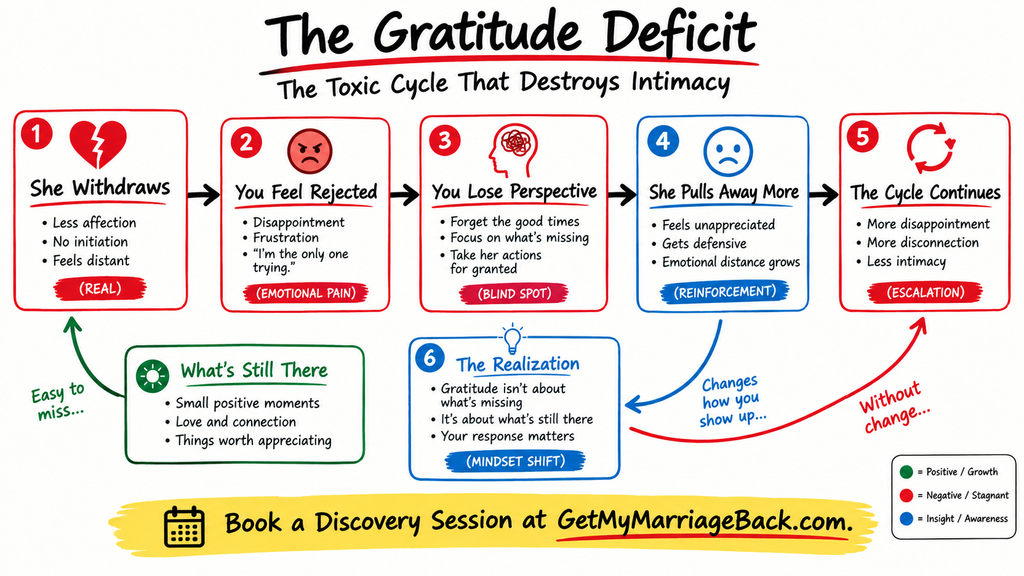
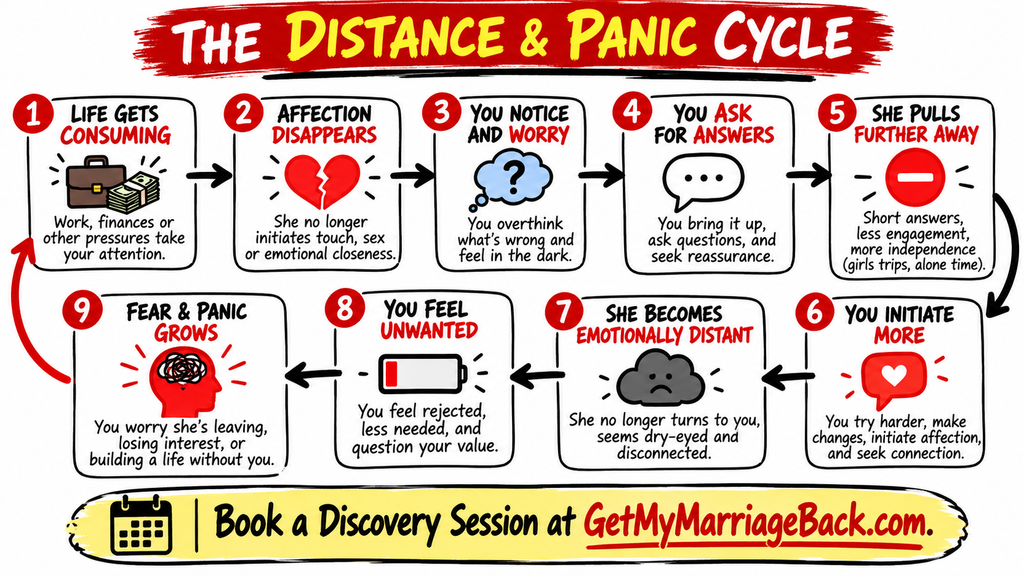
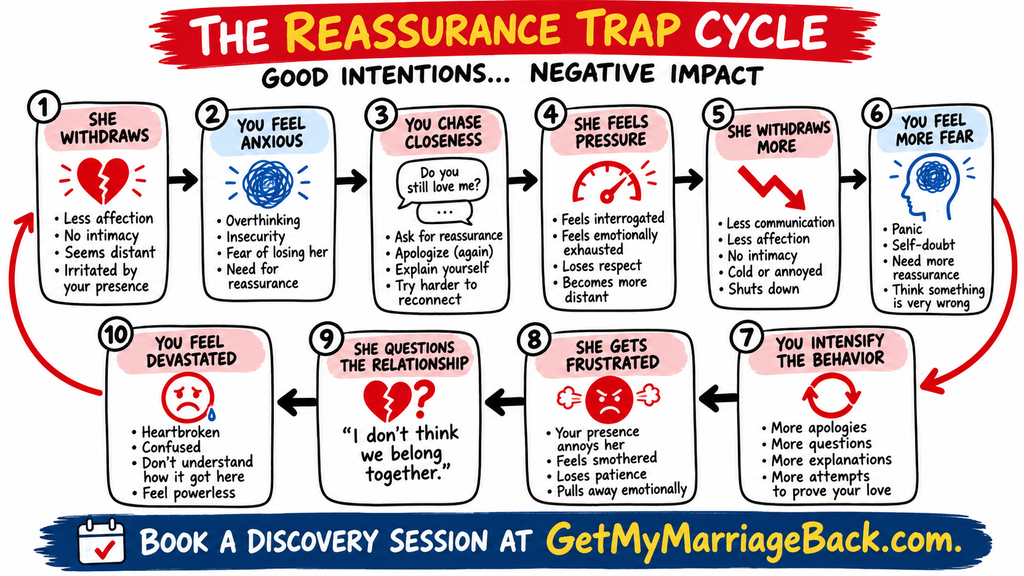
Many marriages feel hopeless because the same painful cycle keeps repeating.

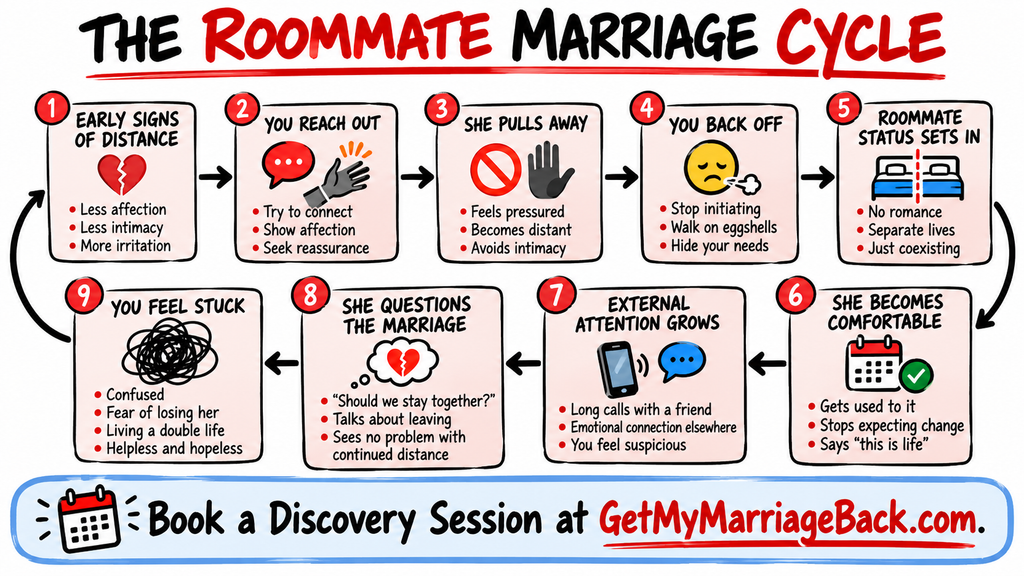
One partner pursues. The other withdraws.

The pursuer becomes more anxious, demanding, and emotionally intense. The withdrawing partner feels controlled and becomes colder. The increased distance causes even more pursuit.

Eventually, both spouses believe the other person is the problem.

But often, the real enemy is the cycle.

Other common cycles include:

  • Criticism followed by defensiveness
  • Disrespect followed by emotional shutdown
  • Broken promises followed by surveillance
  • Sexual rejection followed by resentment
  • Stress followed by irritability and avoidance
  • Shame followed by secrecy
  • Control followed by rebellion
  • Pride followed by emotional punishment

Patterns can be changed when they are identified honestly.

It becomes more difficult when a spouse repeatedly refuses accountability, rejects all boundaries, or remains committed to behavior that makes emotional or physical safety impossible. But when both people are caught in a pattern they dislike, there may be significant room for recovery.

9. There Is Still a Willingness to Try Something Different

You do not need perfect confidence that the marriage will survive.

You need enough willingness to stop repeating what has already failed.

That willingness may include:

  • Trying marriage counseling
  • Receiving individual support
  • Changing communication habits
  • Setting clearer boundaries
  • Addressing untreated mental health concerns
  • Creating transparency after betrayal
  • Rebuilding physical and emotional intimacy gradually
  • Changing financial or household systems
  • Making time for friendship
  • Allowing the rebuilding process to unfold without forcing it

A marriage cannot be restored through promises alone. Look for behavior.

Real willingness sounds like, โ€œI do not know whether this will work, but I am prepared to participate honestly.โ€

Can You Save a Marriage When Only One Person Is Trying?

Can You Save a Marriage When Only One Person Is Trying?

One spouse can begin the change, but one spouse cannot complete the entire repair.

Your self-leadership can interrupt destructive patterns. When you become calmer, stop chasing, communicate more clearly, and refuse disrespect without hostility, the relationshipโ€™s emotional system changes.

Your spouse must now respond to a different version of you.

That shift may reduce defensiveness, increase curiosity, and make reconnection more possible. But it cannot force honesty, faithfulness, affection, or accountability from another adult.

Your job is not to control the outcome. Your job is to become the healthiest, most grounded version of yourself while evaluating your spouseโ€™s response over time.

You can open the door.

You cannot make another person walk through it.

How to Stop the Reactive Cycle and Lead From Emotional Stability

When you are afraid of losing your marriage, your instincts may tell you to do more: talk more, explain more, text more, pursue more, and demand answers more urgently.

But panic rarely produces attraction or trust.

Use the following steps to regain stability.

Stop Treating Every Mood as an Emergency

Your spouse is allowed to have emotions you do not like.

Do not interpret every quiet evening, delayed response, or bad mood as proof that divorce is coming. Emotional monitoring makes you anxious and makes your spouse feel watched.

Respond to patterns, not every passing emotion.

Remove Shame, Sarcasm, and Condescension

Shaming language may produce short-term compliance, but it destroys emotional safety.

Avoid insults, character attacks, moral superiority, guilt tactics, sarcastic jabs, and public humiliation. Address the behavior directly without degrading the person.

Instead of saying, โ€œYou are a selfish narcissist,โ€ say, โ€œWhen you make this decision without discussing it with me, I feel disregarded. I need us to agree on a better process.โ€

Establish Boundaries Without Performing Anger

A boundary is not a threat designed to control another person.

It is a clear statement of what you will participate in, what you will not tolerate, and what action you will take to protect your well-being.

For example:

โ€œI want to discuss this, but I will not continue while we are insulting each other. I am going to step away, and we can try again when we are calmer.โ€

A mature boundary does not require shouting. Its strength comes from consistency.

Rebuild Your Physical and Mental Health

Your marriage should matter, but it should not consume your identity.

Return attention to your sleep, physical health, work, purpose, spiritual grounding, friendships, and emotional development. This is not a trick to make your spouse miss you.

It is how you stop asking the relationship to provide every form of certainty, significance, connection, growth, and fulfillment.

A healthier you makes better decisionsโ€”whether the marriage recovers or not.

Bring Back Variety and Positive Energy

Relationships suffocate when every interaction becomes a discussion about problems.

Create moments of novelty and lightness without pretending the issues do not exist. Try a new activity, change the environment, bring humor into the home, or have a conversation that is not about the marriage.

Attraction needs some freedom from constant analysis.

Replace Expectations With Clear Requests

Unspoken expectations often become silent contracts:

โ€œIf you loved me, you would know what I need.โ€

When your spouse fails the test they did not know they were taking, resentment grows.

State what you want directly and allow your spouse to respond honestly. A clear request creates an opportunity for cooperation; an expectation creates a setup for disappointment.

Let the Process Reveal the Truth

Do not demand certainty before enough evidence exists.

Marriage repair is a process. Your spouseโ€™s consistency, accountability, and willingness will reveal more than emotional promises made during a crisis.

Practice patience without becoming passive. Pray about what you cannot control, act wisely on what you can control, and observe the pattern over time.

Signs Your Marriage Needs More Than Self-Help

Some problems require trained professional support.

Consider working with a qualified marriage therapist, individual therapist, faith leader, or other appropriate professional when you are dealing with:

  • An affair or repeated betrayal
  • Addiction
  • Severe communication breakdown
  • Persistent contempt
  • Untreated depression or another mental health concern
  • Sexual trauma or major intimacy problems
  • Threats of divorce used as manipulation
  • Escalating conflict
  • Long-term emotional withdrawal

Professional support is not proof that the marriage has failed. It can provide structure when both spouses are too emotionally flooded to repair the relationship alone.

When Hope Should Not Become Self-Abandonment

Not every marriage should be preserved at any cost.

Physical violence, sexual coercion, stalking, threats, intimidation, severe financial control, and patterns of abuse are not ordinary communication problems. Prioritize safety and seek appropriate professional or local support rather than attempting to become more attractive, patient, or accommodating.

You should also be cautious when your spouse consistently:

  • Refuses all responsibility
  • Repeatedly violates important boundaries
  • Uses counseling to manipulate or retaliate
  • Continues an affair without remorse or transparency
  • Shows contempt for your well-being
  • Makes promises but never changes behavior
  • Punishes you for expressing basic needs
  • Expects you to carry the relationship indefinitely

Self-leadership does not mean tolerating mistreatment.

It means having enough emotional clarity to distinguish between a wounded marriage that needs repair and a destructive situation that requires protection, distance, or a different decision.

What to Do When You See Signs Your Marriage Can Still Be Saved

Do not use these signs as an excuse to relax and return to the same patterns.

Use them as an invitation to act differently.

Begin with three commitments:

1. Become Grounded

Stop making permanent decisions in the middle of emotional flooding. Regulate your body, slow your reactions, and reconnect with your values before initiating major conversations.

2. Become Purposeful

Do not let the crisis become your entire identity. Use the pain as information and motivation to develop greater confidence, discipline, awareness, and emotional maturity.

3. Become Self-Aware

Notice the role you play without blaming yourself for everything. Identify your triggers, expectations, pride, communication habits, and attempts to control the outcome.

Your spouse may or may not follow your lead.

But regardless of what happens, you will stop abandoning yourself in the process.

signs your marriage can still be saved - the bottom line

The Bottom Line

The most meaningful signs your marriage can still be saved are not superficial.

Living in the same house, sharing finances, or having children may provide more opportunities to reconnect, but those circumstances alone do not prove that a healthy relationship remains.

Look instead for emotional engagement, shared values, moments of vulnerability, friendship, accountability, and a willingness to try a different approach.

Then stop waiting passively for your spouse to become the person who saves the marriage.

Lead yourself first.

Become calmer without becoming cold. Set boundaries without becoming cruel. Restore your purpose without using distance as punishment. Create attraction without manipulation. Speak honestly without shaming. Allow your behavior to communicate dignity, stability, confidence, and emotional strength.

You cannot control whether your spouse chooses to rebuild with you.

But you can stop feeding the cycle that has been pushing both of you further apartโ€”and that may be the first real sign that your marriage has a chance.

If you missed part 1 of the series, click here to check it out.

Frequently Asked Questions [FAQ]

How do you know when a marriage cannot be saved?

A marriage may be beyond repair when there is ongoing abuse, persistent contempt, repeated betrayal without accountability, or a complete refusal to participate in change. A qualified professional can help you evaluate the situation safely and objectively.

What are the signs a marriage will end in divorce?

Common warning signs include chronic contempt, emotional detachment, repeated unresolved conflict, secrecy, and one or both spouses refusing responsibility. These signs indicate serious risk, but they do not guarantee divorce if both partners are willing to change.

How do I know if God wants me to end my marriage?

Prayer, spiritual counsel, personal safety, wise boundaries, and an honest examination of the relationship can help guide your decision. Avoid assuming that enduring abuse or serious mistreatment is automatically a spiritual obligation.

What are the first signs a marriage is ending?

Early signs may include reduced affection, avoidance, constant criticism, loss of friendship, emotional withdrawal, and conversations that feel purely transactional. Addressing these patterns early gives the relationship a better chance of recovery.

Rules for Marriage: 12 Guardrails for a Healthy, Attractive Bond

It has become popular to say there are no universal rules for marriage.

People claim every marriage is different, relationships do not come with manuals, and couples must simply discover what works for them. There is some truth in that ideaโ€”but it can also become an excuse to avoid responsibility, discipline, and self-examination.

Every marriage has its own personality. Yet healthy, lasting marriages consistently reveal recognizable patterns.

Couples who remain connected over time tend to communicate with respect, protect one anotherโ€™s dignity, repair conflict, maintain friendship, manage expectations, and continue cultivating romantic and sexual attraction. These patterns may not be rigid laws, but they are reliable guardrails.

Success leaves clues.

When people repeatedly succeed at something as emotionally complex as marriage, it is reasonable to study how they think, behave, recover, and reconnect. A person who genuinely values marriage should be willing to identify those patterns rather than dismiss the entire subject by saying, โ€œThere are no rules.โ€

The healthiest rules for marriage do not imprison two people. They protect the environment in which trust, friendship, desire, growth, and emotional safety can flourish.

rules for marriage

Marriage Rules Are Guardrails, Not Instruments of Control

The word โ€œrulesโ€ can make marriage sound rigid, restrictive, or authoritarian.

That is not the purpose of these principles.

Healthy marriage guardrails are not weapons for controlling your spouse. They are standards you first apply to yourself. They help you decide how you will communicate, respond, lead, apologize, create connection, and protect the relationshipโ€”even when your spouse is not behaving perfectly.

This matters because many people wait for their partners to change before improving their own conduct.

They say:

  • โ€œI will become affectionate when my spouse becomes more attentive.โ€
  • โ€œI will communicate respectfully when my spouse stops frustrating me.โ€
  • โ€œI will apologize when my spouse admits what they did.โ€
  • โ€œI will bring more romance when my spouse becomes more attractive.โ€
  • โ€œI will work on the marriage when my partner proves they care.โ€

That mindset creates a stalemate.

Personal leadership means refusing to surrender control of your character simply because another person is imperfect. You cannot control your spouseโ€™s behavior, but you can influence the emotional climate of your marriage through the energy, discipline, warmth, honesty, and maturity you consistently bring into it.

You may sometimes have to begin a healthier cycle alone. That does not mean carrying the entire marriage indefinitely or tolerating abuse. It means taking responsibility for your contribution before using your spouseโ€™s shortcomings to justify your own.

The Number-One Rule for Marriage: Pursue Unity

The foundational rule for marriage is the pursuit of unity.

Unity does not mean agreeing about everything. It does not require either spouse to abandon personal identity, independent thought, boundaries, or ambition.

Unity means remembering that you are on the same team.

Every disagreement, financial decision, family challenge, intimacy issue, career transition, and parenting conflict should be approached from one central question:

What response will strengthen us as a team?

Without unity, spouses begin operating like opposing attorneys. Each person gathers evidence, defends a position, exposes the other personโ€™s weaknesses, and tries to win the case.

But winning an argument while damaging your spouseโ€™s dignity is not a marital victory. If your partner leaves the conversation feeling humiliated, emotionally abandoned, or unsafe with you, the relationship has lostโ€”even when your logic was correct.

Unity changes the objective of conflict.

The goal is no longer to establish which spouse is the superior thinker. The goal is to understand the problem, protect the bond, and find the most responsible path forward together.

12 Essential Rules for Marriage

12 Essential Rules for Marriage

The following rules for marriage are not shortcuts to a conflict-free relationship. They are practical standards for creating a marriage that is resilient, emotionally intelligent, affectionate, and mutually attractive.

1. Protect Unity More Than Your Ego

Pride turns ordinary disagreements into power struggles.

Instead of addressing the actual issue, spouses begin defending their intelligence, authority, reputation, or right to feel offended. One person needs to be correct. The other needs to avoid looking weak. Soon, the original problem becomes less important than winning.

A healthier question is not, โ€œHow do I prove my point?โ€

It is, โ€œHow do we solve this without destroying connection?โ€

Protecting unity may require you to soften your tone, acknowledge a valid point, pause a heated discussion, or apologize for your delivery even when your underlying concern remains legitimate.

Humility is not humiliation. It is the strength to place the health of the marriage above the temporary satisfaction of being declared right.

2. Practice Radical Personal Accountability

One of the most powerful rules for marriage is to stop waiting for your spouse to go first.

Take responsibility for the atmosphere you create.

Examine your tone, body language, emotional availability, spending habits, reliability, affection, criticism, defensiveness, and willingness to repair. Ask what it feels like to live with youโ€”not merely what you intended.

Accountability does not mean accepting blame for everything. It means honestly confronting the part you can control.

Emotionally intelligent spouses do not say, โ€œYou made me behave this way.โ€ They recognize that frustration may explain a reaction, but it does not excuse contempt, cruelty, dishonesty, or emotional recklessness.

Your partner may contribute to the tension. Your response still belongs to you.

3. Fight the Problem, Not Each Other

Healthy couples experience conflict. The difference is how they handle it.

Attacking your spouseโ€™s character turns a solvable problem into an identity wound. Statements such as โ€œYou are selfish,โ€ โ€œYou never care,โ€ or โ€œYou always ruin everythingโ€ invite defensiveness instead of cooperation.

Address the behavior, its impact, and the desired change.

For example:

โ€œWhenever major purchases are made without a conversation, I feel excluded from decisions that affect us both. I want us to agree on an amount that requires mutual discussion.โ€

That approach is specific, responsible, and solution-oriented.

Avoid yelling, insults, threats, mockery, guilt, condemnation, condescension, and sarcastic put-downs. These behaviors may create momentary compliance, but they gradually poison affection and attraction.

You cannot repeatedly treat your spouse like an enemy and expect them to remain emotionally or sexually open to you.

4. Protect Your Spouseโ€™s Dignity in Public

Public loyalty is one of the most important rules for a successful marriage.

Do not use your spouse as material for jokes, expose private weaknesses for entertainment, or recruit family and friends into your marital disputes. Every relationship needs a protected inner circle.

This does not mean concealing abuse, addiction, danger, or serious misconduct. Professional support and trusted counsel may be necessary in those circumstances.

It means ordinary frustrations should not become public campaigns against your partnerโ€™s reputation.

Speak about your spouse in a way that protects the possibility of reconciliation. Once relatives and friends are trained to despise your partner, they may continue holding resentment long after the two of you have repaired the issue.

Correct privately. Honor publicly.

5. Never Stop Cultivating Attraction

Marriage does not eliminate the need for seduction. It makes intentional attraction more important.

Many couples stop doing the very things that originally created desire. Curiosity becomes assumption. Playfulness becomes logistics. Compliments become criticism. Dates become errands. Touch becomes functional. Mystery disappears under the weight of routine.

Attraction needs both certainty and variety.

Your spouse should feel secure in your commitment while still experiencing freshness, anticipation, flirtation, discovery, and emotional movement. Reliability creates safety, but thoughtful unpredictability helps keep romance alive.

Continue dressing with intention. Initiate affectionate touch. Plan experiences. Send suggestive messages. Compliment specific qualities. Create private jokes. Look at your spouse with desire instead of treating them like another household employee.

Seduction in marriage is not manipulation. It is the art of making your spouse feel seen, chosen, desired, and emotionally alive in your presence.

6. Maintain Friendship Beneath the Marriage

Romance is difficult to sustain without friendship.

Your spouse should not become someone you only discuss bills, children, chores, and problems with. A marriage needs moments of lightness, laughter, shared interests, companionship, and genuine curiosity.

Ask questions that are not administrative.

What has been occupying your spouseโ€™s mind lately and what are they afraid of? What are they excited about and what do they miss?

And what do they want to experience next?

Friendship gives a marriage emotional resilience. During seasons when passion fluctuates, responsibilities increase, or life becomes stressful, friendship helps couples remain connected enough to rebuild.

Make time to enjoy each other without turning every interaction into a relationship evaluation.

7. Manage Expectations Before They Become Resentment

Many marriages suffer less from a lack of love than from unspoken, unrealistic, or conflicting expectations.

One spouse expects frequent affection. The other assumes commitment should be enough. One expects traditional roles. The other expects everything to be divided equally. One assumes money should be saved. The other believes it should be enjoyed. Neither explains the expectation clearly, yet both feel betrayed when it is not fulfilled.

Unspoken expectations eventually become invisible contracts.

You punish your spouse for violating an agreement they never knew they had made.

Discuss expectations concerning finances, sex, household responsibilities, family boundaries, parenting, faith, social life, privacy, career decisions, and quality time. Revisit these conversations as your circumstances change.

Do not expect mind-reading. Clarity is more loving than silent resentment.

8. Refuse to Keep Score

Scorekeeping transforms partnership into a transaction.

โ€œI initiated the last date.โ€

โ€œAlso… I apologized first.โ€

โ€œ…handled the children yesterday.โ€

โ€œI have done more for this marriage than you.โ€

Some imbalance is unavoidable. There will be seasons when one spouse contributes more because the other is sick, grieving, overwhelmed, pregnant, unemployed, building a business, or managing another serious responsibility.

A strong marriage cannot be sustained by measuring every gesture with perfect mathematical equality.

This does not mean tolerating chronic irresponsibility. Persistent imbalance should be addressed. But approach it as a problem to solve rather than an opportunity to prove moral superiority.

Marriage works best when both spouses aim to contribute generously, not minimally.

9. Repair Quickly and Apologize Completely

Every marriage experiences emotional ruptures. Strong marriages become skilled at repair.

A complete apology does not sound like:

โ€œI am sorry you were offended.โ€

โ€œSorry, but you pushed me.โ€

โ€œI already apologized, so get over it.โ€

A meaningful apology identifies the behavior, acknowledges its impact, expresses remorse, and communicates a commitment to change.

For example:

โ€œI was dismissive when you tried to explain your concern. My tone made you feel insignificant, and that was disrespectful. I am sorry. Next time, I will slow down and listen before responding.โ€

Repair should not be delayed merely to protect pride. The longer emotional distance is allowed to harden, the more difficult reconnection becomes.

Apologizing first does not automatically mean you were entirely wrong. It may simply mean you are mature enough to stop the bleeding.

10. Regulate Yourself Before Correcting Your Spouse

Emotional regulation is essential to both conflict resolution and attraction.

A constantly reactive spouse becomes difficult to approach. When every concern triggers defensiveness, rage, panic, moral lectures, threats, or dramatic withdrawal, honest communication begins to feel dangerous.

Learn to pause.

Take a breath. Lower your voice. Ask for a short break when necessary. Return to the conversation at an agreed time rather than disappearing indefinitely.

Self-control is attractive because it communicates strength, stability, and emotional safety. This is different from emotional suppression. Regulating an emotion means managing how it is expressed, not pretending it does not exist.

You are allowed to be angry. You are not entitled to become cruel.

11. Make Intimacy an Ongoing Conversation

Sex should not be treated as an automatic entitlement or an optional luxury that receives attention only after every other responsibility is complete.

Physical intimacy is one of the ways many spouses experience connection, reassurance, playfulness, and desire. Yet healthy sexual connection requires emotional intelligence, communication, responsiveness, and respect.

Discuss frequency, initiation, preferences, stress, health, rejection, affection, novelty, and changing needs without shaming one another.

Avoid using sex as a weapon, reward, bargaining chip, or measurement of personal worth. At the same time, do not dismiss a spouseโ€™s repeated concerns about intimacy as shallow or unimportant.

A thriving intimate life is not created through pressure. It is built by becoming the kind of partner with whom emotional and physical openness feels appealing.

That includes personal hygiene, attentiveness, confidence, affection, patience, emotional presence, and a willingness to keep learning your spouse.

12. Maintain the Marriage Before It Breaks

Do not wait for a crisis before paying attention to your relationship.

Cars receive maintenance. Businesses conduct reviews. Athletes examine performance. Yet many couples assume marriage should survive indefinitely without structured attention.

Schedule regular conversations about the state of the relationship.

Ask:

  • What has felt good between us lately?
  • Where have we felt disconnected?
  • What do you need more of from me?
  • Is there any resentment we need to address?
  • How is our friendship?
  • How is our physical connection?
  • What would make the next month better?

These conversations should not become blame sessions. Their purpose is to identify small points of friction before they develop into entrenched resentment.

Healthy marriages are not merely repaired. They are maintained.

Rules for Marriage That Preserve Emotional Attraction

Rules for Marriage That Preserve Emotional Attraction

Emotional attraction grows when your spouse associates your presence with a healthy combination of safety, significance, connection, growth, and positive anticipation.

That does not mean making your spouse responsible for meeting every emotional need. Mature adults maintain a sense of purpose, identity, friendship, self-respect, and personal responsibility outside the relationship.

However, marriage should become a meaningful place where both people feel valued and emotionally nourished.

You strengthen emotional attraction when you:

  • Listen without immediately correcting.
  • Express appreciation with specificity.
  • Create shared experiences.
  • Respect your spouseโ€™s individuality.
  • Respond to vulnerability with care.
  • Maintain standards for your own growth.
  • Bring confidence instead of chronic neediness.
  • Offer affection without always demanding an immediate return.
  • Create emotional safety without becoming dull or passive.
  • Balance reliability with playfulness and novelty.

Neediness suffocates attraction because it makes your spouse responsible for constantly stabilizing your identity. Emotional coldness also destroys attraction because it starves the bond of warmth and reassurance.

The goal is grounded interdependence: two self-aware people who can stand independently but intentionally choose to build together.

Behaviors That Quietly Poison a Marriage

Some marriages do not collapse because of one dramatic event. They weaken through repeated moments of contempt.

Watch for patterns such as:

  • Shaming your spouse for expressing a need.
  • Insulting their intelligence or appearance.
  • Blaming them for every negative emotion.
  • Judging their motives without evidence.
  • Condemning their entire character over one behavior.
  • Using guilt to force cooperation.
  • Responding to emotion with cold logic alone.
  • Using sarcasm to conceal hostility.
  • Speaking with condescension.
  • Becoming obsessed with proving who is right or wrong.

These behaviors destroy emotional safety. Once emotional safety disappears, honesty decreases, defensiveness rises, physical affection becomes more complicated, and attraction begins to erode.

Truth can be delivered without humiliation.

Tough conversations are sometimes necessary. But tough love without emotional intelligence easily becomes ordinary cruelty wearing a respectable label.

What to Do When You Are the Only One Applying These Rules

You cannot single-handedly create a healthy marriage forever. Marriage ultimately requires participation from both people.

But one person can interrupt an unhealthy cycle.

You can stop yelling even when your spouse continues raising their voice. Also you can become clearer about expectations. …apologize for your contribution.

You can stop publicly criticizing the marriage. And you can restore playfulness, improve your emotional regulation, and initiate a more mature conversation.

Sometimes a different response produces a different response.

However, self-leadership should not become self-abandonment. If your spouse consistently refuses accountability, violates boundaries, behaves abusively, betrays agreements, or shows no willingness to participate in repair, outside support may be necessary.

Starting the cycle does not mean carrying another capable adult indefinitely.

The Rules for Marriage Must Be Lived, Not Merely Discussed

Marriage advice is easy to collect and difficult to embody.

The value of these rules is not in agreeing with them intellectually. The value is in practicing them when you are disappointed, tired, sexually frustrated, financially stressed, misunderstood, or convinced that your spouse should go first.

A strong marriage is rarely built through one grand gesture.

It is built through repeated decisions:

To protect unity, regulate pride.

…communicate clearly.

To remain curious, quickly, preserve dignity, create attraction intentionally

To keep choosing the relationship without losing yourself.

There may be no single manual that can predict every challenge your marriage will face. But that does not mean there are no principles.

Healthy marriages leave patterns. Wise couples study those patterns, apply them with emotional intelligence, and adapt them to the unique realities of their relationship.

The best rules for marriage are not restrictions imposed by one spouse upon the other.

They are shared guardrails that protect the friendship, intimacy, unity, and attraction both people are responsible for creating.

19 Signs Your Wife Is Not Sexually Attracted To You

Frequently Asked Questions

What are the rules of marriage?

The rules of marriage are practical guardrails that promote unity, respect, accountability, communication, loyalty, intimacy, and ongoing connection. They are not tools for controlling a spouse but standards both partners use to protect the relationship.

What is the rule for success in marriage?

The foundational rule is to pursue unity by approaching problems as teammates rather than opponents. Every other healthy principle becomes easier when protecting the bond matters more than defending individual ego.

What are the rules for successful marriage?

Successful marriages rely on honest communication, personal accountability, mutual respect, friendship, emotional regulation, clear expectations, rapid repair, public loyalty, and intentional intimacy. Couples must also continue dating, appreciating, and learning one another as they grow.

What is the #1 thing that destroys marriages?

Mismanaged pride is one of the most destructive forces because it prevents accountability, apology, compromise, and emotional repair. When being right becomes more important than staying connected, resentment and contempt can gradually replace affection.

Sexless Marriage: How to Rebuild Intimacy, Attraction and Connection

A sexless marriage can create a uniquely painful form of loneliness. You may share a home, raise children, manage responsibilities and even appear happy in publicโ€”yet privately feel unwanted, rejected or emotionally abandoned.

For some couples, infrequent sex is a mutual preference and not a problem. The real crisis begins when one or both spouses feel distressed by the loss of affection, erotic energy or emotional connection.

A sexless marriage is rarely solved by demanding more sex. It is also rarely just about sex.

Sexless Marriage and the Downsides.

Physical distance can be a symptom of chronic stress, unresolved resentment, health conditions, hormonal changes, painful sex, medication side effects, damaged trust or a relationship dynamic in which attraction has slowly been replaced by pressure.

Rebuilding intimacy therefore requires more than scheduling intercourse or reminding your spouse of marital obligations. It requires emotional intelligence, self-leadership, honest communication and the patient rebuilding of a relationship in which desire can breathe again.

What Is Considered a Sexless Marriage?

A commonly used benchmark describes a sexless marriage as one in which a couple has sexual contact fewer than 10 times per year or approximately once a month or less. However, this is not a universal medical diagnosis, and frequency alone does not tell you whether a marriage is healthy.

A couple having sex six times a year may feel deeply affectionate and satisfied. Another couple may have sex twice a month while one spouse feels pressured, disconnected or emotionally starved.

The more useful questions are:

  • Are both spouses comfortable with the current level of intimacy?
  • Is physical affection freely chosen or performed out of obligation?
  • Does either spouse feel persistently rejected, pressured or undesirable?
  • Has affection disappeared along with sex?
  • Can the couple discuss intimacy without blame, defensiveness or withdrawal?

A sexless marriage becomes a serious relationship issue when the difference in desire is creating pain, resentment, avoidance or an ongoing loss of connection.

Why Do Marriages Become Sexless?

Why Do Marriages Become Sexless?

There is rarely one simple cause. Most sexless marriages develop through a combination of physical, emotional and relational factors.

Stress, Exhaustion and Overloaded Lives

Work demands, parenting, financial pressure, caregiving and inadequate sleep can leave spouses with little energy for romance.

When every conversation revolves around bills, children and unfinished tasks, partners can gradually become efficient coworkers rather than lovers. The relationship may still function, but its sense of anticipation and play disappears.

Medical Conditions and Hormonal Changes

Low desire is not always a relationship verdict. Chronic pain, diabetes, heart disease, thyroid disorders, depression, anxiety, menopause, pregnancy, postpartum changes and other health conditions can affect sexual interest or function.

Certain medicationsโ€”including some antidepressantsโ€”may also reduce libido or make arousal and orgasm more difficult. Pain during sex, erectile difficulties and changes in lubrication can cause someone to avoid intimacy because they expect discomfort, embarrassment or disappointment.

When the decline in intimacy is sudden, severe or accompanied by physical symptoms, medical evaluation should be an early step rather than a last resort.

Unresolved Resentment

Desire struggles to survive where resentment is repeatedly buried.

A spouse who feels criticized, dismissed, overburdened, betrayed or emotionally neglected may stop opening up physically. Even when the original conflict appears small, years of unaddressed disappointments can make vulnerability feel unsafe.

Sex may be the visible problem, while the deeper issue is accumulated hurt.

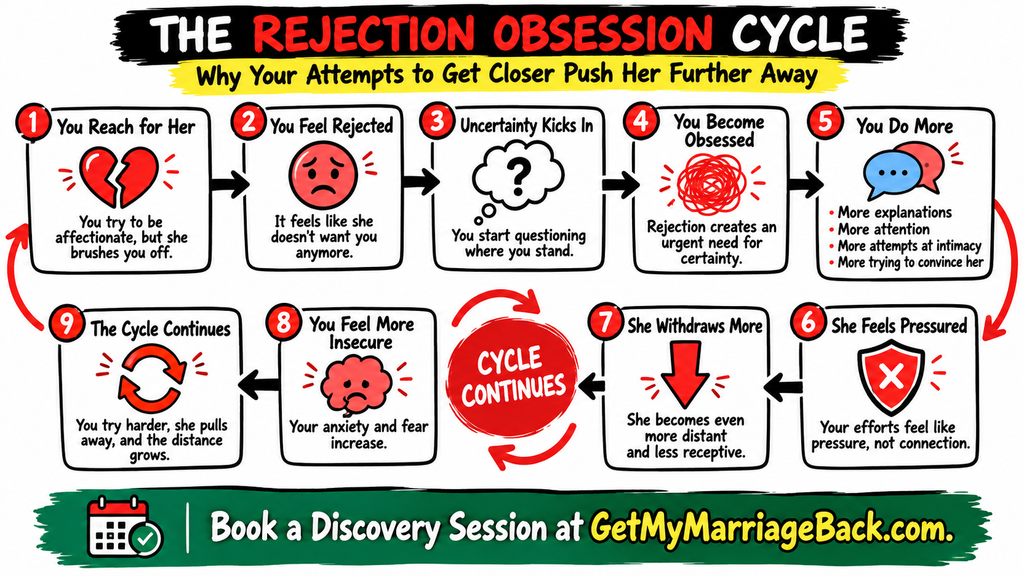
Pressure and the Pursuerโ€“Withdrawer Cycle

One spouse wants more closeness and begins pursuing. The other experiences that pursuit as pressure and withdraws. The withdrawal increases the first spouseโ€™s anxiety, producing even more pursuit.

Soon, a hug is no longer just a hug. It feels like the beginning of a negotiation.

The lower-desire spouse becomes guarded because every affectionate moment appears to carry an expectation. The higher-desire spouse becomes increasingly resentful because every rejection feels like proof that they are unwanted.

Neither spouse feels emotionally safe, and the cycle reinforces itself.

Loss of Attraction and Polarity

Marriage naturally requires partnership, cooperation and routine. But desire also needs individuality, curiosity, confidence and enough emotional space for two people to continue experiencing each other as distinct human beings.

Attraction can fade when one spouse becomes chronically needy, passive, controlling, contemptuous, reactive or disconnected from personal purpose.

It can also decline when the relationship loses novelty and every interaction becomes predictable. Certainty supports commitment, but healthy variety keeps romance awake.

Broken Trust

Infidelity, secrecy, dishonesty, addiction, financial betrayal or repeated broken promises can make physical vulnerability feel dangerous.

Sexual connection cannot be sustainably rebuilt while the injured spouse is being rushed past unresolved pain. Trust restoration may require accountability, transparency and professional support before erotic intimacy can return.

Shame, Trauma or Negative Sexual Experiences

Past trauma, religious shame, body-image struggles and earlier experiences of coercion can profoundly affect desire.

These situations require patience and trauma-informed care. Seduction must never be used to override fear, boundaries or consent.

Different Levels of Desire

Desire differences are common and do not automatically mean either spouse is defective.

One person may experience spontaneous desire, while the other experiences responsive desire that emerges only after relaxation, affection or emotionally safe stimulation has begun. Problems develop when those differences are interpreted as rejection, inadequacy or entitlement.

Sexless Marriage - Why Negotiating for Desire Usually Backfires

Why Negotiating for Desire Usually Backfires

You can negotiate schedules, responsibilities and relationship agreements. You cannot negotiate another person into genuinely desiring you.

Statements such as these rarely create attraction:

  • โ€œWe are married, so you should want sex.โ€
  • โ€œI did everything you asked. What more do you want?โ€
  • โ€œA good husband or wife would meet my needs.โ€
  • โ€œYou rejected me last week, too.โ€
  • โ€œIf you loved me, you would do this.โ€

These messages may produce compliance, but compliance is not desire.

Pressure transforms intimacy into a test that the lower-desire spouse expects to fail. It also teaches the higher-desire spouse to depend on sexual access for reassurance, significance or emotional stability.

Healthy attraction grows through invitation, not emotional debt.

The Chore-Play Trap

Contributing to the household is part of being a responsible partner. Sharing labor may also reduce exhaustion and create more room for connection.

The problem begins when helpful behavior becomes a covert contract:

โ€œI completed these tasks, so my spouse should reward me with sex.โ€

That unspoken exchange creates resentment because one spouse feels unappreciated while the other feels manipulated.

Do the dishes because they need to be done. Parent your children because they are your children. Support your spouse because partnership matters.

Then address intimacy directly, honestly and without disguising sexual expectations as generosity.

Stop Policing the Relationship

Repeatedly lecturing your spouse about what marriage is โ€œsupposedโ€ to include may be logically understandable, but it is rarely seductive.

The relationship-police role communicates judgment rather than confidence. It turns one spouse into the prosecutor and the other into the accused.

Desire does not flourish under surveillance.

This does not mean silently accepting an arrangement that causes you pain. It means expressing your needs with dignity rather than trying to shame your spouse into submission.

You can say:

โ€œPhysical and emotional intimacy matter deeply to me. I do not want pressured or obligatory sex, but I also do not want us to ignore the distance between us. I would like us to understand what has changed and decide together whether we are willing to rebuild.โ€

That is not begging, threatening or moralizing. It is clear adult communication.

How to Fix a Sexless Marriage Without Creating More Pressure

There is no guaranteed formula, because you cannot control another personโ€™s feelings or choices. You can, however, change the environment in which your relationship is operating.

1. Rule Out Medical and Psychological Causes

Begin with curiosity rather than accusation.

A medical professional may help identify hormonal changes, pain, sexual dysfunction, medication side effects, depression, anxiety or other factors affecting desire. Never stop or change prescription medication without consulting the prescribing clinician.

A licensed therapist may also help when trauma, shame, grief, body-image struggles or persistent mental-health symptoms are involved.

2. Remove Covert Pressure

Stop turning every touch into an attempt to initiate sex.

Offer affection that is complete in itself: a hug that does not escalate, a kiss without expectation or a gentle touch that does not become a test.

You may even need to say explicitly:

โ€œI want us to become comfortable with affection again. I am not going to treat every moment of closeness as a demand for sex.โ€

Pressure reduction is not a manipulation tactic designed to make your spouse pursue you. It is a sincere effort to restore freedom and emotional safety.

3. Stop Counting Rejections

Keeping a mental scoreboard makes every interaction adversarial.

Tracking how often your spouse says no may appear to provide evidence, but it also keeps your attention locked onto rejection. Over time, you begin approaching your spouse with the emotional weight of every previous disappointment.

Address the overall pattern during an intentional conversation. Do not prosecute the marriage one declined invitation at a time.

4. Rebuild Self-Respect

Your spouseโ€™s desire matters, but it cannot be the sole measurement of your value.

Return to the foundations of your own life:

  • Improve your physical health.
  • Dress and groom yourself with care.
  • Strengthen friendships.
  • Pursue meaningful work.
  • Develop emotional discipline.
  • Reconnect with faith, gratitude or grounding practices.
  • Build a life that contains purpose beyond receiving validation.

This is not about pretending not to care. It is about caring without collapsing.

Grounded confidence is attractive because it creates emotional stability. Neediness, constant reassurance-seeking and victim behavior create pressure because they make your spouse responsible for regulating your identity.

5. Address Disrespect Before Pursuing Romance

Do not beg for closeness while tolerating contempt.

Eye-rolling, insults, humiliation, sarcasm, constant criticism and dismissiveness poison attraction. You cannot seduce your way around a relationship culture built on disrespect.

Set calm boundaries:

โ€œI am willing to discuss what is wrong, but I am not willing to be insulted. Let us pause and return to this conversation when we can speak respectfully.โ€

A boundary is not an attempt to control your spouse. It states what you will participate in and what you will do when the standard is violated.

Boundaries without follow-through become empty threats. Boundaries delivered with rage become punishment. The goal is calm consistency.

6. Have One Honest Conversation Instead of 100 Arguments

Choose a neutral timeโ€”not bedtime, not immediately after rejection and not during an argument.

Focus on understanding rather than winning.

Ask:

  • โ€œWhen did intimacy begin feeling different for you?โ€
  • โ€œIs there anything about sex that has become uncomfortable or pressured?โ€
  • โ€œDo you feel emotionally close to me?โ€
  • โ€œAre there unresolved hurts affecting your desire?โ€
  • โ€œWhat makes affection feel safe and enjoyable?โ€
  • โ€œAre you willing to work on this with me?โ€

Listen carefully, especially when the answer is difficult.

Emotional leadership does not mean controlling the conversation. It means regulating yourself well enough to hear the truth without immediately shaming, correcting or defending.

7. Restore Friendship

A relationship cannot live on sexual chemistry alone, but attraction often struggles when friendship disappears.

Spend time together without turning every activity into a relationship summit. Laugh. Ask meaningful questions. Show interest in your spouseโ€™s inner world. Share experiences that are not centered on parenting or household management.

Friendship does not replace sex. It rebuilds the emotional bridge across which intimacy can eventually travel.

8. Bring Back Variety and Anticipation

Familiarity is comforting, but excessive predictability can flatten attraction.

Change the atmosphere:

  • Plan an unfamiliar date.
  • Dress differently.
  • Learn something together.
  • Take a day trip.
  • Create private rituals.
  • Flirt through the day without demanding a payoff.
  • Surprise your spouse with thoughtfulness that is not transactional.

Seduction in marriage is not manipulation. It is the art of creating emotional movement, curiosity and pleasurable anticipation while respecting the other personโ€™s freedom.

9. Reinforce What You Genuinely Appreciate

People naturally become defensive when most feedback is negative.

Notice what you admire and communicate it without exaggeration or hidden demands:

โ€œYou looked beautiful tonight.โ€

โ€œI loved how playful you were with me earlier.โ€

โ€œI feel close to you when we talk like this.โ€

Appreciation helps create warmth. It should not be used as a behavior-conditioning trick or delivered only when you expect sex.

10. Reintroduce Non-Sexual Touch

Start with forms of closeness that both spouses freely welcome:

  • Holding hands
  • Sitting close
  • Hugging
  • Cuddling
  • Giving a shoulder massage
  • Kissing without escalation

Ask what feels comfortable. Respect the answer.

Non-sexual touch can help affection feel safe again, but it should not be treated as a guaranteed staircase leading to intercourse.

11. Develop a Broader Definition of Intimacy

Intimacy includes more than intercourse.

It may involve emotional disclosure, playful conversation, sensual touch, kissing, shared spirituality, affectionate rituals and other mutually desired forms of closeness. Marriage and family therapists may help couples identify what intimacy means to each partner and uncover the personal barriers affecting it.

Broadening intimacy does not mean permanently avoiding the sexual problem. It helps couples rebuild connection without making one act carry the entire weight of the relationship.

12. Rebuild Erotic Communication

Many spouses expect their partners to guess what creates desire.

Talk about:

  • What helps each person relax
  • What kinds of affection feel good
  • What shuts desire down
  • Whether either spouse experiences pain
  • Preferred pace and timing
  • Privacy concerns
  • Fantasies or interests that can be discussed safely
  • What makes each partner feel attractive

This conversation should be curious, not interrogative. Neither spouse owes agreement to every desire expressed.

13. Consider Professional Support

A licensed marriage therapist or qualified sex therapist can help when conversations repeatedly become defensive, when resentment is deeply entrenched or when the couple cannot identify why desire disappeared.

Therapy is especially important when the relationship includes trauma, infidelity, sexual pain, compulsive behavior, coercion, severe conflict or mental-health concerns.

As a couples counseling exercises, get this bonus articles.


Take This 2 Minutes Quiz

Question 1 of 15
What Not to Do in a Sexless Marriage

Professional support is not an admission that the marriage is doomed. It is often the most efficient way to expose patterns the couple can no longer see from inside the relationship.

What Not to Do in a Sexless Marriage

Do Not Beg for Desire

Expressing pain is healthy. Repeated pleading places your emotional stability in your spouseโ€™s hands and makes intimacy feel like crisis management.

Do Not Use Guilt

Guilt may produce reluctant participation, but sex obtained through emotional pressure damages trust and attraction.

Do Not Threaten Infidelity

Statements such as โ€œSomeone else will give me what I needโ€ create fear rather than connection.

You are allowed to evaluate whether the marriage remains sustainable. You are not entitled to use betrayal as leverage.

Do Not Become Cold as a Manipulation Strategy

Creating healthy space is different from using silence, withdrawal or indifference to punish your spouse.

A strategic performance of detachment is still neediness wearing a disguise.

Do Not Diagnose Your Spouse

Avoid declaring that your partner is broken, frigid, addicted, narcissistic or secretly unfaithful without evidence.

Describe what you observe. Ask questions. Seek qualified help when necessary.

Do Not Pressure Someone Through Pain or Trauma

No relationship technique should override consent, medical discomfort or psychological safety.

Physical intimacy must remain freely chosen.

Can One Spouse Change a Sexless Marriage?

One spouse can interrupt unhealthy patterns, become more emotionally stable, stop applying pressure and create a healthier relational environment.

That can have a powerful effect.

However, one person cannot single-handedly create mutual intimacy. Your growth may invite a response, but it cannot guarantee one.

Eventually, both spouses must demonstrate some willingness to understand the problem and participate in repair. If your partner refuses every conversation, rejects all professional support and denies that your distress matters, the question may shift from โ€œHow do I attract my spouse?โ€ to โ€œWhat relationship am I willing to remain in?โ€

Self-leadership means improving what you can influence while facing what you cannot control.

“My husband wants to leave me but I still love him…”

When Should You Consider Leaving a Sexless Marriage?

A period of low intimacy does not automatically require divorce. Many couples recover after childbirth, illness, grief, betrayal, stress or prolonged disconnection.

Consider the complete relationship rather than using sexual frequency as the only measure.

Important questions include:

  • Is there still respect?
  • Is affection present in other forms?
  • Can you discuss difficult subjects honestly?
  • Is your spouse willing to investigate medical or emotional causes?
  • Are both partners making meaningful efforts?
  • Is the relationship safe?
  • Has there been coercion, abuse or repeated betrayal?
  • Is the current arrangement mutually acceptable?
  • Are you remaining only because fear prevents a decision?

A marriage may survive without sex for decades. Survival, however, is not the same as emotional health.

There is no universal deadline for leaving. The decision depends on your values, safety, commitments, history, available options and whether genuine repair remains possible.

Signs That Intimacy May Be Returning

Do not measure progress only by intercourse.

Early signs can include:

  • Less defensiveness
  • More eye contact
  • Spontaneous laughter
  • Increased non-sexual touch
  • Greater emotional honesty
  • Willingness to spend time together
  • Playful communication
  • More attention to appearance
  • Increased privacy and couple time
  • A sincere willingness to discuss sexual concerns

Respond to these signs with warmth, not urgency.

Trying to convert every improvement into sex can recreate the pressure that caused withdrawal. Allow the relationship to develop momentum.

The Difference Between Seduction and Manipulation

Skillful seduction creates an invitation. Manipulation creates an obligation.

Healthy seduction may involve confidence, flirtation, novelty, emotional presence, mystery, appreciation and attentiveness. It respects timing and welcomes an honest no.

Manipulation uses guilt, fear, jealousy, withdrawal, financial pressure, spiritual condemnation or emotional punishment to obtain compliance.

The goal is not to engineer access to your spouseโ€™s body. It is to become a healthier, more attractive partner while creating a relationship in which both people are free to desire, communicate and choose.

Reverse a Sexless Marriagee

A Practical 30-Day Intimacy Reset

Week 1: Reduce Pressure

Stop monitoring sexual frequency and remove covert expectations from affection. Schedule a medical appointment when physical or medication-related causes may be involved.

Week 2: Restore Respect

Identify criticism, defensiveness, sarcasm or contempt in your communication. Establish one clear boundary and practice listening without immediately arguing.

Week 3: Rebuild Friendship and Variety

Plan one enjoyable activity with no sexual condition attached. Introduce a small change that creates novelty, playfulness or curiosity.

Week 4: Discuss the Future

Have a calm conversation about what each spouse has noticed. Decide on the next practical step, such as continued weekly conversations, a medical consultation or sessions with a licensed therapist.

Thirty days may begin a new pattern, but it will not erase years of disconnection. Think in terms of patient, consistent progress rather than instant results.

Stop Chasing and Start Leading Yourself

A sexless marriage can make you feel powerless, but powerlessness is not the same as having no influence.

You can stop begging for validation. You can address your health, regulate your emotions, strengthen your purpose, establish respectful boundaries and communicate your needs without shame.

You can replace pressure with presence.

You can replace covert contracts with honesty.

You can replace victimhood with self-awareness.

None of this guarantees that your spouse will change. It does ensure that you approach the crisis from dignity rather than desperation.

Desire cannot be demanded, purchased through chores or extracted through guilt. It is more likely to return when two spouses rebuild safety, respect, individuality, curiosity and freely chosen affection.

Your goal is not merely to increase a number. It is to create a marriage in which emotional and physical connection feel alive, mutual and worth protecting.

Wife Is Not Affectionate? 7 Reasons and How to Rebuild Attraction

Frequently Asked Questions

How do you cope with a sexless marriage?

Care for your physical and emotional health, stop measuring your worth through your spouseโ€™s desire and discuss the problem without blame. Seek medical or therapeutic support when health issues, trauma, resentment or communication problems are involved.

How long can a marriage survive without intimacy?

A marriage can continue indefinitely without sex, especially when both spouses accept the arrangement. When one spouse is deeply distressed, unresolved disconnection may gradually damage trust, affection and commitment.

Is a sexless marriage unhealthy?

It is not automatically unhealthy when both spouses are genuinely satisfied with the level of intimacy. It becomes unhealthy when it involves pressure, persistent loneliness, resentment, avoidance or the dismissal of one partnerโ€™s concerns.

Should you stay in a marriage where there is no intimacy?

Consider the entire relationship, including respect, safety, affection, shared values and both spousesโ€™ willingness to pursue repair. A licensed therapist can help you evaluate your options when repeated efforts produce no meaningful engagement.

Marriage Statistics, 9 Facts: Divorce Rates, Trends & What They Really Mean

Marriage has changed dramatically over the past fifty years.

People are marrying later. Fewer adults are getting married. Divorce has declined from its historic peak, yet millions of marriages continue to struggle with emotional distance, financial stress, resentment, declining attraction, and poor communication.


Take This 2 Minutes Quiz

Question 1 of 15

More Video on our YouTube Channel

Looking at today’s marriage statistics provides an honest snapshot of where modern relationships stand. Whether you’re researching divorce rates, average marriage length, infidelity statistics, or sexless marriages, the numbers reveal recurring patternsโ€”not inevitable outcomes.

The encouraging news is this:

Statistics describe averages.

They do not predict your future.

The couples who build exceptional marriages usually don’t possess extraordinary compatibility. They consistently practice emotional maturity, friendship, attraction, accountability, and intentional leadership instead of assuming marriage will simply maintain itself.

Understanding the data helps you recognize where marriages commonly fail so you can intentionally build one that thrives.


Marriage Statistics at a Glance

Here are some of the most important marriage statistics in the United States today:

  • Approximately 2 million marriages occur annually.
  • The U.S. marriage rate is approximately 6.1 marriages per 1,000 people.
  • About 47% of American households are headed by married couples.
  • The median age at first marriage is roughly 30 years for men and 29 years for women.
  • The national divorce rate is approximately 2.4 divorces per 1,000 people.
  • Divorce rates have steadily declined since their peak during the 1980s and early 1990s.
  • Americans continue delaying marriage while cohabitation has become increasingly common.
  • Most people still desire marriage despite waiting longer to enter it.

These numbers paint a picture that is far more nuanced than the common claim that “marriage is dying.”

Marriage is evolvingโ€”not disappearing.


Behind the Numbers: Why Marriage Statistics Should Inspire Leadership, Not Fear

Many people read marriage statistics with a sense of doom.

They see headlines claiming that half of marriages fail or that intimacy inevitably fades after several years. Those conclusions often produce anxiety instead of action.

Statistics are useful because they identify common behavioral patterns.

They cannot measure your willingness to grow.

They cannot measure your humility.

They cannot measure your emotional intelligence.

Nor can they predict whether you will consistently invest in your spouse’s emotional and physical attraction.

Average outcomes usually come from average habits.

Most struggling marriages share remarkably similar characteristics:

  • Emotional needs gradually become neglected.
  • Attraction is assumed instead of intentionally maintained.
  • Pride replaces curiosity.
  • Expectations silently replace communication.
  • Small frustrations accumulate into deep resentment.
  • Partners wait for each other to change first.

Those patterns are far more predictive than the statistics themselves.

Marriage does not slowly fall apart because of one catastrophic event.

More often, it erodes through thousands of unnoticed moments where emotional connection, appreciation, flirtation, friendship, and personal growth quietly disappear.

The data should motivate preparationโ€”not fatalism.

current marriage statistics

Current Marriage Statistics in the United States

Marriage remains one of America’s most common family structures, although it no longer dominates society the way it did decades ago.

Today, married-couple households account for roughly 47% of all U.S. households, compared to approximately 66% during the mid-1970s.

Several cultural shifts explain this change:

  • People pursue education longer.
  • Careers often take priority during their twenties.
  • Cohabitation before marriage has become socially accepted.
  • Financial uncertainty delays long-term commitments.
  • Individuals increasingly prioritize personal development before marriage.

Despite these changes, surveys consistently show that marriage remains a life goal for most young adults.

Generation Z and Millennials are not rejecting marriage.

They are simply approaching it later than previous generations.


Marriage Rates Have Declinedโ€”But Context Matters

One of the most discussed marriage statistics is the declining marriage rate.

Several decades ago, marriage was viewed as a near-universal milestone.

Today, Americans have far more lifestyle choices.

Many couples choose long-term cohabitation before marriage.

Others remain single longer while focusing on careers or financial stability.

Some delay marriage because they witnessed difficult divorces growing up.

This means fewer marriages occur each year relative to the total population.

However, a lower marriage rate does not automatically mean relationships have become less important.

Instead, it reflects changing priorities, cultural attitudes, and economic realities.

Marriage has become more intentional.

Many couples now spend years dating before making a lifelong commitment.

Ironically, waiting longer to marry is associated with greater marital stability up to a certain point because individuals often enter marriage with greater emotional maturity and financial security.


The Average Age of First Marriage Continues to Rise

The average age of first marriage has steadily increased over the last several decades.

Current estimates place the median first-marriage age at approximately:

  • Men: 30 years old
  • Women: 29 years old

Compare that with the 1960s, when many couples married in their early twenties.

Several factors contribute to this trend:

Higher Educational Attainment

More people complete university degrees before settling down.

Career Development

Young adults often prioritize establishing financial independence before marriage.

Financial Pressure

Housing costs, student debt, and inflation encourage many couples to wait.

Emotional Readiness

Many individuals now recognize that emotional maturity contributes significantly to long-term relationship success.

Interestingly, research generally finds that marrying extremely young carries a greater divorce risk than marrying during the late twenties or early thirties.

Age alone does not guarantee success, but maturity often improves communication, conflict resolution, and realistic expectations.


Marriage Is Becoming More Selective

Another important trend hidden within marriage statistics is increased selectivity.

Previous generations often married because it was expected.

Today’s couples typically spend much longer evaluating compatibility.

Dating has become a prolonged process involving:

  • Multiple relationships
  • Cohabitation
  • Career planning
  • Financial discussions
  • Shared values
  • Lifestyle compatibility

This additional time can benefit marriages.

However, prolonged dating alone does not create healthy relationships.

Many couples become experts at evaluating partners while neglecting to develop themselves.

Personal growth remains one of the strongest predictors of long-term relationship health.

Your spouse experiences the version of you that continues showing up after the weddingโ€”not the polished version presented during courtship.


Marriage vs. Cohabitation Statistics

Living together before marriage has become increasingly common across developed countries.

Many couples view cohabitation as a practical step before marriage.

Reasons include:

  • Sharing living expenses
  • Testing compatibility
  • Career flexibility
  • Delaying wedding costs
  • Convenience

While cohabitation has become normalized, researchers continue debating its long-term effects.

The more important factor appears to be intentional commitment rather than simply sharing a residence.

Couples who actively build trust, communicate effectively, maintain attraction, and pursue shared goals generally experience healthier long-term relationships regardless of when they move in together.

Commitmentโ€”not merely proximityโ€”creates stability.


Divorce Statistics: Separating Myth from Reality

Perhaps no marriage statistic receives more attention than divorce.

For years, the phrase “half of all marriages end in divorce” has dominated public discussion.

While this estimate reflected projections during previous decades, it no longer accurately represents today’s reality.

Current divorce rates have gradually declined from their historical peak during the 1980s and early 1990s.

Several reasons contribute to this decline:

  • Couples marry later.
  • Education levels have increased.
  • Financial preparation has improved.
  • Marriage has become more selective.
  • Many high-risk couples never marry in the first place.

This does not mean divorce has become rare.

Millions of marriages still end every decade.

The lesson is not that marriage has become safer by chance.

Rather, healthier relationship habits and greater maturity appear to improve long-term stability.


Why Most Marriages Fail Has Less to Do with One Event

When people search for marriage statistics, they often hope to identify one single cause of divorce.

Reality is far more complicated.

Most marriages decline gradually through repeated patterns rather than isolated incidents.

Affairs.

Money.

Communication.

Parenting.

Career stress.

Sexual dissatisfaction.

While these frequently appear in divorce research, they often function as symptoms rather than root causes.

In many struggling marriages, two deeper dynamics quietly fuel years of conflict:

  • Mismanaged expectations that create chronic disappointment.
  • Mismanaged pride that prevents repair, accountability, and emotional safety.

These underlying issues gradually influence nearly every area of married lifeโ€”including communication, attraction, intimacy, trust, finances, and conflict resolution.

Understanding these deeper patterns makes the statistics far more useful because it shifts attention away from blaming circumstances and toward developing the emotional skills that help marriages endure.

โ€œIs My Wife Cheating?โ€ 💔 10 Additional Questions To Find Out

marriage statistics - infidelity

Infidelity Statistics: How Common Are Affairs?

Infidelity remains one of the most emotionally charged topics in marriage, but the statistics deserve careful interpretation.

Research estimates that roughly 15% to 20% of married individuals admit to having had sexual affairs at some point during their marriage. Emotional affairs are considerably harder to measure because many people define emotional boundaries differently, meaning the true prevalence is likely higher.

These numbers should not create paranoia.

Instead, they reinforce one important truth: attraction and emotional connection require ongoing investment. Most affairs are not simply about physical opportunity. They often emerge after months or years of emotional disconnection, unresolved resentment, neglected intimacy, or poor boundaries.

None of this excuses betrayal. Personal accountability always matters. But understanding the common conditions that precede affairs allows couples to strengthen their marriage long before temptation becomes a crisis.

Healthy marriages intentionally protect emotional intimacy instead of assuming commitment alone is enough.


Sexless Marriage Statistics

One of the fastest-growing searches surrounding marriage statistics concerns sexless marriages.

While researchers define the term differently, a marriage is often classified as “sexless” when the couple has sexual intimacy fewer than ten times per year.

Studies generally estimate that between 15% and 20% of married couples fall into this category.

However, frequency alone does not determine marital health.

Some couples naturally desire less frequent intimacy while remaining emotionally connected and satisfied. Others have frequent sex but little friendship, trust, or affection.

The more revealing question is this:

Has intimacy become a source of connection or merely another source of tension?

Physical intimacy tends to decline when couples stop nurturing emotional safety, playfulness, admiration, and attraction. Many mistakenly treat sex as an isolated issue when it is often the visible symptom of broader relational problems.

If friendship weakens, attraction usually follows.

If resentment grows, desire often shrinks.

Intimacy rarely disappears overnight. It gradually erodes through thousands of interactions where partners stop making each other feel emotionally seen, appreciated, and desired.


Average Length of Marriage Statistics

Many people search for the average length of a marriage because they want to understand long-term relationship success.

The answer depends on whether you’re measuring marriages that end in divorce or marriages that continue for life.

Among marriages that end in divorce, the average duration is approximately eight years, although this varies considerably depending on age, education, and life circumstances.

By contrast, many first marriages last decades. The median duration of ongoing first marriages exceeds twenty years.

This distinction matters.

The average length of marriages ending in divorce is not the same as the average successful marriage.

Longevity alone also should not become the goal.

A marriage that survives emotionally disconnected for forty years is not necessarily healthier than one that lasts twenty years with genuine intimacy, friendship, and mutual growth.

The objective isn’t simply staying married.

It’s remaining emotionally connected while doing so.


Remarriage Statistics

Marriage statistics consistently show that divorce risk increases with each subsequent marriage.

While exact percentages vary between studies, second marriages generally experience higher divorce rates than first marriages, and third marriages carry an even greater risk.

Why?

Many people assume experience automatically creates wisdom.

Unfortunately, experience without self-awareness often produces repetition.

Changing partners does not automatically eliminate:

  • emotional triggers
  • poor communication
  • unmanaged expectations
  • unresolved childhood patterns
  • pride
  • avoidance
  • unhealthy conflict habits

If personal growth does not occur, familiar relationship dynamics often reappear in new marriages.

The encouraging reality is that individuals willing to examine their own patterns frequently build much healthier relationships after learning from previous mistakes.

The greatest predictor is not the number of marriages someone has had.

It is their willingness to become a better partner.


Marriage Statistics and Children

Children undoubtedly transform a marriage.

They introduce incredible joy, deeper purpose, and family legacy.

They also introduce sleep deprivation, financial pressure, competing priorities, and constant demands on time and energy.

Research consistently finds that marital satisfaction often declines during the early parenting years before improving as children grow older.

This does not mean children damage marriages.

Rather, parenting exposes weaknesses that may have already existed beneath the surface.

Couples who maintain friendship throughout parenthood tend to navigate these seasons far better.

Simple habits become increasingly valuable:

  • Regular date nights
  • Daily appreciation
  • Shared parenting responsibilities
  • Honest communication
  • Physical affection outside the bedroom
  • Protecting couple time

Children thrive when parents continue investing in their own relationship.

A healthy marriage remains one of the greatest gifts parents can offer their family.


Financial Stress and Marriage Statistics

Money consistently ranks among the most common areas of marital conflict.

Financial disagreements rarely center solely on dollars.

More often, they reflect differing beliefs about:

  • security
  • generosity
  • risk
  • priorities
  • lifestyle
  • future planning

One spouse may value saving.

The other values experiences.

Neither approach is automatically wrong.

Conflict develops when assumptions replace conversations.

Successful couples treat finances less like competing agendas and more like shared stewardship.

Regular financial discussions reduce anxiety because expectations become visible before resentment builds.

Money itself rarely destroys marriages.

Poor communication about money often does.


Why Attraction Gradually Fades

Many people searching marriage statistics focus almost exclusively on divorce percentages.

An equally important question is this:

Why do emotionally committed couples gradually lose attraction?

Contrary to popular belief, attraction is not maintained through physical appearance alone.

Long-term attraction grows from multiple dimensions:

Emotional Stability

People naturally feel safer around emotionally grounded partners who respond thoughtfully instead of reacting impulsively.

Friendship

Romantic passion rests on genuine friendship.

Couples who laugh together, enjoy shared experiences, and remain curious about one another often sustain attraction far longer.

Personal Growth

Growth is inherently attractive.

When both spouses continue developing emotionally, spiritually, professionally, and physically, they bring fresh energy into the relationship instead of becoming stagnant.

Healthy Independence

Ironically, attraction often weakens when partners become emotionally dependent on one another for all happiness and identity.

Strong marriages balance closeness with individuality.

Mutual Appreciation

People rarely drift away from those who consistently make them feel respected, admired, and valued.

Attraction thrives where appreciation is regularly expressed.

marriage statistics - common patterns

The Most Common Patterns Behind Marital Decline

Statistics reveal recurring outcomes.

Behavior explains why those outcomes occur.

While every marriage is unique, many struggling relationships display remarkably similar habits over time:

  • Communication becomes transactional rather than relational.
  • Small disappointments remain unresolved.
  • Physical affection declines.
  • Criticism outweighs appreciation.
  • Curiosity is replaced with assumptions.
  • Pride prevents repair after conflict.
  • Partners stop dating each other.
  • Individual growth comes to a standstill.

None of these patterns emerge overnight.

Healthy marriages rarely survive on good intentions alone.

They flourish because both partners repeatedly choose connection over complacency.


What the Data Really Teaches

The biggest lesson hidden inside today’s marriage statistics is surprisingly hopeful.

Modern marriages face genuine challenges.

Economic pressure.

Technology.

Busy schedules.

Social media.

Changing cultural expectations.

Yet millions of couples continue building deeply satisfying lifelong relationships.

The difference rarely comes down to luck.

Strong marriages are usually built through consistent daily decisions.

Choosing humility instead of ego.

Friendship instead of emotional distance.

Curiosity instead of judgment.

Leadership instead of blame.

Statistics identify common risks.

They also remind us that intentional habits consistently outperform passive ones.

Sexless Marriage ❤️ Does my Marriage Still Have a Chance⁉️

How to Avoid Becoming Another Marriage Statistic

Reading marriage statistics can leave people feeling discouraged.

It is easy to conclude that lasting love is becoming increasingly rare.

The numbers tell a different story.

Healthy marriages still exist in every generation. They simply require intentional habits that many couples never develop.

If there is one lesson repeated throughout decades of relationship research, it is this:

Strong marriages are builtโ€”not found.

Here are some of the practices that consistently help couples rise above the average.

1. Never Stop Building Friendship

Romance often receives the attention, but friendship provides the foundation.

Couples who genuinely enjoy spending time together are better equipped to handle stress, parenting, financial pressure, illness, and inevitable disagreements.

Friendship means:

  • Being curious about each other’s lives.
  • Laughing together regularly.
  • Creating new experiences instead of living on routine.
  • Celebrating small wins.
  • Showing appreciation without waiting for special occasions.

When friendship weakens, almost every other area of marriage becomes harder.


2. Protect Attraction Instead of Assuming It Will Last

One of the biggest myths in marriage is that attraction should remain effortless.

In reality, attraction is dynamic.

It growsโ€”or declinesโ€”based on daily interactions.

People often associate attraction only with physical appearance, but emotional attraction is equally important.

Ask yourself:

  • Am I still someone my spouse enjoys being around?
  • Do I bring peace or constant tension into the relationship?
  • Am I emotionally grounded during conflict?
  • Do I still flirt, compliment, and pursue my spouse?

Long-term attraction thrives when both partners continue investing in their physical health, emotional maturity, confidence, purpose, and playfulness.

Marriage should not mark the end of courtship.

It should deepen it.


3. Manage Expectations Before They Become Resentment

Many marital disappointments begin as silent expectations.

One spouse assumes.

The other never knew.

Expectations become dangerous when they remain unspoken.

Healthy couples regularly discuss:

  • Household responsibilities
  • Parenting roles
  • Finances
  • Sexual intimacy
  • Family boundaries
  • Career ambitions
  • Personal goals

Clarity reduces unnecessary conflict.

Most resentment is simply uncommunicated expectations that have accumulated over time.


4. Learn to Lead Yourself Before Trying to Lead Your Spouse

One of the greatest mistakes couples make is focusing almost exclusively on changing each other.

Real influence begins with personal responsibility.

That does not mean accepting unhealthy behavior or avoiding difficult conversations.

It means asking:

  • How am I contributing to this pattern?
  • Where can I communicate more clearly?
  • What emotional habits do I need to improve?
  • Am I reacting or responding?

Healthy leadership starts with self-awareness.

Ironically, people who consistently model emotional maturity often inspire greater change than those who constantly criticize.


5. Don’t Let Pride Win

Every marriage experiences conflict.

The healthiest couples are not those who avoid disagreements.

They simply repair more effectively.

Pride says:

  • “I shouldn’t have to apologize.”
  • “They started it.”
  • “I’ll wait until they change.”

Humility asks:

  • “How can we solve this together?”
  • “What part did I play?”
  • “What matters moreโ€”being right or restoring connection?”

Many marriages collapse not because the problems were impossible to solve, but because neither spouse wanted to take the first step toward repair.


6. Continue Growing as Individuals

Healthy marriages require two people who continue growing.

Growth creates fresh conversations.

Fresh experiences.

Fresh admiration.

Fresh attraction.

Personal growth might include:

  • Improving physical health
  • Deepening spiritual life
  • Learning new skills
  • Developing emotional intelligence
  • Pursuing meaningful work
  • Becoming a better communicator

The more each spouse grows individually, the more they have to contribute to the relationship.

Stagnation often leads to complacency.

Growth creates momentum.


What Marriage Statistics Cannot Measure

Numbers tell us many important things.

They reveal trends.

They expose common challenges.

They identify recurring risks.

But they cannot measure the qualities that often determine whether a marriage succeeds.

Statistics cannot quantify:

  • Genuine forgiveness
  • Emotional resilience
  • Daily acts of kindness
  • Loyalty during difficult seasons
  • The willingness to rebuild trust
  • Consistent personal growth
  • A shared commitment to weather life’s storms together

These qualities are difficult to chart, yet they often separate thriving marriages from struggling ones.

Your marriage is shaped far more by your daily habits than by national averages.


Marriage statistics provide valuable insight into modern relationships, but they should never become a source of hopelessness.

Yes, fewer people are marrying than in previous generations.

Yes, millions of couples experience divorce, emotional disconnection, financial conflict, and declining intimacy.

Yet the data also reveals encouraging trends. Divorce rates have fallen from their historic peak, many couples are waiting until they are more emotionally and financially prepared to marry, and most people still aspire to build a lifelong partnership.

The greatest takeaway isn’t that marriage is becoming impossible.

It’s that healthy marriages rarely happen by accident.

They are built through intentional friendship, emotional intelligence, mutual respect, sustained attraction, personal accountability, and a willingness to grow together through every season of life.

Statistics describe what has happened to many couples.

They do not determine what is possible for yours.

If you use these insights to strengthen communication, manage expectations, protect intimacy, and continue developing yourself, you dramatically improve the odds of building a marriage that is not merely long-lastingโ€”but deeply fulfilling.


Frequently Asked Questions [FAQ]

What percent of marriages now end in divorce?

The oft-quoted claim that 50% of marriages end in divorce is outdated. Divorce rates have declined over the past few decades, and while many marriages still end in divorce, current estimates suggest the lifetime risk for first marriages is lower than previously believed.

What is the rule for success in marriage?

There is no single rule, but successful marriages consistently combine friendship, trust, healthy communication, emotional maturity, shared purpose, and a commitment to repair conflicts instead of avoiding them.

What is the success rate of marriage today?

Most first marriages do not end quickly, and many last decades. Long-term success depends less on luck and more on how consistently couples invest in communication, attraction, emotional connection, and mutual growth.

What is the #1 cause of divorce?

No single factor causes every divorce, but persistent conflict, poor communication, unmanaged expectations, financial stress, infidelity, and emotional disconnection are among the most common contributors. In many cases, these problems are intensified by unresolved pride and a lack of accountability.


Broken Marriage?
Fix it
Here FREE

Get My Marriage Back