
What Would Help You Most Right Now?

Choose the option that best matches where you are with your marriage.

I Need Personalized Help

My Marriage Is in Serious Trouble

If you're dealing with separation, divorce, loss of attraction, infidelity, intimacy problems, or a spouse who's pulling away, get help looking at what's happening in your specific situation.

Get Personalized Help โ†’
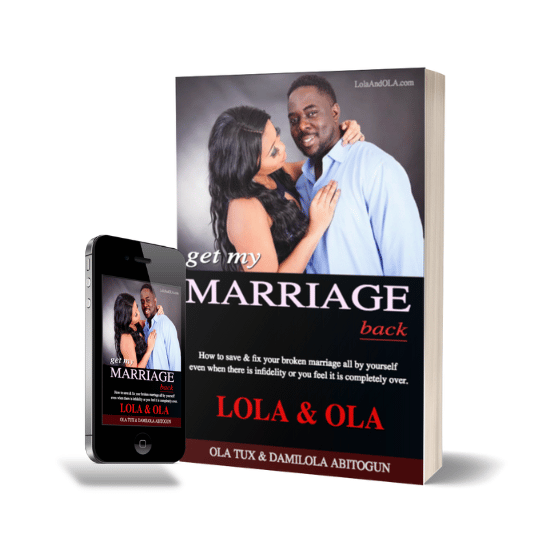
Get My Marriage Back book cover
I'd Rather Learn What to Do First

Start With Get My Marriage Back

Get the book and start learning the principles for moving your marriage in a better direction.

Get the Free Book โ†’

My Husband Doesn’t Love Me Anymore: What Do I Do Now?

โ€œMy husband doesn’t love me anymore.โ€ Ouch! Few sentences carry more emotional weight inside a marriage.


Take This 2 Minutes Quiz

Question 1 of 15

Sometimes he says it directly: โ€œI love you, but I’m not in love with you.โ€ Sometimes the words are never spoken, but you feel the change. He seems emotionally distant. Affection has disappeared. Sex has slowed down or stopped. Conversations feel transactional. You live in the same house, yet increasingly feel like roommates.

Then fear asks the question you cannot stop thinking about:

Can my marriage be saved?

I want you to understand something before you make your next move. Your husband’s present feelings matter, but they are not instructions for how you should behave.

When rejection becomes an emergency, fear starts making your decisions. You explain more, try harder, become more accommodating, initiate another marriage conversation, search for signs your husband doesn’t love you, and watch every interaction for evidence that something has changed.

That response feels logical because you want to save your marriage.

Unfortunately, it can create precisely the emotional experience that makes attraction harder to rebuild.

โ€œMy Husband Doesn’t Love Me Anymoreโ€ Is a Symptom, Not the Whole Diagnosis

When your husband says he is not in love with you anymore, you naturally focus on the statement.

But the statement is often the visible symptom of a much larger relationship experience.

Attraction can decline under years of routine, resentment, predictability, pressure, unresolved conflict, disappointment, emotional disconnection, loss of respect, or simply two people gradually becoming different versions of themselves.

That distinction matters.

If you diagnose the entire problem as โ€œhe doesn’t love me,โ€ your solution becomes โ€œmake him love me.โ€

Now you have assigned yourself an impossible job.

You cannot command another person’s feelings. You cannot argue somebody into desire. And you cannot manufacture genuine attraction by becoming increasingly desperate for proof that attraction still exists.

What you can influence is the experience of interacting with you and, more importantly, the experience of being you.

That is where Personal Power begins.

One Statement Does Not Automatically Mean a Dead Marriage

Take his words seriously without turning them into prophecy.

Research supports making that distinction. A nationally representative study of 3,000 married adults ages 25โ€“50 found that 25% had thought about divorce during the previous six months. Yet divorce thinking was not static: 31% of those thinking about divorce at the first measurement were no longer thinking about it one year later. (PubMed)

That does not mean you dismiss a husband who says he wants out.

It means a current emotional state and an inevitable future are two different things.

This is particularly important when you are experiencing rejection because your brain wants certainty immediately. It would rather receive a terrible answer than remain inside uncertainty.

So you start interrogating the future:

โ€œDo you still love me?โ€

โ€œAre you attracted to me?โ€

โ€œIs there someone else?โ€

โ€œDo you want this marriage?โ€

โ€œDo you think we can fix this?โ€

โ€œAre you going to divorce me?โ€

The problem isn’t that these questions can never be discussed. The problem begins when obtaining reassurance becomes your primary strategy for managing fear.

Your husband becomes responsible for regulating your emotional state at precisely the moment he is questioning his own.

my husband doesn't love me anymore

Mistake #1: Treating His Feelings Like an Emergency

Your first impulse is often urgency.

He says, โ€œI’m not in love with you anymore,โ€ and your mind hears:

FIX THIS NOW.

Suddenly, tonight feels like your last opportunity to save your marriage from divorce.

You want to talk until 2:00 a.m. You need to understand exactly when his feelings changed. Perhaps you start listing everything you’re willing to change or promising that the marriage will be different.

Fear calls this fighting for your marriage.

I call it surrendering your Personal Power to panic.

Grounding comes first because an emotionally flooded version of you cannot make skillful decisions about an emotionally complicated marriage.

You don’t need to pretend you aren’t hurt. Rejection hurts.

Instead, learn to experience pain without automatically converting pain into action.

Mistake #2: Trying to Prove You’re Worth Loving

Rejection breeds obsession.

The more desperately you want your husband’s approval, the more tempting it becomes to build a case for why he should choose you.

You remind him of your history.

You emphasize the children.

You explain how much you love him.

You point out everything you’ve done for the family.

Perhaps you tell him how much you’re changing and ask him to acknowledge your progress.

But attraction is experiential.

Your rรฉsumรฉ cannot create chemistry.

A courtroom argument cannot manufacture curiosity.

More importantly, your value is not something your husband’s current emotional state gets to determine.

When I talk about Value in marriage, I’m not talking about moral worth. I’m talking about the experience you bring into a relationship: your emotional stability, energy, purpose, warmth, confidence, boundaries, curiosity, social intelligence, playfulness, growth, presence, and ability to engage with life.

You don’t prove those qualities.

You live them.

Mistake #3: Becoming a Performance Instead of a Person

This is where saving your marriage becomes exhausting.

You start performing.

Maybe you become unusually agreeable because conflict feels dangerous. You cook his favorite meal and quietly wait to see whether he notices. You change your appearance, then study his face for a reaction.

Sex can become another performance. So can affection, kindness, giving space, working out, dressing differently, or being โ€œpositive.โ€

None of those behaviors are inherently bad.

Your motive changes their emotional texture.

When every improvement is secretly asking, โ€œDo you love me now?โ€, self-development has become another form of pressure.

Your husband is no longer experiencing you.

He is experiencing your campaign.

That is why developing attraction requires something deeper than learning a few techniques.

Mistake #4: Turning Every Connection Into a Relationship Test

Suppose you have a surprisingly good evening together.

He laughs.

You relax.

For twenty minutes, the marriage feels almost normal.

Then fear whispers:

Ask him what this means.

Suddenly the pleasant experience becomes a relationship summit.

โ€œDid tonight make you feel differently?โ€

โ€œDo you think we’re getting better?โ€

โ€œAre you attracted to me again?โ€

โ€œDoes this mean you don’t want a divorce?โ€

You took connection and turned it into a test.

Now consider what research tells us about desire.

Across three studies, researchers Gurit Birnbaum, Harry Reis and colleagues found that perceived partner responsiveness was associated with greater sexual desire. Their work focused on feeling understood, valued, and cared for within an intimate relationship; the association between responsiveness and desire was especially pronounced among women in their studies. (PubMed)

A separate daily-diary study of newlywed couples found perceived partner responsiveness helped explain the association between sexual and marital satisfaction.

Do not turn that research into another trick.

The lesson isn’t, โ€œBe responsive so your husband will desire you.โ€

That’s still performance.

The deeper point is that desire exists inside an experience.

If you want to build and nurture attraction skillfully, seductively, and with emotional intelligence, focus less on extracting a verdict and more on the quality of the experience you bring.

Mistake #5: Monitoring Your Husband for Signs Attraction Is Returning

This trap is subtle because it looks like awareness.

You stop begging, but now you’re watching.

He touched you. Is that a sign?

He texted first. Does he miss you?

He seemed jealous. Does that mean attraction is returning?

You had sex. Does he love you again?

He was cold this morning. Did you lose all your progress?

That’s not Personal Power.

It’s emotional dependence wearing a detective’s coat.

You cannot build genuine confidence while checking another human being every six hours to determine whether your confidence is working.

Warmth is an outcome.

Reciprocity is an outcome.

Curiosity is an outcome.

Attraction is an outcome.

Your responsibility is not to monitor those outcomes. Your responsibility is to develop the conditions on your side that make a different relational experience possible.

So How Do You Build Attraction When Your Husband Doesn’t Love You Anymore?

Start by changing the question.

Instead of:

โ€œHow do I make my husband fall in love with me again?โ€

Ask:

โ€œWho am I becoming while my marriage is going through this crisis?โ€

That sounds like a small shift.

It isn’t.

The first question makes your husband the center of your development. The second returns you to the only place where you possess real leverage.

The constructive roadmap moves through:

Grounding โ†’ Purpose โ†’ Self-Discovery โ†’ Value โ†’ Curiosity & Attraction

Let’s unpack it.

my husband doesn't love me anymore

1. Grounding: Stop Letting Rejection Drive the Car

Grounding does not mean eliminating fear.

It means returning to your higher self while fear exists.

Reconnect with gratitude. Take care of your physical health. Sleep. Work. Pray or reconnect with your spiritual center if faith is part of your life. Spend time with people who remind you that your identity is larger than your marriage crisis.

Most importantly, separate what hurts from what requires immediate action.

Your husband being emotionally distant hurts.

That does not mean another three-hour conversation is required tonight.

He may genuinely feel uncertain about the marriage.

You still don’t need to panic.

Grounding creates enough emotional space for intelligence to return.

2. Purpose: Make Your Life Bigger Than His Feelings

When your husband doesn’t love you anymore, his mood can become your weather.

If he’s warm, you’re hopeful.

When he’s cold, your day collapses.

If he texts, you breathe.

When he doesn’t, you spiral.

This happens because the marriage crisis has swallowed your purpose.

Re-engage with your life.

Your career matters. Your health matters. Motherhood may matter. Your friendships, creativity, contribution, education, spirituality, business, service, and long-term mission matter.

Purpose is not a distraction designed to make your husband jealous.

It’s the process of remembering that your life was never supposed to shrink to one question:

โ€œDoes he love me today?โ€

There is also something naturally attractive about a human being who is meaningfully engaged with life.

Purpose creates movement.

Movement creates experiences.

Experiences create stories.

Stories create dimension.

Dimension creates curiosity.

That is far more seductive than waiting at home emotionally staring at the marriage.

3. Self-Discovery: Use the Crisis Without Blaming Yourself

Now you can ask harder questions.

What does rejection expose in you?

Do you become controlling when you’re scared?

Does uncertainty make you over-explain?

Have you confused being needed with being desired?

Did routine replace curiosity?

Have you stopped developing parts of yourself because marriage made life comfortable?

Where did resentment change your energy?

Did you become so focused on being a responsible wife that you stopped being an interesting woman?

These questions are not admissions of guilt.

Self-Discovery is not self-blame.

Your husband’s behavior belongs to him. His decisions belong to him. If he chooses divorce, that choice is his.

You are investigating your capacity because that’s the only capacity you can develop.

This is how a crisis becomes useful instead of merely painful.

4. Value: Become Experientially Attractive Again

Value is where this work becomes visible without becoming a performance.

Ask yourself:

What does it feel like to experience me?

Not:

โ€œAm I a good person?โ€

Not:

โ€œHave I done enough for this family?โ€

Not:

โ€œDoesn’t twenty years of marriage mean something?โ€

Those are different questions.

Experiential Value includes your presence, emotional intelligence, confidence, boundaries, health, energy, interests, conversational depth, humor, warmth, sexuality, independence, competence, social life, style, purpose, and capacity to remain grounded under pressure.

Some of those qualities may already be strong.

Others became dormant.

Rediscover them for yourself first.

A marriage crisis often causes you to stare so intensely at what’s disappearing that you stop developing what makes you engaging.

Reverse that.

5. Curiosity and Attraction: Stop Trying to Manufacture the Outcome

Here’s the paradox.

The more desperately you try to produce attraction, the less attractive the process can become.

Curiosity requires space.

Desire needs room to breathe.

Seduction is not begging somebody to certify your desirability.

For a woman trying to rebuild attraction with her husband, seduction means cultivating value and allowing that value to be experienced. It can include warmth, playfulness, femininity, style, sensuality, social intelligence, meaningful conversation, healthy mystery, confidence, and genuine engagement with your own life.

None of this means pursuing him for reassurance.

Women never need to pursue a reluctant husband to prove interest.

Seduction invites curiosity.

Pursuit attempts to close distance.

Your job isn’t to force the distance closed.

Become increasingly compelling to experience while remaining emotionally intelligent enough not to demand a particular response.

Attraction Is Not the Same Thing as Love

This distinction saves enormous confusion.

Attraction is a feeling.

Love at its mature level includes decisions, behaviors, commitment, sacrifice, intimacy, history, meaning, and repeated experiences.

People often panic when attraction fluctuates because they interpret fluctuation as proof that love has permanently died.

Long-term desire is more dynamic than that.

Research itself begins from the observation that sexual desire often declines over time in long-term relationships, while also finding that relationship processes such as perceived responsiveness are associated with desire. (PubMed)

So when your husband says, โ€œI’m not in love with you anymore,โ€ don’t dismiss him.

But don’t build your entire strategy around arguing with his current feeling either.

You cannot debate attraction back into existence.

Create better experiences.

What If Your Husband Wants a Divorce?

Then the stakes are higher, but the principle remains the same.

Do not confuse urgency with panic.

The national divorce-ideation research is useful here because it demonstrates that thinking about divorce can change over time. Among married adults in the study, researchers found distinct groups ranging from softer divorce thinking to long-term serious thinking, and substantial movement between those groups over a year. (Wiley Online Library)

Take divorce language seriously.

At the same time, stay focused on what you control.

You cannot force reconciliation.

You can stop adding unnecessary pressure.

You can become grounded enough to make intelligent decisions.

Your life can regain purpose.

Self-Discovery can expose patterns you never saw before.

Value can increase.

A different experience of you can emerge.

Then curiosity and attraction have room to become possible outcomes rather than demands.

Can You Save Your Marriage Alone?

You can start alone.

That is different from saying you can control the final outcome alone.

Someone has to become conscious of the destructive pattern first. Someone has to stop feeding panic. One person can decide that fear will no longer dictate every interaction.

You don’t need permission to become grounded.

Nobody has to approve your purpose.

Self-Discovery belongs to you.

Your Value can develop regardless of whether someone applauds.

This is why saving your marriage alone begins with Personal Power rather than persuasion.

When you stop waiting for your husband to change before you become a stronger version of yourself, the entire emotional structure of the crisis begins to change on your side.

What Happens When He Rejects You Again?

This part matters.

You can do excellent work and still experience another cold interaction.

Your husband can still be uncertain.

He might remain emotionally distant tomorrow.

Perhaps he repeats that he isn’t in love with you.

Do not interpret the return of the symptom as proof that your development failed.

It is a capacity test.

Can you experience rejection without returning immediately to panic?

Can you feel uncertainty without proving?

Will you continue developing your life without turning development into a performance?

Can warmth remain warmth instead of becoming a relationship test?

That is how emotional intelligence becomes a skill rather than an idea.

The old pattern looks like:

Rejection โ†’ Panic โ†’ Proving โ†’ Performing โ†’ Pressuring โ†’ Rejection

The constructive roadmap is:

Rejection โ†’ Grounding โ†’ Purpose โ†’ Self-Discovery โ†’ Value โ†’ Curiosity & Attraction โ†’ Rejection

Notice something important.

Rejection can appear at the end of both.

Life doesn’t promise you permanent protection from painful emotions.

Personal Power gives you greater capacity to navigate them without destroying yourself or unconsciously feeding the very outcome you fear.

my husband doesn't love me anymore

Your Husband’s Feelings Are Not Your Identity

When your husband doesn’t find you attractive, it can feel intensely personal.

When he says he doesn’t love you anymore, it can feel like a verdict on your femininity, desirability, history, and future.

It isn’t.

His feelings are information about his current experience.

Take the information seriously.

Then return to your work.

You do not need to beg for attraction.

Don’t audition for love.

Stop turning yourself into a project designed to obtain his approval.

Become grounded. Re-engage purpose. Discover yourself again. Develop experiential Value. Let curiosity and attraction emerge as outcomes rather than assignments you give your husband.

That is how you navigate rejection without surrendering your dignity.

And paradoxically, that is also how you create more room for the marriage to feel different.

My Wife Loves Me But Doesnโ€™t Desire Me | 5 Signs | 5 Tips

Frequently Asked Questions

Why doesn’t my husband love me anymore?

Attraction and emotional connection can deteriorate through resentment, routine, conflict, pressure, unresolved hurt, disconnection, or changing relationship dynamics. His statement describes his current experience; understanding the underlying pattern matters more than arguing with the statement.

Can my husband fall in love with me again?

Feelings and relationship evaluations can change, and research shows that responsiveness and relational experience are associated with desire while divorce thinking itself can shift over time. Focus on creating healthier conditions from your side rather than trying to force a feeling.

What should I do when my husband says he doesn’t love me anymore?

Take his words seriously, but don’t respond with panic, begging, proving, or repeated demands for reassurance. Start with Grounding, then rebuild Purpose, Self-Discovery and experiential Value instead of making his feelings your daily assignment.

Can I save my marriage if my husband wants a divorce?

You can begin changing destructive patterns from your side even when your husband isn’t participating, although his decisions remain his own. Divorce thinking is not always static, so focus on emotional intelligence, Personal Power and the relationship experience you can influence.


Wife Not in Love With Me? How to Rebuild Attraction in Your Marriage

โ€œMy wife is not in love with me.โ€

Few thoughts hit a husband harder.

Sometimes she says it directly: โ€œI love you, but Iโ€™m not in love with you anymore.โ€

Other times, you recognize it through the symptoms. Sex has disappeared. Affection feels obligatory. She avoids your touch. Conversations have become logistical. You share a home, bills, responsibilities and possibly childrenโ€”but the marriage increasingly feels like a friendship or roommate arrangement.


Take This 2 Minutes Quiz

Question 1 of 15

Your instinct is to fix the problem immediately.

That instinct is where many husbands accidentally make attraction loss worse.

When rejection triggers fear, you naturally want reassurance. You talk more about the marriage, explain how much you care, become unusually helpful, initiate more affection or try to prove that you have changed.

The problem is simple: attraction cannot be negotiated into existence.

If your wife is not attracted to you anymore, rebuilding your marriage requires something more emotionally intelligent than trying harder to get a reaction from her. You need to understand the conditions under which attraction deterioratesโ€”and become skillful at changing the part of that experience you actually control.

wife not in love with me

When Your Wife Is Not in Love With You, Don’t Treat Attraction Like an Emergency

The first mistake is treating attraction loss like an emergency that must be solved tonight.

Imagine lying in bed at 1:00 a.m. You reach for your wife. She pulls away.

Your mind immediately starts writing the rest of the story:

She doesn’t want me.

She’s not attracted to me.

She’s going to leave.

My marriage is over.

Now your nervous system wants relief.

You ask what’s wrong. She says she’s tired, but you don’t believe that’s the whole story. Another question follows. Then another.

Soon you are no longer responding to what actually happened. You are responding to what you fear the rejection means.

That distinction matters.

In our livestream, we described this as the beginning of an Attraction-Panic Cycle:

Fear โ†’ Chasing โ†’ Proving โ†’ Pleasing โ†’ Predictability โ†’ Pressure โ†’ Withdrawal โ†’ Fear

The painful irony is that fear of losing attraction can produce behaviors that make romantic connection feel increasingly pressured.

Why Trying Harder Can Make Your Marriage Feel Worse

When your wife says she isn’t in love with you, trying harder feels responsible.

You love your marriage. Why wouldn’t you fight for it?

Because there is an important difference between pursuit and chasing.

Healthy pursuit expresses interest while preserving dignity and freedom. Fear-driven chasing needs your wife’s reaction to regulate your emotional state.

That difference changes the experience completely.

A loving invitation says, โ€œI’d enjoy spending time with you.โ€

Fear-driven pursuit carries an invisible second sentence:

โ€œโ€ฆand I need you to say yes so I know our marriage is okay.โ€

Your wife feels that weight even when you never say those words.

This is why the question isn’t simply, โ€œAm I doing nice things?โ€

Ask instead:

What emotional energy is driving what I’m doing?

Stop Trying to Prove You Deserve Your Wife’s Attraction

When pursuing harder doesn’t work, proving often comes next.

You start mentally building a case:

โ€œI’ve always been faithful.โ€

โ€œI provide for this family.โ€

โ€œI’ve changed.โ€

โ€œI help around the house.โ€

โ€œI love you more than anyone ever will.โ€

Those qualities matter.

They still don’t create romantic debt.

Being a responsible husband doesn’t obligate your wife to experience sexual attraction toward you. Likewise, years invested in a marriage don’t create an emotional contract requiring someone to feel desire on command.

This distinction is painful because commitment and attraction operate differently.

Commitment involves decisions, values and behavior.

Attraction involves experience.

You can influence the experience you create around another person. You cannot force their emotional response to it.

That is why proving yourself becomes especially dangerous when it carries an unspoken expectation:

โ€œAfter everything I’ve done, you should want me.โ€

Desire suffocates under obligation.

People-Pleasing Is Not Value

This is one of the most counterintuitive lessons when a wife is not attracted to her husband:

Becoming endlessly agreeable does not automatically make you more attractive.

Fear can turn kindness into people-pleasing.

You wash more dishes. Take over extra responsibilities. Agree with everything. Avoid difficult opinions. Stop challenging anything. Offer favors constantly.

None of those actions is inherently unattractive.

The motive changes their meaning.

If you’re being generous because generosity reflects who you are, that’s authentic behavior. If you’re performing generosity while desperately waiting for affection in return, the behavior becomes transactional.

The internal question becomes:

โ€œDo you want me now?โ€

Research adds an important distinction here. Studies on responsiveness find that feeling understood, cared for and valued by a romantic partner is associated with sexual desire and intimacy. In a three-study investigation, perceived partner responsiveness was associated with greater desire, particularly among women.

So the lesson is not โ€œstop being nice.โ€

It’s more sophisticated:

Become responsive without becoming self-erasing.

A 2023 research review makes almost exactly this distinction. Sexual responsiveness is associated with desire, sexual satisfaction and relationship quality, but those benefits deteriorate when responsiveness requires neglecting your own needs.

That aligns with a central principle from Get My Marriage Back:

Value is not people-pleasing.

If Your Marriage Feels Like Roommates, Predictability Matters -wife not in love with me

If Your Marriage Feels Like Roommates, Predictability Matters

Many people searching โ€œwife not in love with meโ€ are really describing a roommate marriage.

Nothing catastrophic necessarily happened.

Life simply became extraordinarily predictable.

Wake up.

Work.

Children.

Dinner.

Television.

Phones.

Bed.

Repeat.

Familiarity is necessary for a secure marriage, but familiarity alone doesn’t create erotic energy.

This is where attraction requires a more nuanced understanding.

Your goal isn’t to manufacture jealousy, disappear mysteriously or play psychological games. Those strategies replace genuine attraction with manipulation.

Instead, become a person who is still developing.

Research on self-expansion is particularly relevant. Across three studies, researchers found that engaging in novel, growth-oriented activities with a long-term romantic partner was associated with greater sexual desire and relationship satisfaction. (PubMed)

Other research has examined personal self-expansionโ€”the growth and positive change you experience independentlyโ€”and its relationship to romantic passion. (PubMed)

That supports an important principle:

Your marriage should contain two developing human beings, not two people whose identities have collapsed into maintaining a household.

Attraction Needs Some Room to Breathe

When your marriage feels threatened, you naturally focus more attention on it.

Eventually, everything becomes about the relationship.

Breakfast becomes an opportunity to evaluate her mood.

A text becomes evidence.

Sex becomes a referendum on the marriage.

A quiet evening becomes proof that you’ve become roommates.

One affectionate moment produces hope. One rejection destroys it.

That hyper-focus creates pressure.

Every interaction becomes emotionally expensive because your wife isn’t simply having dinner with you anymore. Somewhere underneath the interaction is a question she is expected to answer:

โ€œAre we okay yet?โ€

Stop making every moment carry that burden.

You don’t need to pretend the marriage crisis doesn’t exist. You need enough emotional grounding that every interaction isn’t required to resolve it.

Ground Yourself Before Trying to Rebuild Attraction

When your wife rejects you, your first job isn’t seduction.

It’s Grounding.

Grounding means fear no longer gets automatic control over your next action.

You can experience rejection without immediately initiating another marriage conversation.

You can hear something painful without constructing an argument.

A cold evening doesn’t require you to chase reassurance.

This is Personal Power in practical form.

You return to your higher self, gratitude, emotional stability and what is actually within your control.

Notice the distinction:

Grounding does not mean becoming emotionally detached.

It means becoming emotionally responsible.

You still want your marriage. You simply stop requiring your wife’s immediate behavior to determine your emotional center.

Rebuild a Life That Generates Purpose

When marriage becomes your only source of emotional meaning, rejection becomes overwhelming.

Your world shrinks.

Every thought becomes about her.

Every improvement becomes secretly designed for her approval.

Even โ€œworking on yourselfโ€ turns into another attraction tactic.

Purpose interrupts that pattern.

Return meaningful energy to your health, career, business, fatherhood, friendships, creativity, spirituality, interests and mission.

This isn’t a trick for making your wife curious.

Purpose pursued as manipulation isn’t purpose.

The deeper objective is becoming a fuller human being regardless of what emotional weather exists inside your marriage today.

Ironically, this also addresses one of the central problems in roommate status: sameness.

A growing person continually brings something new back into their relationshipsโ€”new experiences, perspectives, stories, energy, competence and confidence.

Research on self-expansion offers a useful parallel. Novel and broadening experiences have repeatedly been associated with desire, including research involving couples dealing with clinically low sexual desire. (Sage Journals)

Use Rejection for Self-Discovery, Not Self-Blame - wife not in love with me

Use Rejection for Self-Discovery, Not Self-Blame

If your wife is not attracted to you, self-discovery requires uncomfortable questions.

Not:

โ€œWhat’s wrong with her?โ€

And not:

โ€œWhat’s wrong with me?โ€

Instead ask:

โ€œWhat has this crisis revealed about me?โ€

Have you become needy?

Did you stop developing?

Are you afraid to disagree?

Did you abandon friendships and interests?

Has your personality become consumed by work?

Do you use sex as proof that you’re loved?

Does rejection make you obsessive?

Are you trying to earn affection through service?

Can you express desire without demanding reciprocation?

Those questions produce information.

Self-discovery isn’t a confession of guilt. Your wife’s feelings belong to her.

The exercise reveals your capacity.

When you discover how fear changes your behavior, you gain the ability to choose differently.

Build Value Instead of Performing for Attraction

โ€œValueโ€ in this framework doesn’t mean human worth.

Your worth isn’t determined by whether your wife wants sex tonight.

Value describes the experience of interacting with you.

Are you grounded or chronically reactive?

Curious or predictable?

Purposeful or consumed by the marriage?

Playful or heavy?

Warm or transactional?

Confident or approval-seeking?

Emotionally intelligent or constantly demanding reassurance?

Interesting or stagnant?

That is where building attraction becomes skillful.

You don’t announce your value.

You experience life differently, and other people experience you differently as a consequence.

Seduction Is an Experience, Not a Negotiation

Seduction in a marriage crisis should never mean manipulating your wife into sex.

Real seduction creates an experience in which desire has room to emerge voluntarily.

That requires freedom.

It also requires emotional responsiveness.

Research has consistently connected perceived responsivenessโ€”feeling understood, validated and cared forโ€”with intimacy and sexual desire. (Frontiers) More recent work also found an association between partner responsiveness, greater sexual communication and positive intimacy or sexual outcomes. (Taylor & Francis Online)

So emotional intelligence and seduction are not opposites.

They belong together.

Listen without turning every disclosure into a defense.

Express interest without demanding a response.

Be playful without testing whether she responds correctly.

Flirt without making every flirt an invitation to sex.

Have opinions without becoming combative.

Maintain boundaries without punishing her.

Create experiences without secretly scoring her reaction.

Respect rejection without collapsing into resentment.

That combination is powerful because it removes coercion without removing masculinity, personality, desire or intention.

Stop Measuring Whether Attraction Is โ€œWorkingโ€

This part is critical.

Once you start rebuilding yourself, don’t turn your wife into a dashboard.

โ€œShe touched me twice today.โ€

โ€œ…laughed at my joke.โ€

โ€œShe didn’t text back for three hours.โ€

โ€œ…kissed me differently.โ€

โ€œWe had sex, so it’s working.โ€

โ€œShe rejected sex, so nothing is working.โ€

That mindset puts you straight back into the Attraction-Panic Cycle.

Curiosity and attraction are outcomes, not measurements you assign to your wife.

Research on desire itself reinforces why simplistic scorekeeping makes little sense. A systematic review notes that sexual desire naturally ebbs and flows both within people and between people over time. (PubMed)

One cold night doesn’t define your marriage.

Neither does one passionate weekend.

Build capacity rather than constantly collecting evidence.

What Happens When Your Wife Rejects You Again?

She will have another distant day.

That’s the real test.

Your old pattern was:

Fear โ†’ Chasing โ†’ Proving โ†’ Pleasing โ†’ Predictability โ†’ Pressure โ†’ Withdrawal โ†’ Fear

The constructive roadmap becomes:

Fear โ†’ Grounding โ†’ Purpose โ†’ Self-Discovery โ†’ Value โ†’ Curiosity & Attraction โ†’ Fear

Notice something important.

It ends with fear again.

That’s intentional.

Progress doesn’t mean you never experience rejection, uncertainty or fear. Progress means those feelings stop automatically controlling your behavior.

When rejection returns, you return to Grounding.

Then Purpose.

…Self-Discovery.

Then Value.

Over time, you’re no longer desperately trying to make your wife attracted to you.

You’re becoming capable of creating a marriage experience in which attraction, warmth, curiosity, intimacy and reconciliation have room to develop naturally.

That is a much stronger position from which to save your marriage, navigate a wife who is not in love with you, address a sexless marriage, or respond when your marriage feels like roommates.

You cannot negotiate desire.

You can become more emotionally grounded, purposeful, interesting, responsive, self-aware and experientially attractive.

And that changes what you bring into the marriage.

My Wife Loves Me But Doesnโ€™t Desire Me

Frequently Asked Questions

Why is my wife not in love with me anymore?

Romantic feelings can decline through accumulated conflict, pressure, resentment, excessive predictability, loss of intimacy and changes in how two people experience each other. Instead of demanding an explanation that restores certainty, examine the relational experience and the patterns within your control.

Can my marriage be saved if my wife is not in love with me?

A loss of romantic feelings does not automatically mean the marriage has reached an irreversible endpoint. Start by stopping fear-driven chasing and rebuilding Grounding, Purpose, Self-Discovery and Value so your actions no longer add pressure to the crisis.

How do I make my wife attracted to me again?

You cannot make another adult experience attraction, but you can influence the experience of being married to you. Build emotional stability, authentic confidence, responsiveness, purpose, novelty and value without turning those behaviors into techniques for extracting affection.

Should I give my wife space if she says she is not in love with me?

Respecting her freedom is different from becoming cold, disappearing or using space as a manipulation tactic. Stay grounded and dignified, reduce pressure, and let warmth or pursuit come from genuine interest rather than fear of rejection.

Trying To Save Marriage Wife Said It’s Too Late? ❤️ Try this 3 โ€œUNUSUALโ€ Tricks

In this lesson, you will discover the 3 SECRET tricks that I used when I was trying to save my marriage when my wife said it was too late.


By the way, you can master the full methods by downloading our free book at www.GetMyMarriageBack.com or get it on Amazon


QUESTION ⁉️ โ€œIt all sounds great but this evil will not help me with my wife; when she says she’s done, it means she’s done.โ€

The first sign we notice in this message is the fact that a husband is throwing hands up in the air claiming there is no way for his wife to behave.

When you approach saving your marriage with that energy, you will attract more of it.

What if you accept that you are confused and itโ€™s just time to learn something new about making your wife open for you to penetrate mentally and physically?โ€

ENJOY THE VIDEO.

Trying To Save Marriage Wife Said It’s Too Late

IMG - trying to save marriage, wife said it's too late

TRICK #1 – Stop Confusing Words with Action

If you are like most people, you’ve caught feeling and you are feeling rejected because your wife says she’s done.

Never mind what she says; what about her actions?

Is she still living in the same house with you?  

If she is still connected to you in one way or the other, even if it’s because of the kids, I would stop panicking.

It’s common mistake in relationships especially marriage to confuse her words with her actions.

Relax and follow her actions.

Regardless of what the action may be, relax; you are the king.

TRICK #2 – Admit that the Marriage May Be Too Late to Save

Once you relax, she will become curious again and want to initiate engagement.

Use that opportunity to show case you new relaxed man who is sure of himself and require no validation from anyone in order to be happy.

This is more of a demeanor and energy than what you say out.

It’s also okay at this stage to admit that the marriage is bad

… and that’s not equivalent to admitting that it’s all your fault.

It will only showcase you as a king who knows how to listen and communicate effectively with his queen.

This new behavior will shock your wife and will start to consider changing her mind…

If she was ever serious about saving your marriage being too late.

TRICK #3 – Give Her What She Wants; Gift of Missing You

This process will take time but you can leverage this opportunity to give yourself a gift.

When she insinuated that it’s too late to save the marriage, she’s was saying she needed space.

There is no one single event that can shut a marriage off.

Give her what she wants; the gift of missing you–space.  

You need space too as it’s an opportunity to showcase your ability of infinite patience.

BONUS TRICK – Learn the Art of Attraction – Read the Book 10-15 times

In that time period, it can be extremely difficult to just sit tight and not express yourself.

You may even feel unheard; but that’s needy behavior.

Download the book for free and read it 10-15 times so that you can teach the material unprepared.

It makes patience easier.

That time ans space will increase attraction between the two of you and…

You will equipped with material and ingredients to catalyze further growth of the attraction that you now have.


We all know that relationships have their ups and downs, and sometimes, those downs can feel pretty darn low.

So, you might be wondering…

When exactly is it too late to save a marriage? And is all that effort really worth it to mend a broken marriage?

First things first, let’s address the timing.

The truth is, there’s no one-size-fits-all answer to this.

Every relationship is unique, just like the people in it. Some couples manage to find their way back even from the darkest of times, while others might reach a point where the pain and damage become irreparable.

It’s crucial to remember that it’s not just about the timeline, but also about the willingness and effort both partners are willing to put in.

Now, let’s talk about whether it’s worth fixing a broken marriage.

This is a tough one, no doubt about it. The decision to fix a broken marriage is deeply personal and can be influenced by a multitude of factors. Here are a few things to consider:

Communication:

One of the pillars of a strong relationship is open and honest communication. If both partners are willing to sit down and talk about their feelings, concerns, and what led them to this point, it’s a positive sign that there’s a chance for healing.

It might be necessary for at least one willing partner to use seduction skills to attract the other partner into that space first.

Love and Commitment:

Remember why you fell in love in the first place?

Those feelings might still be buried under the rubble of issues, but they could be worth uncovering. If there’s still love and commitment, it’s definitely worth exploring if the marriage can be saved.


Can Menopause Cause a Sexless Marriage And Not Wanting To Be Touched?


Professional Help and Support:

Seeking the guidance of a marriage counselor or therapist can work wonders.

These experts can provide fresh perspectives, communication tools, and strategies to navigate the choppy waters of a struggling marriage.

Self-Reflection:

Take a moment to look within.

Are you both willing to acknowledge your own shortcomings and work on them? Self-awareness and personal growth can play a huge role in reviving a marriage.

Children and Family:

If there are children involved, their well-being should be a priority.

Sometimes, parents choose to work on their marriage for the sake of their kids, and that can be a strong motivator.

However, it’s also important to recognize when it might be time to let go (it doesn’t have to be a permanent decision):

Toxic Dynamics:

If the relationship has become toxic, filled with emotional or even physical abuse, it’s crucial to prioritize your safety and well-being over trying to fix something that might be beyond repair.

Unresolved Issues:

If past issues keep resurfacing and there’s a lack of genuine effort to address them, it might be a sign that the foundation of the relationship is too shaky.

Loss of Trust:

Trust is like a delicate glass vase โ€“ once it’s shattered, it’s hard to piece it back together perfectly. If trust has been broken beyond repair, it might be time to reevaluate.

Personal Growth:

Sometimes, individuals grow in different directions.

If you find yourselves with different goals, values, or aspirations that can’t be reconciled, it might be healthier to part ways.

In the end, the question of whether a broken marriage is worth fixing boils down to the efforts, emotions, and circumstances of the people involved.

It’s not an easy road, but with open hearts, dedication, and perhaps some professional guidance, it’s incredible what two people can achieve together.

Just remember, whether you choose to fight for your marriage or part ways, the most important thing is your happiness and your overall well-being.

You deserve a life filled with love, respect, and joy.

So there you have it. Marriage can be a wild ride, full of twists and turns.

It’s never too late to try, but it’s also okay to walk away when the time is right.

Whatever path you choose, remember that you’re not alone โ€“ there’s a whole world of support out there cheering you on.

Stay strong, stay kind, and most importantly, stay true to yourself. Until next time!

How do you know it’s too late to save a marriage?

It might be too late to save a marriage when both partners have lost emotional connection and willingness to work on the relationship.

Is it worth fixing a broken marriage?

Whether a broken marriage is worth fixing depends on the individuals involved and their commitment to making positive changes. With the right support, all it takes is one person for a fair chance.

At what point do you stop trying to save your marriage?

You might consider stopping efforts to save a marriage when there’s consistent toxicity, lack of trust, and minimal effort from both partners to improve the situation.

Can a dying marriage be saved?

While challenging, a dying marriage can potentially be saved if at least once person is willing to engage the necessary education on seduction to get both partners into a space where they are open to seeking professional help, communication, and making necessary changes.


What Would Help You Most Right Now?

Choose the option that best matches where you are with your marriage.

I Need Personalized Help

My Marriage Is in Serious Trouble

If you're dealing with separation, divorce, loss of attraction, infidelity, intimacy problems, or a spouse who's pulling away, get help looking at what's happening in your specific situation.

Get Personalized Help โ†’
Get My Marriage Back book cover
I'd Rather Learn What to Do First

Start With Get My Marriage Back

Get the book and start learning the principles for moving your marriage in a better direction.

Get the Free Book โ†’