
Broken Marriage?
Fix it
Here FREE

Get My Marriage Back


Your Husband Doesn’t Spend Time With You: How to Reconnect Without Being Needy

Few experiences in marriage feel as lonely as realizing your husband doesn’t spend time with you anymore.

my husband doesn't spend time with me

You may still live together, share responsibilities, and function as a team on paper, yet emotionally it feels like you’re miles apart. Conversations become shorter. Date nights disappear. His attention seems reserved for work, hobbies, friends, television, or his phone while you’re left wondering what happened to the connection you once shared.

If you’ve found yourself thinking, “My husband doesn’t spend time with me,” the first instinct is often to demand more attention, push for conversations, or express frustration. While those reactions are understandable, they rarely create the result you’re hoping for.

Connection grows best through attraction, influence, emotional intelligence, and mutual respectโ€”not pressure.

The good news is that a lack of quality time doesn’t automatically mean your marriage is failing. In many cases, it signals deeper issues that can be identified and addressed before they become permanent patterns.

Why Your Husband Doesn’t Spend Time With You

Before trying to solve the problem, it’s important to understand what may be causing it.

Most husbands don’t wake up one morning and decide they no longer want to spend time with their wives. Emotional distance usually develops gradually.

Common reasons include:

  • Work stress and mental exhaustion
  • Unresolved resentment
  • Feeling criticized or unappreciated
  • Loss of emotional connection
  • Falling into routine and complacency
  • Different relationship needs
  • Personal struggles with anxiety, depression, or burnout
  • Lack of excitement and variety in the relationship

A partner being outright malicious is usually the exception, not the rule.

More often, people withdraw because they no longer experience the marriage as a place of certainty, connection, growth, appreciation, or emotional safety.

Is Quality Time Actually Your Love Language?

Many women who feel neglected are actually craving quality time more than anything else.

The concept of love languages was popularized by relationship counselor and author Gary Chapman in his bestselling book The Five Love Languages.

If quality time is your primary love language, a lack of shared experiences can feel like rejection even when your husband still loves you.

Understanding your emotional needs helps you communicate them more clearly instead of assuming your husband automatically understands what you need.

The goal is not simply getting more hours together. The goal is feeling connected during the time you share.

Besure to take the assessment here.

Stop Chasing and Start Influencing

One of the biggest mistakes people make is trying to force connection.

Pressure creates resistance.

The more one spouse demands attention, the more the other often pulls away.

This doesn’t mean you should suppress your needs. It means you should focus on influence instead of force.

There is a significant difference between taking quality time and inspiring quality time.

When your husband feels obligated to spend time with you, the interaction often feels transactional.

When he genuinely wants to spend time with you, the experience feels natural, enthusiastic, and emotionally rewarding for both of you.

Healthy attraction is built through invitation, not coercion.

Rebuild Friendship First

Many struggling marriages focus heavily on problems while neglecting friendship.

Yet friendship remains one of the strongest foundations of long-term attraction.

Ask yourself:

  • When was the last time you laughed together?
  • When was the last time you shared a new experience?
  • When was the last time you talked without discussing responsibilities?

Strong marriages consistently nurture friendship.

That means becoming curious about each other again.

Instead of turning every interaction into a relationship discussion, create opportunities for lighthearted engagement.

A simple walk, shared meal, game night, or spontaneous outing can often accomplish more than another emotional confrontation.

Attraction - my husband doesn't spend time with me

Avoid Behaviors That Kill Attraction

Many people unintentionally damage connection while trying to fix it.

Some of the most common attraction killers include:

Neediness and Suffocation

Constantly seeking reassurance can create pressure instead of closeness.

Criticism and Blame

Repeated criticism makes people emotionally defensive.

Emotional Reactivity

When every conversation becomes emotionally charged, people begin avoiding interactions altogether.

Policing and Moralizing

Nobody enjoys feeling monitored, corrected, or managed.

Negativity and Contempt

Shaming, sarcasm, insults, judgment, and condescension slowly poison emotional safety.

The healthier alternative is emotional self-leadership.

Learn to communicate your needs calmly, clearly, and confidently.

Focus on Becoming Magnetic Again

One of the most empowering shifts you can make is focusing on your own growth.

This is not about playing games.

It’s about becoming the strongest version of yourself.

People are naturally attracted to individuals who possess:

  • Purpose
  • Confidence
  • Emotional stability
  • Gratitude
  • Self-respect
  • Positive energy
  • Personal growth

Ironically, when your entire emotional world depends on your spouse’s attention, attraction often decreases.

When you cultivate a meaningful life, your energy changes.

You become more interesting, more fulfilled, and more attractiveโ€”not just to your husband, but to yourself.

Improve Communication by Listening More

Most people think communication is primarily about talking.

In reality, effective communication is often about listening.

Many spouses spend conversations preparing their next argument instead of seeking understanding.

Try asking questions such as:

  • “How have you been feeling lately?”
  • “What’s been weighing on your mind?”
  • “What would help you feel more supported right now?”

Then listen without interrupting.

Listening creates emotional safety.

Emotional safety creates connection.

Connection creates attraction.

Address Expectations Before They Become Resentment

Many marriage problems stem from unspoken expectations.

You may expect regular date nights.

Your husband may assume providing financially demonstrates love.

Neither person is necessarily wrong.

The issue is that expectations left unspoken eventually become disappointments.

Healthy couples regularly discuss:

  • Time together
  • Family responsibilities
  • Intimacy
  • Finances
  • Personal goals
  • Emotional needs

Clarity prevents resentment.

Create More Variety in the Marriage

Human beings crave both certainty and variety.

Marriage provides certainty.

But attraction often requires variety.

If every week feels exactly the same, emotional energy tends to decline.

Introduce novelty through:

  • New experiences
  • Shared hobbies
  • Weekend adventures
  • Learning something together
  • Traveling
  • Taking classes
  • Revisiting activities you enjoyed while dating

New experiences create new memories, and new memories often reignite connection.

When Professional Help Makes Sense

If emotional distance has persisted for a long time, professional counseling may be beneficial.

A skilled marriage counselor can help identify blind spots, improve communication, and uncover unresolved issues that neither spouse has fully recognized.

Seeking help isn’t a sign of failure.

It’s often a sign that both people value the relationship enough to fight for it.

if your husband doesn't spend time with you

If your husband doesn’t spend time with you, don’t immediately assume the marriage is over.

Distance is often a symptom, not the root problem.

Rather than chasing attention, focus on rebuilding friendship, improving communication, creating emotional safety, and becoming the strongest version of yourself.

The healthiest relationships are built through influence, attraction, respect, and partnership.

When you lead with emotional intelligence instead of pressure, you create the kind of environment where connection can naturally grow again.

My Wife Loves Me But Doesnโ€™t Desire Me | 5 Signs | 5 Tips

Frequently Asked Questions

What to do when your husband won’t spend time with you?

Start by calmly communicating your needs without blame or criticism. Focus on rebuilding friendship, creating positive interactions, and understanding the reasons behind his withdrawal instead of immediately applying pressure.

What are the signs a relationship is failing?

Common signs include emotional disconnection, constant criticism, lack of respect, avoidance of meaningful conversations, and a complete loss of effort from both partners. These signs do not automatically mean the relationship is over, but they should be addressed promptly.

What is the rule for success in marriage?

There is no single rule, but successful marriages consistently balance friendship, respect, communication, attraction, and shared growth. Couples who manage expectations and protect emotional safety tend to navigate challenges more effectively.

What is depleted husband syndrome?

Depleted husband syndrome refers to a state of emotional, mental, or physical exhaustion where a husband feels overwhelmed by life demands and withdraws from connection. While not a formal clinical diagnosis, it often involves burnout, stress, and reduced emotional availability that can impact marriage.

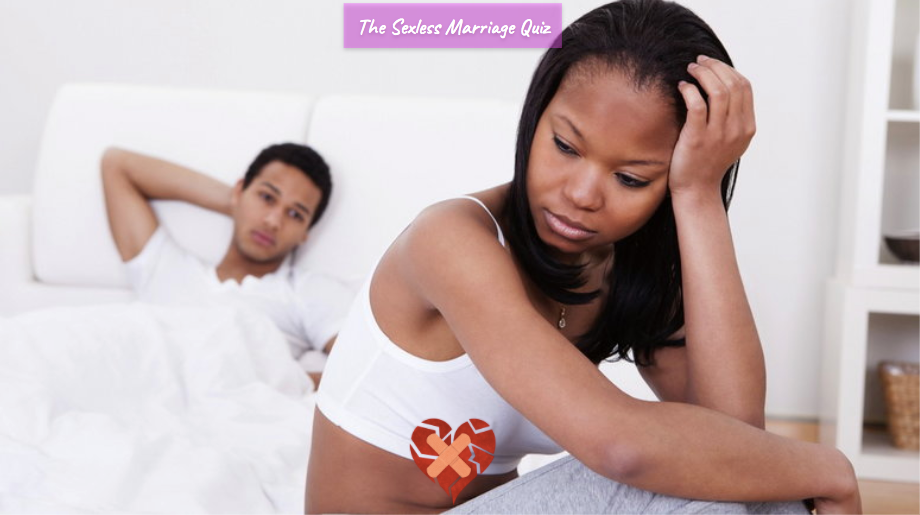
Sexless Marriage Quiz: Find Out What’s Really Happening

Take our free sexless marriage quiz and discover what’s driving intimacy loss and how to rebuild attraction and connection.

Question 1 of 15

If you’re here, chances are you’re looking for more than a label. You’re looking for clarity.

When physical intimacy fades, it’s easy to become trapped in confusion, resentment, self-doubt, or endless overthinking. One spouse may feel rejected. The other may feel pressured. Both can begin to feel lonely while living under the same roof.

The good news is that a lack of intimacy does not automatically mean your marriage is broken. In many cases, it signals deeper issues involving emotional connection, attraction, expectations, stress, pride, communication, or relationship dynamics that have been left unresolved.

That’s exactly why this 2-minute sexless marriage quiz was created. Instead of focusing solely on how often you’re having sex, it helps identify the underlying patterns that may be weakening attraction, creating emotional distance, and turning passionate partners into roommates.

Sexless Marriage Quiz

Here is a full article on The chances of survival in a sexless marriage

And Here is a free audio book on how we used attraction secrets to break the chains of sexless-ness in our marriage.

Sexless Marriage Quiz: Discover the Real Cause Behind the Intimacy Gap

What Is Considered a Sexless Marriage?

Most experts define a sexless marriage as a relationship where physical intimacy occurs fewer than 10 times per year. Others use a broader definition of less than once per month.

However, frequency alone doesn’t tell the whole story.

Some couples have sex infrequently but feel deeply connected, desired, and emotionally fulfilled. Other couples may have sex more often yet still feel disconnected and unsatisfied.

The real question isn’t simply:

“How often are we having sex?”

The more important question is:

“What is happening to the attraction, emotional connection, and relationship dynamic underneath the surface?”

That’s where this sexless marriage quiz becomes valuable.

Why Taking a Sexless Marriage Quiz Matters

Why Taking a Sexless Marriage Quiz Matters

When intimacy disappears, emotions usually become louder than reality.

You may find yourself:

  • Tracking every rejection
  • Overanalyzing your spouse’s behavior
  • Walking on eggshells
  • Starting arguments over unrelated issues
  • Feeling unwanted or unappreciated
  • Becoming emotionally withdrawn

The challenge is that emotional pain often clouds judgment.

Instead of identifying the real cause of the problem, couples begin treating symptoms. They focus on negotiating for more sex, demanding more affection, or assigning blame.

Unfortunately, attraction rarely grows through pressure.

Before you can solve the problem, you need an accurate diagnosis.

That’s why an objective assessment is often the best place to start.


The Hidden Truth About Most Sexless Marriages

Many people assume sexlessness is primarily a bedroom problem.

In reality, it is usually a relationship dynamic problem that eventually shows up in the bedroom.

Physical intimacy tends to decline when one or more of these four leverage points begin deteriorating:

1. Friendship

Strong marriages are built on genuine friendship.

When couples stop enjoying each other’s company, attraction often follows. Conversations become transactional. Fun disappears. The relationship becomes focused solely on responsibilities.

Over time, emotional distance creates physical distance.

2. Sex and Attraction

Desire thrives on emotional safety, mystery, polarity, confidence, and connection.

Many couples unknowingly replace attraction-building behaviors with attraction-killing behaviors such as neediness, criticism, pressure, resentment, or emotional reactivity.

The result is a cycle of pursuit and withdrawal.

3. Expectations

Unspoken expectations are one of the biggest relationship killers.

When one spouse constantly feels disappointed because reality doesn’t match their expectations, resentment begins accumulating.

Eventually, intimacy becomes emotionally expensive.

4. Pride and Ego

Many marriages suffer not because of a lack of love but because neither person wants to go first.

Pride prevents apologies.

And it prevents vulnerability.

Pride prevents reconnection.

When pride becomes more important than partnership, intimacy suffers.

Common Signs You May Be in a Sexless Marriage

Common Signs You May Be in a Sexless Marriage

The quiz is designed to identify patterns like these:

You Feel More Like Roommates Than Romantic Partners

Daily life revolves around logistics, children, work, bills, and responsibilities.

Romance feels like a distant memory.

Physical Touch Has Almost Disappeared

Hugs, kisses, cuddling, flirting, and affectionate gestures become rare.

The loss of non-sexual touch often precedes the loss of sexual intimacy.

Conversations About Intimacy Lead to Conflict

Instead of productive discussions, conversations quickly become arguments involving blame, criticism, or defensiveness.

One Partner Constantly Pursues While the Other Withdraws

This dynamic creates frustration for both spouses.

The pursuer feels rejected.

The withdrawer feels pressured.

Neither feels understood.

Resentment Is Growing

Resentment is one of the strongest attraction killers in long-term relationships.

When resentment grows, desire often shrinks.


Attraction Doesn’t Respond Well to Pressure

One of the biggest mistakes struggling couples make is trying to negotiate desire.

Unfortunately, attraction doesn’t work that way.

You cannot guilt someone into wanting you.

Neither can you argue someone into feeling chemistry.

And you cannot pressure someone into genuine desire.

Attraction responds more favorably to emotional intelligence, confidence, self-awareness, growth, leadership, and authentic connection.

That’s why the healthiest path forward often begins with self-leadership rather than control.

The 8 Attraction Killers That Often Create Intimacy Problems

The 8 Attraction Killers That Often Create Intimacy Problems

The quiz was designed around several patterns that frequently contribute to sexless marriages.

1. Neediness

Constantly seeking reassurance can unintentionally create pressure.

2. Emotional Reactivity

Being easily triggered creates emotional instability.

3. Moralizing

Treating your spouse like a student instead of a partner damages connection.

4. Lack of Patience

Demanding immediate change rarely produces lasting results.

5. Walking on Eggshells

Avoiding necessary conversations creates hidden resentment.

6. Excessive Criticism

People naturally move away from environments where they feel constantly judged.

7. Over-Pursuit

The harder one person chases, the more likely the other is to withdraw.

8. Poor Self-Leadership

When personal growth stops, attraction often declines as well.


The Emotional Needs That Influence Intimacy

Every person has core emotional needs that impact relationship satisfaction.

Some of the most important include:

Certainty

Feeling emotionally safe and secure.

Variety

Experiencing excitement, novelty, and spontaneity.

Significance

Feeling valued, appreciated, and respected.

Connection

Experiencing emotional closeness and belonging.

Growth

Seeing progress individually and together.

Contribution

Feeling useful and important within the relationship.

When multiple needs go unmet for extended periods, intimacy often suffers.

https://youtu.be/WXLwunnSZ90

Can a Sexless Marriage Be Saved?

In many cases, yes.

The answer depends less on where the marriage is today and more on whether both spouses are willing to improve the relationship dynamic.

Many couples successfully rebuild intimacy by:

  • Improving communication
  • Reducing blame and criticism
  • Rebuilding friendship
  • Increasing emotional safety
  • Developing better emotional intelligence
  • Addressing unmet needs
  • Managing expectations realistically
  • Prioritizing personal growth

The first step is identifying where the breakdown is occurring.

That’s exactly what this sexless marriage quiz is designed to reveal.


What Your Quiz Results May Reveal

Mild Intimacy Drift

Your relationship may simply be experiencing a temporary dry season.

Small adjustments can often create significant improvements.

Moderate Attraction Loss

Emotional distance and resentment may be creating barriers to intimacy.

Intentional reconnection becomes important.

Roommate Syndrome

The relationship has likely become heavily focused on responsibilities while neglecting romance and attraction.

Rebuilding friendship and polarity becomes critical.

Severe Disconnection

Long-standing resentment, pride, emotional defensiveness, or unresolved issues may be preventing intimacy from recovering naturally.

A more structured recovery plan may be necessary.


The Most Important Shift You Can Make

The strongest marriages aren’t built by perfect people.

They’re built by people willing to take responsibility for what they can control.

You cannot control your spouse.

You can control:

  • Your attitude
  • Your growth
  • Your communication
  • Your emotional regulation
  • Your leadership
  • Your response to challenges

When both partners begin operating from that mindset, attraction often has room to return.


Take the Sexless Marriage Quiz Today

If intimacy has become rare, forced, or completely absent, don’t rely on assumptions.

Take the sexless marriage quiz and get a clearer picture of what is actually happening beneath the surface.

You may discover that the issue isn’t simply sex.

You may discover that the path back to intimacy begins with rebuilding attraction, emotional connection, friendship, and healthy relationship dynamics.

Awareness creates options.

And options create change.

Check this out: The Ultimate Marriage Quiz


Frequently Asked Questions

How unhealthy is a sexless marriage?

A sexless marriage is not automatically unhealthy, but it can become damaging when it creates loneliness, resentment, rejection, or emotional disconnection. The real concern is whether both partners feel connected, valued, and fulfilled despite the lack of intimacy.

What is the rule for success with intimacy in marriage?

There is no single rule, but consistent emotional connection combined with intentional effort is one of the strongest predictors of long-term intimacy. Successful couples protect friendship, communicate honestly, and prioritize attraction rather than assuming it will maintain itself.

What is the #1 thing that destroys marriages?

Mismanaged expectations and pride are among the most destructive forces in marriage because they fuel blame, resentment, and emotional distance. When partners become more committed to being right than staying connected, intimacy and trust often decline.

How long can marriage survive without intimacy?

A marriage can survive for years without sex, but survival is different from thriving. The longer emotional and physical intimacy remain neglected, the greater the risk of resentment, disconnection, and relationship dissatisfaction.

How to Save Your Marriage When Your Spouse Wants Out – Saving a Marriage in Crisis

You ever been in one of those situations where you walk into a room, and you can immediately tell somethingโ€™s off?

Click the image below to Watch the Video

Click the image below to Watch the Video

Likeโ€ฆ the air is just thick with tension.

You say โ€œHey, babe,โ€ and all you get back is a grunt. Or worseโ€”absolute silence.

Now, if youโ€™re like me, you probably start running through a mental checklist: โ€œDid I forget the anniversary? Did I leave the toilet seat up? Did Iโ€”Oh waitโ€ฆ itโ€™s worse than that.โ€

And thenโ€ฆ BOOM.

Your spouse hits you with the words no one ever wants to hear:

โ€œI donโ€™t think this is working. I think we should separate.โ€

Listen, if youโ€™ve ever been in this situation or youโ€™re in it right now, I need you to do one thing for me. Breathe. Seriously. Breathe in. Breathe out.

Because this isnโ€™t the end of your marriageโ€”yet. And even if it feels like it, I promise, thereโ€™s still a way forward.

Iโ€™m Ola, one half of a partnership with my wife, Lola. After 11+ years of friendship and 8+ years of marriage, we almost gave up on each other.

The pain, the distance, the constant fightsโ€”it felt like there was no way forward.

But through heartbreak, trial, and relentless effort, we discovered something powerful.

That journey led us to create the Get My Marriage Back system, launch this website in 2018, and co-author the book Get My Marriage Back.

Since then, weโ€™ve helped countless individuals and couples get their marriage back and make it even better.

At press time, weโ€™ve celebrate 17+ years of marriage and 20+ years of friendship.

And today, weโ€™re going to talk about how to save your marriage when your spouse wants out.

And no, before you ask, the answer isnโ€™t to beg, plead, or suddenly become the most romantic version of yourself that ever existed. Trust me, weโ€™ve seen it all, and thatโ€™s not how this works.

So, letโ€™s talk about it.

Tip #1 of 5โ€”Itโ€™s Not About Whose Fault It Is

I know, I know. The first thing we all want to do when a relationship is falling apart is figure out whoโ€™s to blame.

“If she would just listen to me!” “If he would stop ignoring my feelings!” “If they werenโ€™t always on their phone!” Sound familiar?

One of our clientsโ€”letโ€™s call him Jasonโ€”came to us convinced his wife was the problem. She had become distant, she stopped laughing at his jokes, and worst of allโ€ฆ she stopped complaining about his bad habits. And if youโ€™re married, you know: when they stop complaining, thatโ€™s when you should worry.

Jason was stuck in the blame game, and the more he tried to prove his innocence, the worse things got. Heโ€™d say, โ€œBut I do everything for you!โ€ and sheโ€™d respond with, โ€œI never asked you to.โ€ Ouch.

Look, if your spouse wants out, the goal isnโ€™t to prove youโ€™re right. The goal is to understand whatโ€™s happening. And that leads me to the next pointโ€ฆ

Tip #2 of 5โ€”Accept and Understand It

Hereโ€™s the thingโ€”you canโ€™t fix what you refuse to accept. If your spouse says they want out, thatโ€™s their reality right now. Telling them theyโ€™re wrong or acting like itโ€™s just a phase isnโ€™t going to help.

Think about it like this: If someone is drowning and theyโ€™re flailing their arms, you donโ€™t say, โ€œYouโ€™re not actually drowning. Just stop panicking.โ€ No! You acknowledge the panic, then you help them in a way that doesnโ€™t make it worse.

When Jason finally accepted that his wife felt disconnected, instead of fighting it, he started to see things differently. He realized she wasnโ€™t just being coldโ€”she was hurting. And when you recognize that your spouse is hurting, you stop trying to โ€œwinโ€ the argument and start focusing on the real problem.

By the way, if this is hitting home for you, go ahead and hit that like button. And while youโ€™re at it, subscribe, follow, and turn on notifications because weโ€™ve got more coming thatโ€™ll help you get your marriage back on track.

Alright, letโ€™s keep going.

Tip #3 of 5โ€”Be Accountable

(And No, Accountability Is Not the Same as Fault)

Jason had to learn this the hard way. See, he thought being accountable meant admitting everything was his fault. But thatโ€™s not what weโ€™re talking about.

Accountability means asking, โ€œWhatโ€™s my role in this?โ€ without turning it into self-blame or self-pity. Itโ€™s about seeing where you can improveโ€”not so you can take all the blame, but so you can take control of what you can change.

Jason realized he had stopped being emotionally present years ago. His wife didnโ€™t wake up one day and say, โ€œIโ€™m done.โ€ It was a slow fade. And when he finally took accountability for his own emotional unavailability, thatโ€™s when things started to shift.

Tip #4 of 5โ€”Let Go

I know. This one is tough. But listenโ€”the more you try to control the outcome, the worse things get.

Jason spent months trying to convince his wife to stay. He wrote long text messages. He over-explained every little thing. He even made one of those dramatic โ€œI canโ€™t live without youโ€ speeches in the rain. Okay, maybe not in the rain, but you get the idea.

And guess what? None of it worked.

But the moment he stopped trying to force her to stayโ€ฆ the moment he stopped clinging to controlโ€ฆ she noticed.

Because hereโ€™s the truth: Desperation pushes people away. Confidence and self-assurance bring them closer.

Which leads us to the last and most important tipโ€ฆ

Tip #5โ€”Engage in Self-Development

If you take nothing else from this video, take this: The best way to save your marriage is to become the best version of yourselfโ€”not for your spouse, but for you.

Jason stopped focusing on โ€œfixingโ€ his wife and started working on himself. He rediscovered hobbies. He started learning about emotional intelligence. He even started listening instead of just waiting for his turn to talk.

And you know what happened?

His wife started noticing.

Because when you work on yourself, the energy shifts. Your confidence grows. You stop being the person whoโ€™s begging for love and start being the person who naturally attracts it.

And hereโ€™s the crazy partโ€”Jasonโ€™s wife eventually started engaging in conversations again. Not because he convinced her to, but because she felt the difference.

So if your spouse wants out, the best thing you can do isnโ€™t to chase themโ€”itโ€™s to work on you.

And if you need help with that, consider working with us for personal coaching.

Just go to Click Here or Go to ww.GetMyMarriageBack.com

Alright, now before we go, donโ€™t forget to hit like, subscribe, and turn on notifications so you donโ€™t miss the next video.

And hereโ€™s a question for you: Do you think love alone is enough to save a marriage, or is something else more important? Drop your thoughts in the comments, and letโ€™s talk about it.

Here is part 2 of the โ€œSaving a Marriage in Crisisโ€ series; 7 Signs Your Marriage Can Still Be Saved.

FAQ: Saving Your Marriage

What is the No. 1 rule for saving your marriage?

The most important step is to focus on your own self-development rather than trying to control your spouse or the outcome.

How can I save my broken marriage?

You can begin to save your marriage by accepting your spouse’s feelings and understanding their perspective.

What are the hard years of marriage?

The “hard years” of marriage often occur in the first few years as couples adjust and between years 5 and 8 when deeper issues may surface.

At what year do most marriages fail?

While statistics vary, research suggests that most marriages tend to fail either in the first few years (1-2) as couples adjust, or between years 5 and 8.


Broken Marriage?
Fix it
Here FREE

Get My Marriage Back