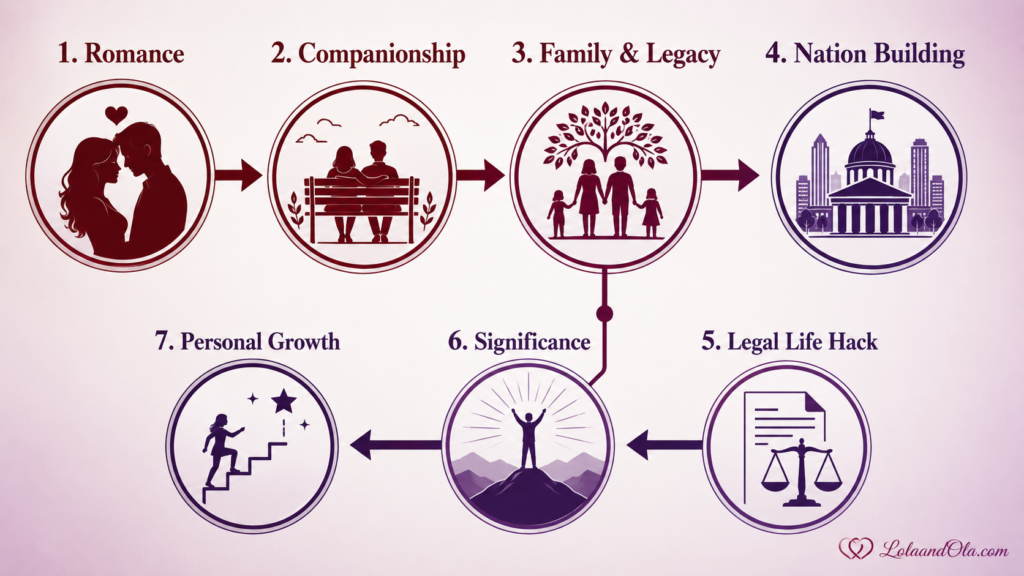


So why do you get irritated when your husband touches you?
You’re not alone.
Many women experience periods in their marriage where physical affection that once felt comforting suddenly feels annoying, overwhelming, or even unwelcome.
The most important thing to understand is that irritation when your husband touches you is usually a symptom, not the root problem.
In many cases, the touch itself isn’t the issue.
Instead, the feeling is often connected to deeper emotional, relational, psychological, or even medical factors that have been building over time.
The good news is that if you’re asking questions and looking for answers, you’re already taking an important step toward understanding what’s happening and finding a path forward.

Your Husband’s Touch Is Often a Reflection of Bigger Issues
When women say things like:
- “I don’t feel anything when my husband touches me.”
- “I don’t want my husband to touch me anymore.”
- “My husband repulses me sexually.”
- “I feel disgusted when my husband touches me.”
The physical reaction is often connected to something larger happening beneath the surface.
For some couples, there has been a gradual emotional drift over the years.
The relationship may not feel as close, exciting, or connected as it once did.
Life responsibilities, stress, parenting, financial pressures, disappointments, and unresolved conflicts can slowly create distance between spouses.
As that emotional distance grows, physical affection may begin to feel different as well.
Rather than seeing the irritation as the problem itself, it can be helpful to view it as a signal that something deeper deserves attention.
Start With a Root Cause Analysis
If you’re wondering, why you might even cringe when your husband touches you, one of the most productive things you can do is perform an honest root cause analysis.
Ask yourself:
- When did these feelings begin?
- Was there a specific event that triggered them?
- Has the relationship changed significantly over time?
- Are there unresolved hurts or resentments?
- Do you still feel emotionally connected to your husband?
- Have outside influences affected how you view my marriage?
Understanding how you got here is often the first step toward deciding where you want to go next.
Many women discover that the irritation didn’t appear overnight.
Instead, it developed gradually as emotional needs went unmet, communication declined, or disappointment accumulated over time.

Comparison Can Quietly Create Relationship Drift
One often overlooked factor is comparison.
You may be comparing your husband to:
- An ex-partner
- Someone you know personally
- A fictional character
- Influencers on social media
- Couples/Couple Goals portrayed online or on television
When comparison becomes a habit, real-life relationships can start to feel inadequate.
The reality is that social media and entertainment often show carefully curated versions of relationships.
Comparing your marriage to unrealistic standards can create dissatisfaction that affects attraction and emotional connection.
If you’ve found yourself thinking, why don’t you want you husband to touch or kiss you?, it may be worth examining whether unrealistic expectations or comparisons are contributing to your feelings.
Emotional Neglect Can Affect Physical Attraction
Sometimes the issue isn’t physical at all.
Your husband may not be meeting important emotional needs.
You may feel unheard, unappreciated, unsupported, or disconnected.
When emotional intimacy suffers, physical intimacy often follows.
For example, some women feel frustrated because:
- Their husband doesn’t listen.
- He rarely expresses appreciation.
- He doesn’t understand their love language.
- They feel emotionally alone in the marriage.
At the same time, it’s also important to examine your own role in the relationship.
Healthy marriages require, not necessarily starting as mutual effort, but eventually getting to “mutual”, understanding, and communication.
The goal isn’t assigning blame.
The goal is identifying patterns that may be contributing to the current situation.

When Touch Starts Feeling Like an Obligation
Some women find themselves thinking:
“My husband thinks he can touch me whenever he wants.” Wait… wasn’t that the deal?
In these situations, irritation can stem from feeling that personal boundaries aren’t being respected.
Even in a healthy marriage, consent and consideration matter; of course.
Affection tends to feel better when it comes from a place of connection rather than expectation.
If you’ve repeatedly expressed discomfort and feel unheard, resentment can begin to build.
Over time, that resentment may become associated with physical touch itself.
This can also lead to your husband getting mad when you don’t want to be touched, creating additional pressure and tension around intimacy.
Unresolved Resentment May Be Playing a Role
Resentment is one of the most common reasons physical affection becomes difficult to receive.
When hurt feelings remain unresolved, every interaction can become filtered through emotional pain.
You may notice yourself becoming irritated over things that didn’t bother you before.
Some women even report experiences such as blowing up on their husband for touching them.
While the reaction may seem sudden, the emotions behind it often have a much longer history.
The outburst itself may simply be the moment when accumulated frustration finally reaches the surface.
Overstimulation and Constant Physical Contact
Sometimes the issue isn’t dislike or lack of love.
For example, you may feel overwhelmed because:
- You’re caring for young children.
- You’re emotionally exhausted.
- You’re mentally overloaded.
- You rarely get personal space.
In these situations, you might think your your husband is always touching you.
When someone already feels overstimulated, even affectionate touch can feel draining rather than comforting.
This doesn’t necessarily mean the relationship is unhealthy. It may simply indicate a need for better communication about personal space, rest, and emotional recovery.
Medical and Hormonal Factors Matter Too
Not every explanation is relational.
There are legitimate medical and hormonal conditions that can affect how you experience touch, attraction, and intimacy.
Examples include:
- Postpartum changes
- Perimenopause
- Menopause
- Hormonal imbalances
- Anxiety
- Depression
- Chronic stress
- Certain medications
- Physical discomfort or pain
A woman experiencing hormonal changes may suddenly find herself feeling irritated by physical contact even when her feelings toward her husband haven’t fundamentally changed.
In these cases, speaking with a healthcare professional may provide valuable insights and solutions.
Can Attraction Be Rebuilt?
In many cases, yes.
If the issue stems from emotional disconnection, resentment, unmet needs, poor communication, or life stress, attraction can often be rebuilt through intentional effort.
The first step is understanding the true source of the problem.
Rather than focusing solely on why you feel repulsed by your husband’s touch, it can be more helpful to ask:
- What changed?
- What needs are not being met?
- What emotions have gone unaddressed?
- What patterns need to improve?
Once those answers become clear, solutions become much easier to identify.
You’re Not Alone
Many women feel guilty when they realize they no longer enjoy physical affection from their spouse.
They worry something is wrong with them or that they’re the only person experiencing these feelings.
They might yield to concepts indicating their lack of control such as compatibility or spirituality.
The truth is that relationship challenges, emotional disconnection, stress, and life transitions affect many marriages.
The fact that you’re searching for answers suggests that you care enough to understand what’s happening.
And understanding the problem is often the first step toward creating a healthier, more connected relationship.

Conclusion
If you’ve been wondering, “why do I get irritated when my husband touches me?”, remember that the irritation is usually a symptom of something deeper rather than the actual problem itself.
Whether the cause is emotional distance, unresolved resentment, unrealistic comparisons, boundary issues, overstimulation, hormonal changes, or life stress, identifying the root cause is essential.
Once you understand your unique story and how you arrived at this point, you can begin creating a practical roadmap toward the relationship and level of connection you ultimately want.
Check This Out: I Feel Disgusted When My Husband Touches Me
FAQ
Identify and address the underlying emotional, relational, or medical factors contributing to your irritation rather than focusing only on the physical touch itself.
Feelings of repulsion are often linked to unresolved resentment, emotional disconnection, unmet needs, stress, or hormonal changes rather than the touch alone.
You may become irritated by your husband’s touch when deeper issues such as relationship drift, emotional distance, overstimulation, or personal stress are affecting your feelings.
Cringing at your husband’s touch can occur when physical affection has become associated with emotional discomfort, resentment, pressure, or unresolved relationship concerns.

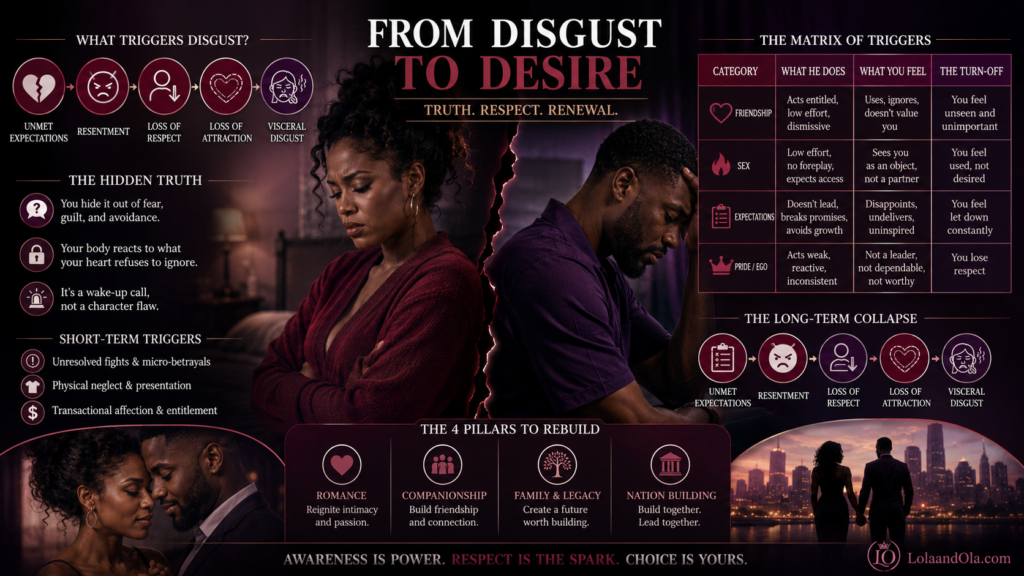
![[Unmet Expectations] ──> [Resentment] ──> [Loss of Respect] ──> [Loss of Attraction] ──> [Visceral Disgust]](https://lolaandola.com/wp-content/uploads/2026/06/1-From-Unmet-Expectations-To-Visceral-Disgust-1024x576.png)