


Want to know the physical signs your wife is cheating? Chances are you’re carrying around a heavy knot in your stomach. Maybe she’s become distant. Maybe intimacy has changed overnight. Maybe she’s suddenly protective of her phone or seems emotionally unavailable.
When trust begins to erode, it’s easy to interpret every small change as proof of an affair.
But here’s the truth most articles won’t tell you:
No single physical sign proves your wife is cheating.
Changes in appearance, intimacy, communication, or daily routines can certainly indicate that something has shifted in the marriage. However, those same changes can also stem from stress, depression, burnout, hormonal changes, unresolved resentment, career pressures, or a personal identity crisis.
The goal isn’t to become a detective.
The goal is to become observant without becoming obsessive.
Ironically, the husbands who spend their days checking phones, interrogating their wives, and searching for “proof” often make the relationship worse regardless of whether infidelity is happening. They lose their emotional grounding, surrender their self-respect, and create an atmosphere where trust becomes nearly impossible to rebuild.
Instead of allowing suspicion to control your behavior, use these potential signs as invitations to pay closer attention to your relationship as a whole.
After all, whether she’s cheating or not, something meaningful may need to be addressed.

The Biggest Mistake Most Husbands Make
When fear takes over, many men fall into what could be called the detective trap.
They begin:
- Checking her location constantly
- Watching her social media activity
- Looking through her phone
- Monitoring text messages
- Questioning every late arrival
- Reading hidden meanings into ordinary conversations
At first, this feels productive.
It feels like taking control.
In reality, it’s the opposite.
Once your identity becomes centered around proving whether your wife is cheating, you’ve handed your emotional stability over to someone else’s behavior.
Whether you find evidence or not, you lose.
If she’s innocent, your suspicion slowly damages the marriage.
If she’s guilty, your panic doesn’t stop the affair—it simply keeps you emotionally trapped while your confidence deteriorates.
Self-leadership means refusing to let fear dictate your next move.
That doesn’t mean ignoring obvious warning signs.
It means gathering information calmly, maintaining your dignity, and refusing to become consumed by paranoia.

Can Physical Signs Really Mean She’s Cheating?
Sometimes.
But it’s more accurate to think of them as signs of emotional disconnection rather than proof of infidelity.
An affair rarely begins because someone simply wakes up wanting to betray their spouse.
More often, unhealthy relationships outside the marriage develop after months—or even years—of unresolved emotional distance, resentment, unmet expectations, poor communication, or personal dissatisfaction.
That doesn’t excuse cheating.
Cheating is still a breach of trust and personal integrity.
But understanding the deeper dynamics helps you avoid making impulsive decisions based solely on fear.
Rather than asking,
“How do I catch her?”
Ask,
“What has fundamentally changed in our relationship?”
That question leads to insight.
The first one usually leads to obsession.
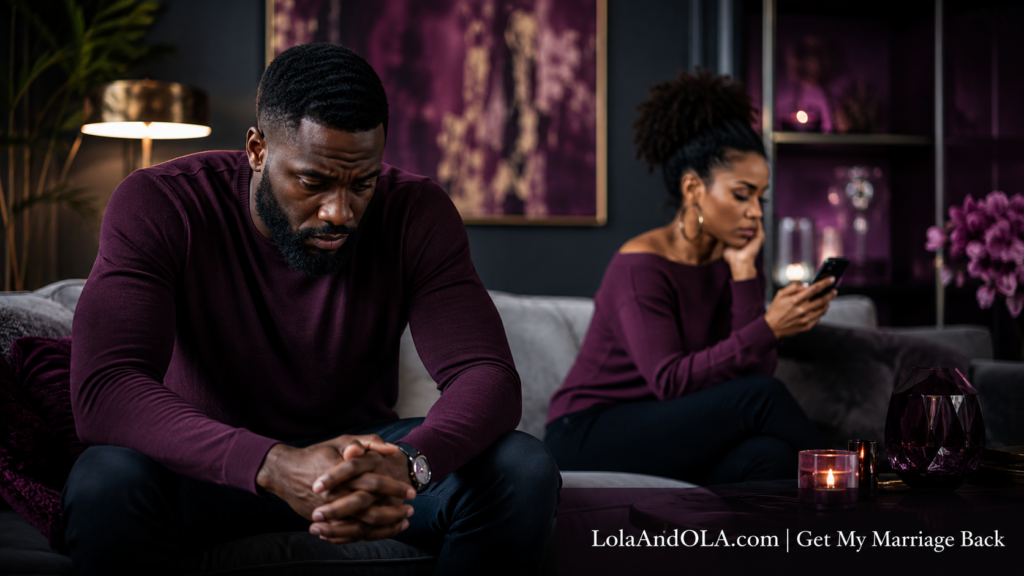
1. She Suddenly Withdraws From Physical Intimacy
One of the most commonly discussed physical signs your wife is cheating is a sudden and ongoing withdrawal from physical affection.
This isn’t about one stressful week.
Everyone goes through periods of exhaustion, illness, work pressure, or emotional overload.
Instead, pay attention to consistent patterns such as:
- She avoids kissing you.
- She no longer initiates affection.
- She pulls away from hugs.
- She avoids cuddling.
- She consistently rejects intimacy without explanation.
- Physical touch feels forced or absent altogether.
Notice the keyword:
Consistently.
A healthy marriage naturally experiences seasons.
But when physical distance becomes the new normal—and emotional distance grows alongside it—it deserves an honest conversation.
Again, this doesn’t automatically point to another man.
It could indicate:
- Emotional burnout
- Unresolved conflict
- Hormonal changes
- Anxiety or depression
- Feeling emotionally unseen
- Resentment that has gone unaddressed
Still, if this withdrawal appears alongside several other warning signs, it’s worth paying close attention.
Instead of reacting with accusations, become curious.
Your objective isn’t to force intimacy.
It’s to understand why intimacy disappeared in the first place.
2. She Makes a Dramatic Change in Her Appearance—Without Sharing It With You
People naturally evolve.
There’s nothing suspicious about buying new clothes, improving fitness, changing hairstyles, or taking greater pride in personal appearance.
Healthy self-improvement should actually be encouraged.
What deserves attention is when those changes happen suddenly and are paired with emotional secrecy.
Examples include:
- A completely new wardrobe.
- Expensive lingerie you’ve never seen before.
- A dramatic fitness obsession.
- New perfume.
- Different makeup habits.
- Increased grooming immediately before leaving home.
- Significant concern about looking attractive—but little interest in sharing that confidence with you.
By itself?
Not evidence.
Combined with emotional withdrawal, unexplained schedule changes, secrecy, and declining intimacy?
It may indicate that her emotional attention is being invested somewhere else.
Sometimes that “somewhere else” is another relationship.
Other times, she’s simply rebuilding her confidence after feeling stuck for years.
That’s why context always matters more than isolated behavior.
The question isn’t:
“Why does she suddenly look better?”
The better question is:
“Why has she emotionally disconnected while these changes are happening?”
That distinction keeps you grounded instead of reactive.
15 Warning Signs Your Wife Doesn’t Love You & How to Attract Her Back ❤️
3. She’s Become Extremely Protective of Her Phone
Technology has become part of everyday life, so it’s normal for people to value their privacy. A locked phone or password alone is not a sign of infidelity.
However, if your wife has suddenly become unusually protective of her devices after years of openness, it may signal that something has changed.
You might notice she:
- Takes her phone everywhere—even around the house.
- Turns the screen away when texting.
- Suddenly changes passwords.
- Silences notifications.
- Leaves the room to answer calls.
- Becomes anxious if you accidentally pick up her phone.
None of these behaviors prove she’s having an affair.
They simply suggest she doesn’t want you seeing something.
That “something” could be:
- Conversations with friends.
- Financial planning.
- Personal journaling.
- Work-related confidentiality.
- Planning a surprise.
- Or an inappropriate emotional or physical relationship.
The important point is this:
Don’t respond by secretly searching her phone.
Snooping may satisfy your curiosity temporarily, but it rarely restores trust. If she’s innocent, you’ve violated her privacy. If she’s cheating, you’ve gathered information without solving the deeper relationship problem.
A stronger response is to remain observant while addressing the growing emotional distance directly.
Remember one of the greatest traps in relationships: trying to control what another person chooses to do instead of mastering your own responses.
4. She Frequently Takes Private Calls or Disappears to Text
If your wife used to answer calls freely around you but now consistently steps outside, whispers in another room, or quickly ends conversations when you walk in, it’s reasonable to notice.
Context matters.
A confidential work project, helping a friend through a crisis, or planning a family surprise could explain occasional privacy.
But repeated secrecy without reasonable explanation deserves attention.
Rather than interrogating her with questions like:
- “Who was that?”
- “Let me see your phone.”
- “Why are you hiding things?”
Approach the issue from a position of calm confidence.
You might simply say:
“I’ve noticed we’ve become more private with each other lately, and it feels different than before. I’d like us to talk about what’s changed.”
Notice the difference.
One approach seeks to catch.
The other seeks to understand.
That distinction often determines whether a difficult conversation becomes productive or defensive.
One of the biggest relationship poisons is becoming obsessed with being “right.” When your only goal is proving your suspicion, genuine communication disappears.
5. She Suddenly Has More Unexplained Time Away From Home
Another commonly reported warning sign involves significant changes in routine.
Perhaps she suddenly has:
- More late nights at work.
- Frequent girls’ nights.
- Weekend commitments that never existed before.
- New hobbies with vague explanations.
- Business trips that seem unusual.
- Long periods where she’s difficult to reach.
Again, these changes don’t automatically equal cheating.
Life changes.
Careers evolve.
Friendships deepen.
People discover new interests.
The concern arises when these schedule changes are combined with:
- Emotional withdrawal.
- Increased secrecy.
- Declining intimacy.
- Defensiveness.
- Inconsistent explanations.
Patterns tell a more complete story than isolated events.
Instead of obsessing over where she is every minute, ask yourself a different question:
Has the emotional investment in our marriage noticeably declined while these new commitments have increased?
That question is far more useful than attempting to account for every hour of her day.
6. She Smells Different or Pays Unusual Attention to Grooming Before Leaving
This is one of the most searched physical signs your wife is cheating, but it’s also one of the easiest to misinterpret.
Perhaps she begins:
- Wearing perfume she rarely used before.
- Spending significantly longer getting ready.
- Buying expensive beauty products.
- Grooming differently before going out.
- Dressing more attractively for ordinary errands.
On its own?
This should never be considered evidence of infidelity.
Many people simply decide to improve themselves.
Others regain confidence after years of neglecting their appearance.
Some begin prioritizing their health after reaching a personal turning point.
The real concern isn’t improved grooming.
It’s when that investment seems disconnected from the marriage.
For example:
She appears excited to prepare for everyone else—but emotionally unavailable when she’s home.
That imbalance can indicate emotional energy is flowing somewhere outside the relationship.
Remember an important principle:
Energy is invested where attention lives.
When emotional investment consistently disappears from the marriage, something deserves honest discussion.
That “something” might be another relationship.
Or it might be resentment, burnout, or a feeling that the marriage has become stagnant.
Either way, focusing only on the perfume misses the bigger issue.
Focus on the relationship—not just the symptom.
Don’t Ignore the Signs—But Don’t Invent Them Either
When you’re hurting, confirmation bias becomes incredibly powerful.
You start connecting unrelated events into one frightening story.
A missed phone call.
A new hairstyle.
Working late.
Buying new clothes.
None of these, individually, prove anything.
The healthiest approach is to avoid both extremes:
- Don’t ignore obvious patterns.
- Don’t manufacture evidence from isolated behaviors.
Your responsibility isn’t to become a detective.
It’s to become a grounded leader within yourself.
Grounding means refusing to let fear dictate your decisions. Whether you draw that stability from faith, gratitude, or a commitment to personal growth, emotional steadiness allows you to see situations more clearly instead of reacting impulsively.
When you’re emotionally grounded, you’re far more likely to notice what actually needs attention—whether that’s rebuilding connection, setting healthy boundaries, or confronting difficult truths with dignity.
7. She Becomes Emotionally Distant While Acting Perfectly Fine With Everyone Else
One of the most overlooked physical signs your wife is cheating isn’t actually physical—it’s relational.
She may still laugh with friends.
She enjoys conversations at work.
She lights up around family.
But when she’s with you, there’s a noticeable emotional wall.
You might notice:
- Conversations become short.
- She no longer asks about your day.
- Eye contact decreases.
- She seems impatient around you.
- Affection feels mechanical.
- She rarely shares what’s going on in her life.
This emotional disconnect often hurts more than any single physical sign.
Whether infidelity is involved or not, emotional withdrawal usually signals that the relationship has drifted from friendship toward coexistence.
In our framework, friendship is one of the four leverage points in every marriage.
When friendship disappears, intimacy usually follows.
When intimacy disappears, attraction often begins to weaken.
That doesn’t automatically create an affair.
But it does create fertile ground for emotional distance to grow if neither spouse intentionally addresses it.
Instead of asking yourself,
“How do I get her to admit something?”
Ask,
“When did we stop genuinely enjoying each other?”
That question often reveals more than hours spent searching for clues.
8. She Starts Talking About Needing Space or “Finding Herself”
Sometimes the clearest warning sign isn’t physical at all.
It’s verbal.
Statements like these should never be ignored:
- “I need space.”
- “I’m not happy anymore.”
- “I’ve changed.”
- “I love you, but I’m not in love with you.”
- “I just need time to figure myself out.”
Many husbands panic the moment they hear these words.
Ironically, panic often accelerates the very outcome they’re trying to avoid.
They begin:
- Begging.
- Constantly texting.
- Making emotional speeches.
- Promising to change overnight.
- Pressuring for reassurance.
Unfortunately, desperation rarely creates attraction.
This doesn’t mean you become cold or indifferent.
It means you remain emotionally grounded enough to hear what she’s actually communicating.
Those words may mean:
- She’s emotionally exhausted.
- She’s carrying unresolved resentment.
- She’s experiencing a personal identity crisis.
- She’s already emotionally invested elsewhere.
Only honest conversations—not assumptions—can reveal which is true.
Behaviors People Often Mistake for Cheating
One of the biggest mistakes anxious spouses make is assuming every unusual behavior points toward infidelity.
In reality, many common life circumstances create similar changes.
For example:
Stress and Burnout
Long work hours, caregiving responsibilities, financial pressure, or chronic stress can dramatically reduce emotional availability and sexual desire.
Hormonal Changes
Pregnancy, postpartum recovery, perimenopause, menopause, thyroid conditions, and other medical factors can significantly affect mood, intimacy, and energy.
Depression or Anxiety
Mental health struggles often cause withdrawal, irritability, loss of affection, and reduced communication.
Personal Growth
Sometimes a spouse begins exercising, dressing differently, or pursuing new hobbies simply because they’re trying to become healthier—not because another person is involved.
This is why no responsible relationship coach should encourage diagnosing infidelity from one or two behaviors.
Patterns matter.
Conversations matter.
Character matters.
Context matters.
What To Do If You Suspect Your Wife Is Cheating
If several warning signs appear together, resist the urge to become a detective.
Instead, lead yourself first.
1. Stay Grounded
Fear creates distorted thinking.
Ground yourself through prayer, gratitude, trusted mentors, healthy routines, and emotional discipline.
You cannot make wise decisions while living in panic.
Our framework begins with Grounding, because emotional stability allows you to respond intentionally instead of reacting impulsively.
2. Look at the Entire Relationship
Ask yourself difficult questions:
- Have we stopped prioritizing friendship?
- Has pride replaced humility?
- Have our expectations become unrealistic?
- Have we neglected intimacy?
- Have we drifted emotionally over time?
Infidelity is always the responsibility of the person who chooses it.
However, relationship drift is often more complex than one person’s failures.
Understanding that complexity helps you address the marriage honestly without assuming blame for someone else’s choices.
3. Have a Calm, Direct Conversation
Don’t interrogate.
Invite honesty.
You could say something like:
“I’ve noticed we’ve become more distant over the past few months. I don’t want to make assumptions, but I do want us to have an honest conversation about what’s happening between us.”
Notice what’s missing:
No accusations.
No threats.
No emotional explosion.
Calm confidence communicates far more strength than emotional volatility ever will.
4. Maintain Healthy Boundaries
Choosing dignity does not mean tolerating betrayal.
If trust has been broken, healthy boundaries become essential.
Boundaries aren’t about controlling another person.
They’re about clearly communicating what you will and won’t accept while remaining respectful.
Healthy marriages are partnerships built on earned trust—not fear, manipulation, or constant surveillance.
Rebuilding Attraction Is Different From Chasing
Many husbands unknowingly become one of what we call the Anti-Seducers during relationship crises.
Instead of leading themselves, they become:
- The Suffocator who constantly seeks reassurance.
- The Reactor who lets emotions dictate every decision.
- The Moralizer who lectures rather than listens.
- The Brute who tries to control through intimidation.
These approaches rarely rebuild attraction.
Personal leadership does.
Focus on becoming the kind of man who naturally creates emotional safety and respect:
- Continue improving your physical health.
- Strengthen your purpose beyond the marriage.
- Develop emotional intelligence.
- Communicate calmly.
- Keep your integrity regardless of her choices.
Whether your marriage ultimately heals or not, this path allows you to emerge stronger instead of more broken.
More Video on our YouTube Channel
Obsession over physical signs your wife is cheating usually begins with fear.
But fear is a terrible relationship advisor.
Some of the signs discussed in this article may indicate infidelity.
Others may point toward emotional disconnection, unresolved conflict, burnout, or struggles completely unrelated to another relationship.
Instead of allowing suspicion to consume your life, focus on what you can actually control.
Lead yourself first.
Strengthen your emotional grounding.
Address problems directly instead of indirectly.
Set healthy boundaries where necessary.
And remember this:
The goal isn’t simply to discover whether your wife is cheating.
The goal is to become the kind of man who responds to uncertainty with wisdom, courage, and self-respect rather than panic.
Regardless of the outcome, those qualities will serve you—and every important relationship in your life—far better than becoming an investigator ever will.
What is Infidelity ❤️ Does it Make Marriage a Mistake⁉️
Frequently Asked Questions [FAQ]
There is no reliable “test” that can prove whether your wife is cheating without direct evidence or honest communication. Instead of resorting to surveillance or traps, pay attention to consistent patterns, have a respectful conversation, and address the relationship from a position of emotional strength rather than suspicion.
There is no universal behavior that guarantees someone is being unfaithful because every individual and relationship is different. Some people become emotionally distant, secretive, or inconsistent, while others show no obvious changes at all, which is why isolated behaviors should never be treated as proof.
Responses vary widely depending on the individual and the situation. Some people become defensive or deny wrongdoing, while others admit the truth, show remorse, or redirect the conversation, making calm communication and factual observation more valuable than emotional accusations.
Start by staying emotionally grounded and resisting the urge to snoop or make accusations without evidence. Focus on honest communication, healthy boundaries, and evaluating the overall health of the relationship before deciding what steps to take next.