Broken Marriage?
Fix it
Here FREE

Get My Marriage Back


Rules for Marriage: 12 Guardrails for a Healthy, Attractive Bond

It has become popular to say there are no universal rules for marriage.

People claim every marriage is different, relationships do not come with manuals, and couples must simply discover what works for them. There is some truth in that ideaโ€”but it can also become an excuse to avoid responsibility, discipline, and self-examination.

Every marriage has its own personality. Yet healthy, lasting marriages consistently reveal recognizable patterns.

Couples who remain connected over time tend to communicate with respect, protect one anotherโ€™s dignity, repair conflict, maintain friendship, manage expectations, and continue cultivating romantic and sexual attraction. These patterns may not be rigid laws, but they are reliable guardrails.

Success leaves clues.

When people repeatedly succeed at something as emotionally complex as marriage, it is reasonable to study how they think, behave, recover, and reconnect. A person who genuinely values marriage should be willing to identify those patterns rather than dismiss the entire subject by saying, โ€œThere are no rules.โ€

The healthiest rules for marriage do not imprison two people. They protect the environment in which trust, friendship, desire, growth, and emotional safety can flourish.

rules for marriage

Marriage Rules Are Guardrails, Not Instruments of Control

The word โ€œrulesโ€ can make marriage sound rigid, restrictive, or authoritarian.

That is not the purpose of these principles.

Healthy marriage guardrails are not weapons for controlling your spouse. They are standards you first apply to yourself. They help you decide how you will communicate, respond, lead, apologize, create connection, and protect the relationshipโ€”even when your spouse is not behaving perfectly.

This matters because many people wait for their partners to change before improving their own conduct.

They say:

  • โ€œI will become affectionate when my spouse becomes more attentive.โ€
  • โ€œI will communicate respectfully when my spouse stops frustrating me.โ€
  • โ€œI will apologize when my spouse admits what they did.โ€
  • โ€œI will bring more romance when my spouse becomes more attractive.โ€
  • โ€œI will work on the marriage when my partner proves they care.โ€

That mindset creates a stalemate.

Personal leadership means refusing to surrender control of your character simply because another person is imperfect. You cannot control your spouseโ€™s behavior, but you can influence the emotional climate of your marriage through the energy, discipline, warmth, honesty, and maturity you consistently bring into it.

You may sometimes have to begin a healthier cycle alone. That does not mean carrying the entire marriage indefinitely or tolerating abuse. It means taking responsibility for your contribution before using your spouseโ€™s shortcomings to justify your own.

The Number-One Rule for Marriage: Pursue Unity

The foundational rule for marriage is the pursuit of unity.

Unity does not mean agreeing about everything. It does not require either spouse to abandon personal identity, independent thought, boundaries, or ambition.

Unity means remembering that you are on the same team.

Every disagreement, financial decision, family challenge, intimacy issue, career transition, and parenting conflict should be approached from one central question:

What response will strengthen us as a team?

Without unity, spouses begin operating like opposing attorneys. Each person gathers evidence, defends a position, exposes the other personโ€™s weaknesses, and tries to win the case.

But winning an argument while damaging your spouseโ€™s dignity is not a marital victory. If your partner leaves the conversation feeling humiliated, emotionally abandoned, or unsafe with you, the relationship has lostโ€”even when your logic was correct.

Unity changes the objective of conflict.

The goal is no longer to establish which spouse is the superior thinker. The goal is to understand the problem, protect the bond, and find the most responsible path forward together.

12 Essential Rules for Marriage

12 Essential Rules for Marriage

The following rules for marriage are not shortcuts to a conflict-free relationship. They are practical standards for creating a marriage that is resilient, emotionally intelligent, affectionate, and mutually attractive.

1. Protect Unity More Than Your Ego

Pride turns ordinary disagreements into power struggles.

Instead of addressing the actual issue, spouses begin defending their intelligence, authority, reputation, or right to feel offended. One person needs to be correct. The other needs to avoid looking weak. Soon, the original problem becomes less important than winning.

A healthier question is not, โ€œHow do I prove my point?โ€

It is, โ€œHow do we solve this without destroying connection?โ€

Protecting unity may require you to soften your tone, acknowledge a valid point, pause a heated discussion, or apologize for your delivery even when your underlying concern remains legitimate.

Humility is not humiliation. It is the strength to place the health of the marriage above the temporary satisfaction of being declared right.

2. Practice Radical Personal Accountability

One of the most powerful rules for marriage is to stop waiting for your spouse to go first.

Take responsibility for the atmosphere you create.

Examine your tone, body language, emotional availability, spending habits, reliability, affection, criticism, defensiveness, and willingness to repair. Ask what it feels like to live with youโ€”not merely what you intended.

Accountability does not mean accepting blame for everything. It means honestly confronting the part you can control.

Emotionally intelligent spouses do not say, โ€œYou made me behave this way.โ€ They recognize that frustration may explain a reaction, but it does not excuse contempt, cruelty, dishonesty, or emotional recklessness.

Your partner may contribute to the tension. Your response still belongs to you.

3. Fight the Problem, Not Each Other

Healthy couples experience conflict. The difference is how they handle it.

Attacking your spouseโ€™s character turns a solvable problem into an identity wound. Statements such as โ€œYou are selfish,โ€ โ€œYou never care,โ€ or โ€œYou always ruin everythingโ€ invite defensiveness instead of cooperation.

Address the behavior, its impact, and the desired change.

For example:

โ€œWhenever major purchases are made without a conversation, I feel excluded from decisions that affect us both. I want us to agree on an amount that requires mutual discussion.โ€

That approach is specific, responsible, and solution-oriented.

Avoid yelling, insults, threats, mockery, guilt, condemnation, condescension, and sarcastic put-downs. These behaviors may create momentary compliance, but they gradually poison affection and attraction.

You cannot repeatedly treat your spouse like an enemy and expect them to remain emotionally or sexually open to you.

4. Protect Your Spouseโ€™s Dignity in Public

Public loyalty is one of the most important rules for a successful marriage.

Do not use your spouse as material for jokes, expose private weaknesses for entertainment, or recruit family and friends into your marital disputes. Every relationship needs a protected inner circle.

This does not mean concealing abuse, addiction, danger, or serious misconduct. Professional support and trusted counsel may be necessary in those circumstances.

It means ordinary frustrations should not become public campaigns against your partnerโ€™s reputation.

Speak about your spouse in a way that protects the possibility of reconciliation. Once relatives and friends are trained to despise your partner, they may continue holding resentment long after the two of you have repaired the issue.

Correct privately. Honor publicly.

5. Never Stop Cultivating Attraction

Marriage does not eliminate the need for seduction. It makes intentional attraction more important.

Many couples stop doing the very things that originally created desire. Curiosity becomes assumption. Playfulness becomes logistics. Compliments become criticism. Dates become errands. Touch becomes functional. Mystery disappears under the weight of routine.

Attraction needs both certainty and variety.

Your spouse should feel secure in your commitment while still experiencing freshness, anticipation, flirtation, discovery, and emotional movement. Reliability creates safety, but thoughtful unpredictability helps keep romance alive.

Continue dressing with intention. Initiate affectionate touch. Plan experiences. Send suggestive messages. Compliment specific qualities. Create private jokes. Look at your spouse with desire instead of treating them like another household employee.

Seduction in marriage is not manipulation. It is the art of making your spouse feel seen, chosen, desired, and emotionally alive in your presence.

6. Maintain Friendship Beneath the Marriage

Romance is difficult to sustain without friendship.

Your spouse should not become someone you only discuss bills, children, chores, and problems with. A marriage needs moments of lightness, laughter, shared interests, companionship, and genuine curiosity.

Ask questions that are not administrative.

What has been occupying your spouseโ€™s mind lately and what are they afraid of? What are they excited about and what do they miss?

And what do they want to experience next?

Friendship gives a marriage emotional resilience. During seasons when passion fluctuates, responsibilities increase, or life becomes stressful, friendship helps couples remain connected enough to rebuild.

Make time to enjoy each other without turning every interaction into a relationship evaluation.

7. Manage Expectations Before They Become Resentment

Many marriages suffer less from a lack of love than from unspoken, unrealistic, or conflicting expectations.

One spouse expects frequent affection. The other assumes commitment should be enough. One expects traditional roles. The other expects everything to be divided equally. One assumes money should be saved. The other believes it should be enjoyed. Neither explains the expectation clearly, yet both feel betrayed when it is not fulfilled.

Unspoken expectations eventually become invisible contracts.

You punish your spouse for violating an agreement they never knew they had made.

Discuss expectations concerning finances, sex, household responsibilities, family boundaries, parenting, faith, social life, privacy, career decisions, and quality time. Revisit these conversations as your circumstances change.

Do not expect mind-reading. Clarity is more loving than silent resentment.

8. Refuse to Keep Score

Scorekeeping transforms partnership into a transaction.

โ€œI initiated the last date.โ€

โ€œAlso… I apologized first.โ€

โ€œ…handled the children yesterday.โ€

โ€œI have done more for this marriage than you.โ€

Some imbalance is unavoidable. There will be seasons when one spouse contributes more because the other is sick, grieving, overwhelmed, pregnant, unemployed, building a business, or managing another serious responsibility.

A strong marriage cannot be sustained by measuring every gesture with perfect mathematical equality.

This does not mean tolerating chronic irresponsibility. Persistent imbalance should be addressed. But approach it as a problem to solve rather than an opportunity to prove moral superiority.

Marriage works best when both spouses aim to contribute generously, not minimally.

9. Repair Quickly and Apologize Completely

Every marriage experiences emotional ruptures. Strong marriages become skilled at repair.

A complete apology does not sound like:

โ€œI am sorry you were offended.โ€

โ€œSorry, but you pushed me.โ€

โ€œI already apologized, so get over it.โ€

A meaningful apology identifies the behavior, acknowledges its impact, expresses remorse, and communicates a commitment to change.

For example:

โ€œI was dismissive when you tried to explain your concern. My tone made you feel insignificant, and that was disrespectful. I am sorry. Next time, I will slow down and listen before responding.โ€

Repair should not be delayed merely to protect pride. The longer emotional distance is allowed to harden, the more difficult reconnection becomes.

Apologizing first does not automatically mean you were entirely wrong. It may simply mean you are mature enough to stop the bleeding.

10. Regulate Yourself Before Correcting Your Spouse

Emotional regulation is essential to both conflict resolution and attraction.

A constantly reactive spouse becomes difficult to approach. When every concern triggers defensiveness, rage, panic, moral lectures, threats, or dramatic withdrawal, honest communication begins to feel dangerous.

Learn to pause.

Take a breath. Lower your voice. Ask for a short break when necessary. Return to the conversation at an agreed time rather than disappearing indefinitely.

Self-control is attractive because it communicates strength, stability, and emotional safety. This is different from emotional suppression. Regulating an emotion means managing how it is expressed, not pretending it does not exist.

You are allowed to be angry. You are not entitled to become cruel.

11. Make Intimacy an Ongoing Conversation

Sex should not be treated as an automatic entitlement or an optional luxury that receives attention only after every other responsibility is complete.

Physical intimacy is one of the ways many spouses experience connection, reassurance, playfulness, and desire. Yet healthy sexual connection requires emotional intelligence, communication, responsiveness, and respect.

Discuss frequency, initiation, preferences, stress, health, rejection, affection, novelty, and changing needs without shaming one another.

Avoid using sex as a weapon, reward, bargaining chip, or measurement of personal worth. At the same time, do not dismiss a spouseโ€™s repeated concerns about intimacy as shallow or unimportant.

A thriving intimate life is not created through pressure. It is built by becoming the kind of partner with whom emotional and physical openness feels appealing.

That includes personal hygiene, attentiveness, confidence, affection, patience, emotional presence, and a willingness to keep learning your spouse.

12. Maintain the Marriage Before It Breaks

Do not wait for a crisis before paying attention to your relationship.

Cars receive maintenance. Businesses conduct reviews. Athletes examine performance. Yet many couples assume marriage should survive indefinitely without structured attention.

Schedule regular conversations about the state of the relationship.

Ask:

  • What has felt good between us lately?
  • Where have we felt disconnected?
  • What do you need more of from me?
  • Is there any resentment we need to address?
  • How is our friendship?
  • How is our physical connection?
  • What would make the next month better?

These conversations should not become blame sessions. Their purpose is to identify small points of friction before they develop into entrenched resentment.

Healthy marriages are not merely repaired. They are maintained.

Rules for Marriage That Preserve Emotional Attraction

Rules for Marriage That Preserve Emotional Attraction

Emotional attraction grows when your spouse associates your presence with a healthy combination of safety, significance, connection, growth, and positive anticipation.

That does not mean making your spouse responsible for meeting every emotional need. Mature adults maintain a sense of purpose, identity, friendship, self-respect, and personal responsibility outside the relationship.

However, marriage should become a meaningful place where both people feel valued and emotionally nourished.

You strengthen emotional attraction when you:

  • Listen without immediately correcting.
  • Express appreciation with specificity.
  • Create shared experiences.
  • Respect your spouseโ€™s individuality.
  • Respond to vulnerability with care.
  • Maintain standards for your own growth.
  • Bring confidence instead of chronic neediness.
  • Offer affection without always demanding an immediate return.
  • Create emotional safety without becoming dull or passive.
  • Balance reliability with playfulness and novelty.

Neediness suffocates attraction because it makes your spouse responsible for constantly stabilizing your identity. Emotional coldness also destroys attraction because it starves the bond of warmth and reassurance.

The goal is grounded interdependence: two self-aware people who can stand independently but intentionally choose to build together.

Behaviors That Quietly Poison a Marriage

Some marriages do not collapse because of one dramatic event. They weaken through repeated moments of contempt.

Watch for patterns such as:

  • Shaming your spouse for expressing a need.
  • Insulting their intelligence or appearance.
  • Blaming them for every negative emotion.
  • Judging their motives without evidence.
  • Condemning their entire character over one behavior.
  • Using guilt to force cooperation.
  • Responding to emotion with cold logic alone.
  • Using sarcasm to conceal hostility.
  • Speaking with condescension.
  • Becoming obsessed with proving who is right or wrong.

These behaviors destroy emotional safety. Once emotional safety disappears, honesty decreases, defensiveness rises, physical affection becomes more complicated, and attraction begins to erode.

Truth can be delivered without humiliation.

Tough conversations are sometimes necessary. But tough love without emotional intelligence easily becomes ordinary cruelty wearing a respectable label.

What to Do When You Are the Only One Applying These Rules

You cannot single-handedly create a healthy marriage forever. Marriage ultimately requires participation from both people.

But one person can interrupt an unhealthy cycle.

You can stop yelling even when your spouse continues raising their voice. Also you can become clearer about expectations. …apologize for your contribution.

You can stop publicly criticizing the marriage. And you can restore playfulness, improve your emotional regulation, and initiate a more mature conversation.

Sometimes a different response produces a different response.

However, self-leadership should not become self-abandonment. If your spouse consistently refuses accountability, violates boundaries, behaves abusively, betrays agreements, or shows no willingness to participate in repair, outside support may be necessary.

Starting the cycle does not mean carrying another capable adult indefinitely.

The Rules for Marriage Must Be Lived, Not Merely Discussed

Marriage advice is easy to collect and difficult to embody.

The value of these rules is not in agreeing with them intellectually. The value is in practicing them when you are disappointed, tired, sexually frustrated, financially stressed, misunderstood, or convinced that your spouse should go first.

A strong marriage is rarely built through one grand gesture.

It is built through repeated decisions:

To protect unity, regulate pride.

…communicate clearly.

To remain curious, quickly, preserve dignity, create attraction intentionally

To keep choosing the relationship without losing yourself.

There may be no single manual that can predict every challenge your marriage will face. But that does not mean there are no principles.

Healthy marriages leave patterns. Wise couples study those patterns, apply them with emotional intelligence, and adapt them to the unique realities of their relationship.

The best rules for marriage are not restrictions imposed by one spouse upon the other.

They are shared guardrails that protect the friendship, intimacy, unity, and attraction both people are responsible for creating.

19 Signs Your Wife Is Not Sexually Attracted To You

Frequently Asked Questions

What are the rules of marriage?

The rules of marriage are practical guardrails that promote unity, respect, accountability, communication, loyalty, intimacy, and ongoing connection. They are not tools for controlling a spouse but standards both partners use to protect the relationship.

What is the rule for success in marriage?

The foundational rule is to pursue unity by approaching problems as teammates rather than opponents. Every other healthy principle becomes easier when protecting the bond matters more than defending individual ego.

What are the rules for successful marriage?

Successful marriages rely on honest communication, personal accountability, mutual respect, friendship, emotional regulation, clear expectations, rapid repair, public loyalty, and intentional intimacy. Couples must also continue dating, appreciating, and learning one another as they grow.

What is the #1 thing that destroys marriages?

Mismanaged pride is one of the most destructive forces because it prevents accountability, apology, compromise, and emotional repair. When being right becomes more important than staying connected, resentment and contempt can gradually replace affection.


Stages of Divorce Grief

What are the Stages of Divorce Grief?

The stages of divorce grief are similar to the stages of grief that occur when someone dies.

The stages are shock and disbelief, pain and sorrow, anger and resentment, bargaining and guilt, and acceptance and hope. The order in which the stages occur may vary from person to person.

Some people may skip some of the stages or move through them more quickly than others.

It is important to allow yourself to grieve the loss of your marriage and not try to rush through the process.

1. Shock and disbelief: This is often the first stage after learning that your divorce is final. You may feel numb, have difficulty processing what has happened, and experience many other emotions, including sadness, anger, fear, and relief.

2. Pain and sorrow: As the reality of your divorce sets in, you will likely experience deep feelings of loss and grief.

You may find yourself crying often, feeling depressed, and struggling to cope with the changes in your life.

3. Anger and resentment: It is common to feel a range of negative emotions during this stage, including anger, bitterness, resentment, and frustration. You may lash out at your former spouse, friends, and family members.

4. Bargaining and guilt: During this stage, you may find yourself trying to negotiate with your former spouse or hoping for a reconciliation. You may also feel guilty about the divorce and blame yourself for the situation.

5. Acceptance and hope: In this final stage, you accept that the divorce is final and begin to move on with your life.

You may still feel sad and miss your former spouse, but you are able to start rebuilding your life. You may also feel hopeful about the future and find new meaning in your life.

Tips on Coping with Separation and Divorce

1. Recognize That Your Marriage Is Over: This can be difficult to accept, but it is an important step in the grieving process. Once you come to terms with the fact that your marriage is over, you can begin to move on.

2. Be Patient โ€” Grief Takes Time: The stages of grief do not always happen in a linear fashion. You may move back and forth between stages or even skip some altogether.

3. Surround Yourself With People Who Support You โ€” And Let Them Help: It can be helpful to talk to friends and family members who have gone through a divorce. They can offer guidance and support.

4. Practice Excellent Self-Care: During this difficult time, it is important to take care of yourself both physically and emotionally. Make sure to eat healthy foods, get enough sleep, and exercise regularly.

5. Feel Your Feelings: It is normal to feel a range of emotions after your divorce. Allow yourself to grieve the loss of your marriage.

6. Find Out Whatโ€™s There Besides Anger, Sadness, And Fear: As you move through the grieving process, you may find that you have new insights about yourself and your life. Allow yourself to explore these new perspectives.

7. Timebox Your Grief: Set aside specific times each day to grieve the loss of your marriage. This can help you to avoid becoming overwhelmed by your emotions.

8. Donโ€™t Hide Your Divorce Grief From Your Kids (But Donโ€™t Freak Them Out, Either)

It is important, to be honest with your children about your divorce. However, you should avoid sharing too much information or putting them in the middle of the situation.

9. Write It Out, Work It Out, Or Just plain Talk It Out: Journaling, therapy, and talking to friends and family members can all be helpful ways to cope with your divorce.

10. Stop Blaming Your Ex and Start Forgiving Them (and Yourself) One of the most important things you can do for yourself is to let go of any resentment and blame you may feel. This can be difficult, but it is an essential part of healing.

11. Remember: You Will Still Be a Part of Your Kidโ€™s Life Even After Divorce Although your family may be changing, you will still be an important part of your childrenโ€™s lives. Try to maintain a positive relationship with your former spouse for the sake of your kids.

12. Consider Professional Help Many people find it helpful to seek out professional help during the divorce process. A therapist can provide support and guidance as you navigate this difficult time.

If you are facing divorce, it is important to understand the grieving process. By recognizing the stages of grief, you can better prepare yourself for the journey ahead.

Remember, every divorce is unique and there is no right or wrong way to grieve. If you find yourself struggling, donโ€™t hesitate to seek out professional help. With time and patience, you will eventually reach the acceptance and hope stage.

Donโ€™t Suppress Your Feelings While Grieving

Everyone is different and everyone can experience each one of these stages very differently. Allowing yourself the freedom to grieve during a divorce doesnโ€™t make you weak.ย  In fact, it can actually make you stronger. If you try to bottle up your emotions, they may eventually come out in destructive ways. Itโ€™s okay to cry, be angry, and feel sad. These are all normal reactions to loss.

Divorce is a process, not an event. Just as there is no one right way to grieve the death of a loved one, there is no one right way to grieve the loss of a marriage. Allow yourself the time and space to experience all the emotions that come with this major life change. Seek out support from friends and family members, or consider professional help if you need it. With time and patience, you will eventually reach the acceptance and hope stage.

Coping With the Hard Feelings

Coping with grief during a divorce is exceedingly difficult. Feeling all the emotions mentioned in each stage during the process of divorce is common and necessary for moving forward. It is important to surround yourself with people that love you and support you to help you through this painful time. If you are feeling lost, consider professional counseling to help you regain a sense of self and hope for the future.

ย 

ย 

ย 

ย 

ย 

ย 

ย 

ย 

ย 

ย 

ย 

ย 

ย 

ย 

ย 

ย 

ย 

ย 

How To Handle Marriage Separation 💔 7 Tips

In this lesson, you will discover how to handle marriage separation in order to ultimately make the outcome most positive and fruitful regardless of how much pain you are dealing with.

I am sorry for whatever the reason is that you are relating to this extremely important topic; my understanding is that itโ€™s never easy, simple, or blissful.

Most people donโ€™t go into a marriage with the purpose or intentions of separating.  I would, however, argue that many are indirectly doing exactly that.  

Iโ€™ll explain.

Weโ€™ve got tons of separation and reconciliation stories we can share with you to emphasize some of the patterns we continue to share with you in these lessons.

But we want to extract this particular lesson from just 2 stories.  

As usual, all the advice we offer is easier said than done but they are worthwhile.

From the first story, Clara reported to us that her husband slept with someone else during separation and lied about it during and after reconciliation.

I know what you are thinking.

How could she ever possibly trust again?  She can actually. 

But wait.

We also have Christine who is worried that her children will hate her and their dad for separating.

Even though the kids have accepted her excuse for sleeping on the sofa (she told them โ€œmommy needs her spaceโ€), she is afraid that they will start to recognize the lack of intimacy or affection at some point.

Honestly, that is probably the least of her issues.

While some may be good at hiding the pain, separation is never easy for either of the parties involved; husband or wife.

Many of todayโ€™s modern men and women lack the patience level required to see it that way because they want all the answers to life questions faster, logically, and now.

They often opt-in for pointing fingers at everything and everyone else.

So in todayโ€™s lesson, I want to point out 7 tips to help anyone in any phase of navigating separation in marriage in order to make the most out of it.

Letโ€™s dive right into it.

Tip #7 – Rules & Boundaries.

PREVIOUS POST: 💔 How Many Marriages End In Divorce?

One of the tools professionally offered to help with separation are letters or contracts that state what the rules and boundaries are during this process.

But I want to emphasize more on the double edge nature of emphasis on rules and boundaries.

Of course, these are designed to not be crossed.  

But for quite a significant percentage of people, the emphasis on rules and boundaries tends to create attention for it and sadly, a heightened desire to cross them.

This is especially true when people are going through an experience that puts them in potentially the weakest space theyโ€™ve ever been in a lifetime.

So I want you to treat rules and boundaries with care especially during separation in marriage.

Actually, Iโ€™d rather you put more attention into yourself, self-esteem, self-worth, and understanding that the existing version of your marriage is over.

If you do decide to stay together, it should be a completely different version of your marriage.

It will make building trust a lot more easier because what happened with the other person during separation becomes less of a factor for the future.

Iโ€™m not saying this to encourage bad and sloppy behavior during separation but to encourage you to retain your much-needed power for your future with or without your present partner.

This is the tip for Clara whose husband slept with someone else during separation and lied about it.  

As far as I am concerned, itโ€™s more so an old problem that was never solved.  

Itโ€™s an unrealistic expectation problem.  

When in separation from your marriage, anything should not go but it could because it usually would.  โ€œShouldโ€œ is usually not the reality. 

Tip #6 – Why 

I want you to identify why you and/or your spouse have opted for separation in order to support the process with a purpose.

Any endeavor in life without an explicitly identifiable purpose is 100% destructive whether you know it or not.

Unfortunately, many people call for separation when they are in a confused state in an attempt to run away from pain or perceived pain.  

So they just leave things in the hands of fate.

Tip #5  – How Long Should You Stay Separated?

TRENDING: 5 Rules to Follow When Separation Starts to Work For Your Marriage💔

This part is also like an oxymoron.  

Let me explain.

When people want separation from a partner or the other way around, they are also and often caught up in their feelings to a large extent.

So the idea of setting a time or term on the process is almost an oxymoron because if they could do that, they would just fix the marriage.

But thatโ€™s why I am pointing it out.

If you want to make the most positive outcome from this often unpleasant experience, I want you to be intentional.

Starting with yourself, I want you to identify and determine how long you want to give this separation process before attempting a decision to stay together or move forward.

That will help tremendously with your personal self-esteem because of the element of certainty and put you more so in the driverโ€™s seat.

Tip #4 – Death & Growth

There is no in-between.  

Your marriage is either dying or growing at any point in time.

I am aware that you probably already know this but I also know that in the mental space of a person going through a separation, a reminder is probably necessary.

You are welcome.

Tip #3 – The Effect of Separation On Children

HAVE YOU SEEN THIS: More Video on our YouTube Channel

Christineโ€™s problem is not her childrenโ€ฆ thatโ€™s the least of her problems. 

The children, by default, will have their own trauma carried over into adulthood.

Of course, parents should not be adding on to that.  

But as you can see, Christine is adding on to it, maybe unknowingly, but for reasons best known to her by leaving her matrimonial bed for the couch.

She has her legitimate reasons; Iโ€™m sure.

Itโ€™s not what the kids are saying or hearing.  

It is much more like what they are watching, how they will subconsciously process and interpret them, their personality, their temperament, 2,000 other signals… 

And how they choose to live life as adults.

The only part of that you will be able to, not control but, influence is how you are living your life, maybe a little of what you say to them but more like how you nurture your marriage from what they can see.

So if you are not capable of nurturing your marriage without asking for space, they are seeing and learning that or the unhealthy and extreme opposite of that no matter how old they are. 

Speaking of space… 

Tip #2 – The Double-Edged & Deadly Nature of Space

While space can actually be a useful tool for mental health, itโ€™s important to know that you are also creating a void and effectively allowing in other energy that may not necessarily be healthy.

Sure, you can eventually hold your partner accountable for any bad behavior or transgression during that separation process.  

It is worth noting that holding other adults accountable all by itself has massive limitations when it comes to romantic relationships and getting what you want. 

It has become pretty normal to ask for space in a marriage. 

But letโ€™s all remember that 50% divorce rate, broken families, and fatherless children are also becoming the norm.

Tip #1 – Duty

I was talking to one of my boys who is in todayโ€™s dating market.  

He went ahead and told me in so many ways how modern women lack a sense of duty when it comes to the role of a wife.

This has been simply his experience and I donโ€™t see that as an absolute truth. But Iโ€™ve also seen enough to know that this is true to a large extent.  

70-80% of divorces are initiated by women and it goes up to 90% for college and university-educated modern women.

I personally think that the breakdown in family leadership has contributed the most to these unpleasant statistics. 

But I also think it will help tremendously if men have the help of the modern women who want marriage and the family structure in bringing a sense of duty to the โ€œtableโ€ while we also continue to address the leadership issues.

After all, both the men and women (and especially children who are the leaders of tomorrow)  benefit from the love and connection but also the long-term benefit of a family structure.  

Duty and not the momentary feelings have been responsible for all structures that stand the test of time.  

Itโ€™s time to work together, sadly, on the structure-building end of things.  

Sad because I think this is the sole responsibility of men particularly from a place of leadership with or without permission from women.

Nonetheless, a sense of duty will reduce the number of women running for the hills at the slightest instance of emotional difficulty in a marriage.

I want to encourage men to work on updating our family leadership skills for the 21st century; itโ€™s pretty lazy to keep referencing the society from 100 years ago.  

And it is highly dangerous to count on women to intentionally bring a sense of duty into the family structure beyond just a bonus if that ever happens.

I donโ€™t think a typical woman is capable of that.  I also subscribe to โ€œnever say never.โ€

So tell me in the comment area one additional bonus tip or question to help more people become better on the other end of separation in a marriage.  

We will be happy to create more videos around it.

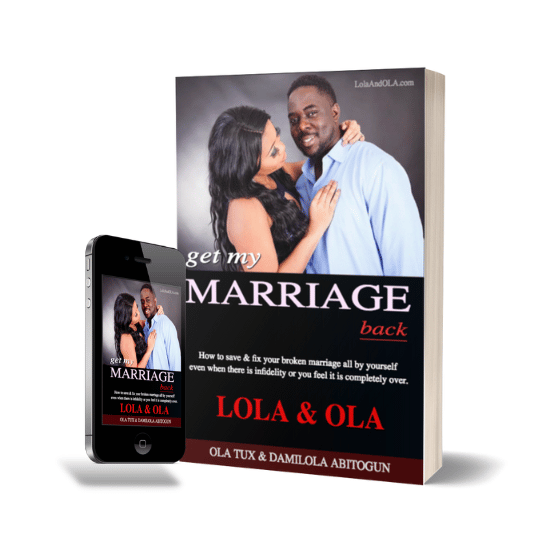
Donโ€™t forget to download your free book.

Get My Marriage Back at:

www.GetMyMarriageBack.com 

Also, check out the 30 minutes free coaching and discovery session that we will give you access to right after the download.

Hit the like button and check out the video on the screen for more information on how to rekindle and build an awesome marriage and legacy without being a simp or a pick-me.

Marriage Counseling ❤️ 2 CRUCIAL Lessons You Must Take Away from The Session

Many married couples waste 1,000’s of dollars on marriage counseling because they go into it UNPREPARED.

Studies show a 40% divorce rate after marriage counseling.

Clearly, something is wrong with that horrible statistics.

Preparing for marriage counseling

2 things you have to pay attention to when next you agree to go to a marriage counseling are:

  1. Arguments and
  2. Masculine/feminine dynamics of your relationship.

(1) Arguments

There are many counselors and advisers teaching couples how to argue these days.

While I understand that the “high” of arguments makes some men feel closer to their wife in a weird way…

It’s best to avoid arguments all together.

There is a confusion between communication and arguments.

Arguments creates bad vibes that makes a typical woman loses respect for their husband.

An argument is simply the act of invalidating your spouses point of view; it’s an attack.

We all get defensive when we feel attacked.

But the main issue there is the fact that it’s all “feeling” driven.

That is to say we are not always able to put our fingers on what the issues are.

Instead of learning “how to argue” from a counseling session, ask him or her to teach you how to avoid arguments.

This is necessary atย  least for the time being… arguments are to be avoided during a marriage crisis.

(2) Masculine/feminine dynamics

The modern marriage is struggling with gender roles and admitting that there is a difference between a man and woman.

The existence of the argument is the proof that you need to know that it absolutely affects the dynamics of happiness in your marriage.

Ask your marriage counselor to help you identify the particular gender, masculine, and feminine dynamics of your marriage.

It’s different from relationships to relationships.

Don’t avoid the conversation

Because what you don’t know or aware of can destroy your marriage.

Below is a question for us to address with this lesson…

โ€œWhat happens if your partner always has to be right?

After 12 years, he still will never ever concede an argument.

Am I supposed to always back down?

I donโ€™t always want to back down but my husband will never stop until he wins.”

Enjoy the video.

https://youtu.be/3KPOM7Ulkns

“Up to 38 percent ofย couplesย who receiveย marriage therapyย getย divorcedย 

within four years of completion.”

More interesting stats here

What is the success rate of marriage counseling?

Studies show a 40% divorce rate after marriage counseling.

So I guess we can safely say that 60% survived and saved the marriage.

If they were able to build a happy and healthy relationship beyond that is another question entirely.

Many couples live as room mates before and after a marriage counseling.

What happens at marriage counseling?

What should happen and what actually happens in a marriage counseling session are 2 different things.

The counselor’s job is to help by listening to both parties

…and help mediate on the issues.

So the mediation is a form of interpreting emotions and feelings to each other as that is usually the root of most disagreements.

Can marriage counseling really help?

Marriage counseling can definitely help but with doing the work beyond the session.

Good feelings at the end of a counseling session is not enough.

The couple to remain committed to the work.

Lots of “emotional control” is needed to sustain the marriage long after the session has ended.

But of course…

It’s easier said than done.

When should you seek marriage counseling?

The best time to seek marriage counseling is at the beginning of a misunderstanding or dispute…

But not before any of the parties shuts down emotionally.

If one person shuts down, marriage counseling as a solution tends to be too late and a waste of time…

…Just another opportunity to argue.

It is better for the spouse who wants to save the marriage to leverage self development.

And possibly….

A personal coach

I would continue that until a brand new energy and relationship dynamics is created.

In order to get the other party to open up.


Normal Enrollment Fee - $10,000+
FREE TODAY

Success with Modern Romance in 30 Days

FREE Bootcamp Course + FREE Book! THIS is what you are missing... TRUST ME! This is the success formula of those who are not complaining on social media. Click Here to Learn More...

FREE! Get My marriage back and smart relationship guide


Broken Marriage?
Fix it
Here FREE

Get My Marriage Back