
Broken Marriage?
Fix it
Here FREE

Get My Marriage Back


How to Keep Attraction in Marriage Without Losing Yourself

One of the most dangerous myths destroying marriages today is the belief that being a good person is enough.

Many husbands and wives genuinely believe that if they remain faithful, provide financially, avoid abuse, and maintain good intentions, their relationship should naturally thrive.

Then one day they find themselves confused, frustrated, disconnected, or even facing separation despite doing what they believed were all the right things.

The hard truth is that positive intentions never guarantee positive impact.

Good intentions matter.

Character matters.

Integrity matters.

But attraction, connection, and long-term relationship success require additional skills that many people were never taught.

If you want to understand how to keep attraction in marriage, you must learn the difference between being a good person and being an emotionally intelligent partner.

how to keep attraction in marriage

The Good Person Myth

Many people unconsciously operate from a hidden contract with life.

“I did everything right, therefore I deserve a good outcome.”

Unfortunately, relationships do not operate like accounting books.

Your spouse does not experience you through a spreadsheet of sacrifices.

They experience you emotionally.

Character is required.

But character alone is not enough.

Emotional intelligence is required.

Social awareness is required.

Communication skills are required.

Personal growth is required.

The world rewards outcomes, not intentions.

This does not mean you should stop being a good person.

It means you must add relationship competence to your character.

Good people lose marriages every day.

Not because they are evil.

Because they stop growing.

Why Attraction Dies in Marriage - how to keep attraction in marriage

Why Attraction Dies in Marriage

One of the biggest misconceptions about marriage is that attraction takes care of itself after the wedding.

It doesn’t.

Attraction is connected to several core human emotional needs:

  • Certainty
  • Variety
  • Significance
  • Connection
  • Growth
  • Contribution

Many marriages become overly focused on certainty while neglecting the other five needs.

The relationship becomes predictable.

The friendship weakens.

The romance fades.

Growth slows down.

Partners stop seeing each other as evolving human beings and start treating each other like permanent fixtures.

Attraction struggles to survive in stagnation.

People are naturally drawn toward growth, energy, possibility, and expansion.

That reality does not disappear because someone got married.

how to keep attraction in marriage - The Dangerous Mistake of Out-Sourcing Responsibility

The Dangerous Mistake of Out-Sourcing Responsibility

When relationships struggle, many people immediately search for external villains.

  • The in-laws.
  • Friends.
  • Coworkers.
  • Social media.
  • Bad influences.

Sometimes those influences are real.

However, high-level relationship leadership starts with self-accountability.

When you choose a partner, you also inherit aspects of their social environment.

You cannot spend your marriage trying to reform everybody around your spouse.

The quality of your connection remains the primary responsibility of both partners… starting with you.

This is not victim blaming.

It is empowerment.

Empowerment focuses on what you can control rather than what you cannot.

how to keep attraction in marriage  - investing in your partner

Investing in Someone Is Not the Same as Connecting With Them

Many people confuse provision with connection.

  • Providing is important.
  • Supporting dreams is important.
  • Contributing financially is important.

But investment is not the same thing as intimacy.

A spouse can appreciate your sacrifices while simultaneously feeling emotionally disconnected from you.

This is why friendship remains one of the most overlooked pillars of attraction.

Our framework focuses heavily on four leverage points:

  1. Friendship
  2. Sex
  3. Expectations
  4. Pride and Ego

Most marriages collapse because expectations and pride become mismanaged.

One partner feels entitled.

The other feels unseen.

Both feel misunderstood.

Neither feels connected.

Emotional Complaints Rarely Arrive Clearly

One of the biggest mistakes couples make is taking complaints literally.

  • A complaint about chores may not be about chores.
  • A complaint about communication may not be about communication.
  • A complaint about romance may not be about romance.

Often, the deeper message sounds like this:

“I don’t feel seen.”

“…don’t feel significant.”

“I don’t feel connected.”

“…don’t feel emotionally safe.”

The people who sustain attraction in marriage learn to hear what is being said beneath what is being said.

This requires emotional intelligence.

It requires active listening.

It requires curiosity instead of defensiveness.

The 8 Anti-Seducers That Quietly Kill Attraction

Attraction rarely dies from one catastrophic event.

More often, it dies from repeated unattractive behaviors.

Some of the biggest attraction killers are:

  • Neediness
  • Moralizing
  • Constant criticism
  • Reactivity
  • Lack of patience
  • Poor self-control
  • Excessive talking without listening
  • Chronic insecurity

Attraction grows in the presence of emotional strength, grounded confidence, and self-awareness.

It dies in environments dominated by blame, shame, judgment, guilt, and constant emotional triggering.

Why Unconditional Love Is Not a Relationship Strategy

One of the most difficult truths in marriage is accepting that unconditional love belongs primarily to God.

Human beings are deeply conditional.

People respond to connection…attraction, emotional safety, growth, leadership, shared vision.

Pretending otherwise is one of the fastest paths to disappointment.

Love is essential.

But love does not eliminate the responsibility to grow.

The Real Secret to Keeping Attraction in Marriage

The answer is not becoming controlling, suspicious or manipulative.

The answer is becoming more.

More self-aware.

Emotionally intelligent.

More grounded.

Attractive through growth.

And more capable of leading yourself before attempting to lead anyone else.

Our GPS framework teaches exactly that:

Grounding in God, gratitude, and emotional stability.

Purpose driven by pain rather than victimhood.

Self-awareness and leadership for long-term sustainability.

Attraction is not something you demand.

It is something you continuously nurture.

Because being right is not enough.

Being a provider is not enough.

Being a good person is not enough.

To keep attraction alive in marriage, you must continue becoming the kind of person your spouse can connect with, respect, admire, and grow alongside.

That is the difference between simply having a marriage and skillfully sustaining one.

Check this out: Is Physical Attraction Overrated in Marriage? Here’s the Real Truth

FAQ

Is it normal to lose attraction for your husband?

Yes, attraction naturally fluctuates in long-term relationships, especially when growth, emotional connection, variety, or friendship are neglected.

Can a marriage survive without physical attraction?

A marriage can survive for a period without physical attraction, but sustaining romance, intimacy, and long-term fulfillment becomes significantly more difficult.

How do you rebuild attraction in a marriage?

You rebuild attraction by improving emotional intelligence, strengthening friendship, creating growth experiences together, and becoming a more attractive version of yourself emotionally, mentally, socially, and physically.

What kills attraction in marriage the fastest?

The fastest attraction killers are neediness, blame, judgment, emotional reactivity, poor communication, stagnation, and taking your partner for granted.


How to Keep the Spark Alive in Marriage: 5 Steps to Lasting Intimacy

Many long-term relationships do not end with dramatic, explosive betrayals.

Instead, they quiet down.

The shared charisma, the deep late-night conversations, and the magnetic physical presence that defined the early years slowly give way to a predictable routine.

Couples wake up years down the line realizing they have built a beautiful life together, but they have completely lost the romantic attraction.

They have drifted into the “roommate phase.”

Sustaining attraction over decades requires more than just date nights and physical chemistry.

True romantic vitality is protected by how couples handle emotional safety, privacy, and conflict.

To understand how to keep the spark alive in marriage, we have to look closely at the invisible psychological habits that either quietly erode or deeply protect intimacy.

how to keep the spark alive in marriage

The Roommate Phase: How Attraction Fades Outside the Spotlight

The foundation of lasting desire relies heavily on protecting a marriage from outside intrusion.

When a relationship faces friction, a modern trap is to seek external validation—whether through family, friends, or social media.

However, public scrutiny and social exposure leave psychological scars that directly impact intimacy.

Research in behavioral psychology consistently shows that social rejection and public exposure activate the exact same neurological pathways associated with physical pain.

The human brain struggles to distinguish between being physically wounded and being relationally exposed.

When the intimate boundaries of a marriage are breached, the relationship loses its safety.

Without absolute safety, romantic vulnerability and physical desire cannot thrive.

This introduces a phenomenon known as reactive exposure.

Often, when a boundary is crossed, partners become so emotionally invested in fighting the outside narrative that their defensive reaction accidentally amplifies the very problem they wanted to minimize.

The emotional defense becomes a disclosure, pulling energy away from the core relationship and pouring it into managing outside perceptions.

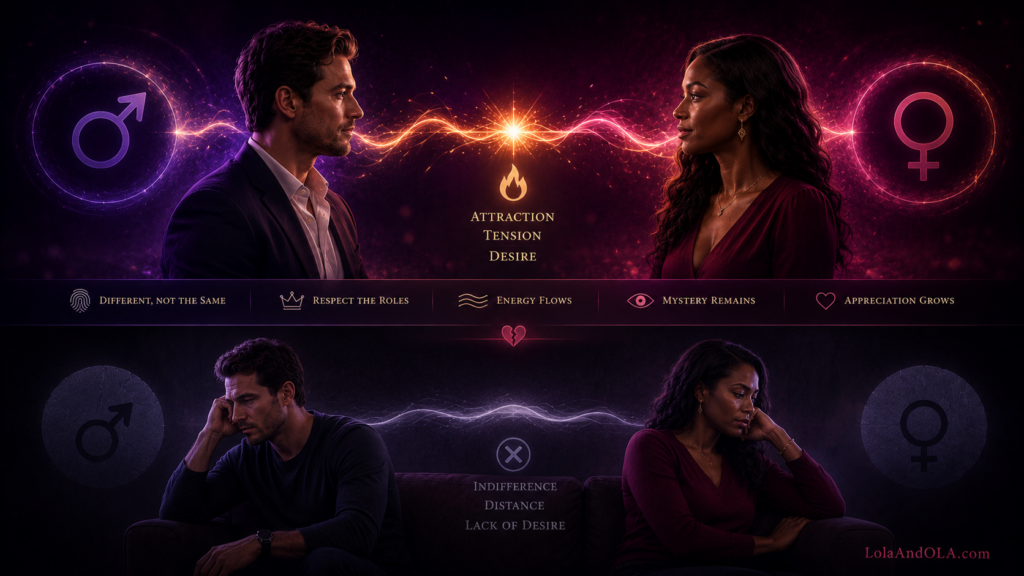
how to keep the spark alive in marriage - attaction, tension and desire

The 5-Fold Destruction of Defensiveness

This protective mindset must also be applied internally during conflict.

Relationship researcher Dr. John Gottman, who studied couples for decades, identified defensiveness as one of the single most destructive behaviors to intimate attraction.

Defensiveness is uniquely dangerous because it always feels justified to the person doing it.

Yet, it systematically destroys desire in five specific ways.

Way #1 – Hyper-defensiveness acts as an accidental confirmation.

When a partner bravely raises an intimate concern—such as feeling lonely or disconnected—and meets an immediate, intense, angry defense, it creates a subconscious impression that something deeper is being hidden.

The louder and more combative the defense becomes, the more emotional suspicion and anxiety grow in the relationship.

Way #2 – A defensive mindset prioritizes winning a battle over protecting the union.

During disagreements, the internal question flips from “What protects our bond?” to “How do I prove I am right?”

These two questions have completely opposite destinations.

One builds a shared future; the other wins a temporary argument while weakening the relational fabric.

A spouse can successfully win every single argument and still end up entirely alone.

Way #3 – Defensiveness invalidates emotional reality.

If a partner expresses that they feel neglected, the defensive mind immediately starts building a courtroom case, presenting factual evidence:

“I paid the bills, I bought gifts, and I checked in yesterday.”

But long-term intimacy is built on emotional experiences, not legal facts.

By focusing entirely on disproving the partner’s feeling, the defensive spouse completely misses the pain behind it.

When a partner stops feeling understood, physical and emotional attraction plummets.

Way #4 – Defensive loop creates deep emotional isolation.

When every vulnerability or complaint triggers a defensive counterattack, effective communication naturally slows down.

Partners start withholding their true thoughts to avoid conflict.

The marriage may look perfectly intact from the outside, but internally, the emotional connection is starving.

The spark dies because the bridge of communication has been dismantled.

Way #5 – Becoming purely defensive means inheriting external standards.

The moment a couple becomes entirely reactive to triggers—whether from each other or outside stresses—they surrender control of their behavior.

Instead of leading with wisdom, they spend their days managing accusations.

These 2 Kill Spark: Mismanaged Pride and Expectations

At the core of every fading marriage lies a fundamental shift in how partners manage their internal world.

Marriages rarely collapse because one partner is inherently evil; bad behavior is the exception, not the rule.

Instead, the breakdown is almost always driven by two core catalysts: mismanaged pride and toxic expectations.

When a relationship enters a crisis, couples often weaponize behaviors that poison their bond.

They fall into patterns of shaming, insult, blame, judgment, condemnation, and guilt.

They become obsessed with being “right or wrong,” using discrete logic, biting sarcasm, and condescension to score points.

These behaviors are the ultimate anti-seducers.

They transform an intimate partner into an adversary, instantly freezing sexual polarity and romantic desire.

To keep the spark alive in a relationship, you must pivot away from a victimhood mindset.

True empowerment means recognizing that you are the primary leader of your own emotional state.

When conflict hits, it requires temporary leadership from one side to rise above the chaos, restore emotional safety, and interrupt the defensive loop.

While day-to-day partnership is the default, sustainability requires lean-in leadership—often requiring the masculine energy to anchor the storm, allowing the feminine energy to safely drop its guard, multiply warmth, and reciprocate closeness.

Navigating Inevitable Low Levels of Spice & Spark

Every long-term relationship will face seasons of emotional winter.

How you navigate these periods determines whether your bond grows stronger or fractures permanently.

High-value couples utilize a three-part leverage focus to navigate crisis: Prayer, Patience, and Process.

  • Prayer: Release the things you cannot control—your partner’s immediate moods, external economic stressors, or past mistakes.
  • Patience: Understand that emotional safety and attraction take time to rebuild once they have been damaged by defensiveness or neglect.
  • Process: Relentlessly focus on what you can control—your own reactions, your tone, and your commitment to the relationship’s core pillars.

By anchoring your marriage in grounding, gratitude, and radical self-awareness, you shift the relationship from being reactive to being purpose-driven.

Pain and friction stop being the forces that tear you apart; instead, they become the exact fuel that drives personal growth, deeper emotional intelligence, and lasting sustainability.

6 Human Emotional Needs and Sexual Polarity

To effectively spice up your marriage, you must understand the psychological architecture of desire.

Human beings are driven by six basic emotional needs: certainty, variety, significance, connection, growth, and contribution.

The roommate phase occurs when a marriage provides massive amounts of certainty and connection, but completely starves the relationship of variety and significance.

Attraction requires tension, and tension requires polarity.

When a relationship becomes too comfortable, predictable, and devoid of playful mystery, the erotic spark vanishes.

To counter this, couples must consciously inject variety back into their dynamic.

This does not mean manufacturing fake scenarios; it means engaging the four leverage focuses of intimacy: deepening the foundational friendship, prioritizing unhurried sex, aligning unspoken expectations, and entirely removing the destructive ego from the bedroom.

Remember, respect, trust, and deep romantic submission are never guaranteed by a marriage certificate, nor are they fully secured during the initial vetting process—which only accounts for about 5% of long-term success.

They are earned, optimized, and re-earned in the mid-to-long term through how you treat each other daily in the trenches of real life.

how to keep the spark alive in marriage

Cultivating Wisdom Over Protective Walls

Adversity and emotional pain do not merely test a marriage; they expose the emotional habits that were already running under the surface.

When the inevitable friction of life teaches us to build walls, long-term marital success depends entirely on wisdom.

We must know the difference between the walls that protect our love from the outside world, and the defensive walls we build against each other that quietly destroy it from within.

Attraction is not a static emotion that stays alive on its own. It is a daily practice of choosing connection over ego, and stewardship over defensiveness.

Check this out: Is Physical Attraction Overrated in Marriage? Here’s the Real Truth

Frequently Asked Questions

What does lack of intimacy do to a woman?

When a woman experiences a chronic lack of intimacy in her marriage, it directly threatens her core emotional needs for certainty and significance, often triggering deep emotional distress.

How do married couples keep the spark alive?

Married couples keep the spark alive by actively balancing connection with erotic polarity and aggressively eliminating defensiveness from their communication. They prioritize the four-point leverage focus—friendship, unhurried sex, clear expectation management, and checking their pride at the door. By intentionally introducing variety to break the roommate routine and fiercely protecting their relational privacy from outside interference, they maintain a sacred, safe space where mutual attraction can continuously grow.

How do you keep the spark alive in a long-distance relationship?

To keep the spark alive in a long-distance relationship, couples must maximize emotional vulnerability and intentionally schedule shared experiences to fulfill the need for variety. Because physical presence is missing, communication cannot just be logistical; it must be deeply psychological, engaging in shared future-building, creative date nights, and clear expressions of desire. Establishing absolute certainty through clear timelines for when the distance will permanently end prevents the relationship from stagnating or succumbing to insecurity.

What are the main signs that a marriage is sliding into the roommate phase?

The primary sign of the roommate phase is a relationship rich in logistical coordination but entirely bankrupt of romantic tension and emotional depth. Couples find themselves talking endlessly about bills, schedules, and household chores, while completely avoiding late-night flirtation, deep eye contact, or spontaneous physical touch. When arguments stop being about passion and instead turn into cold, quiet resentment, or when partners become entirely indifferent to each other’s emotional worlds, the relationship has traded its romantic fire for mere cohabitation.


Broken Marriage?
Fix it
Here FREE

Get My Marriage Back