


If there is one marriage dynamic that catches people’s attention, it’s watching a husband say, “I feel alone,” while his wife sits across from him feeling exactly the same thing.
It’s a moment that feels painfully familiar to millions.
Beneath all the external success, the accomplishments, and the busy schedules, many couples eventually face a harsh reality: they see two people who love each other, who have built a life together, and who have sacrificed together, but who have reached a point where neither one feels truly heard.
If you’ve been married long enough, you know exactly how dangerous that place can become.

When Shared Ambition Creates Marital Friction
Many relationships don’t begin with conflict; they begin with ambition and alignment.
Couples often come together because they are both builders, thinkers, and highly driven individuals.
From the outside, their story looks like the blueprint many people dream about: children, growing businesses, financial success, and community recognition.
But there is something people rarely discuss about power couples.
The very traits that help you build external success can sometimes create friction inside a marriage.
Strong people marry strong people.
Ambitious people marry ambitious people.
We often see people blindly advise singles to “marry your type,” thinking they’ve offered profound wisdom.
The challenge is that when life becomes stressful, those same strengths can collide instead of cooperate.
What initially attracts you to your partner can easily end up being what you later resent.

The Trap of “Relationship Gridlock”
When a husband admits he feels completely alone despite all the responsibilities surrounding him, outsiders are quick to take sides.
Some side with the husband; others side with the wife.
But taking sides misses the root issue.
What is actually happening beneath the surface is pure exhaustion.
- The Husband is carrying responsibilities that he is proud to bear, but he is simultaneously overwhelmed by the weight of them.
- The Wife genuinely believes she has been trying to support her husband, but she feels like every effort she makes gets discounted or overlooked.
Neither person feels understood.
This is where marriages enter dangerous territory, often sliding into divorce and bitter custody battles before either partner realizes what went wrong.
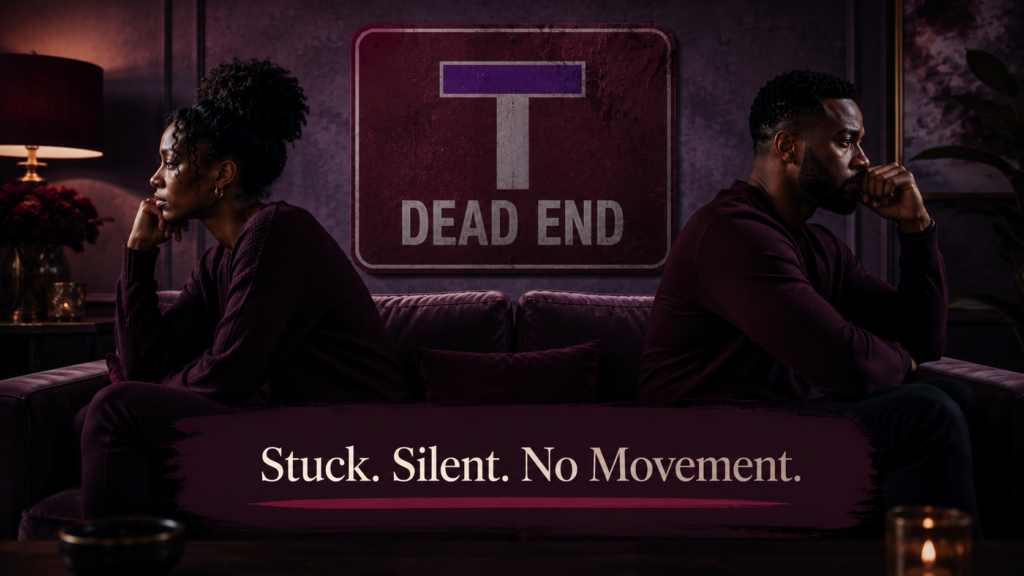
The Anatomy of a Gridlock:
- Husband: “You gotta listen to me. I feel alone.”
- Wife: “I don’t feel like you listen to me. I feel alone too.”
At first glance, it sounds like a disagreement.
But when you listen carefully, they are saying the exact same thing.
They are describing the exact same emotional experience from opposite sides of the table.
This is relationship gridlock.
Nobody is solving anything anymore.
Both people are presenting evidence.
Both people are defending themselves.
Both people are trying to explain their pain.
Yet, nobody feels relief because nobody feels emotionally received.
Why “More Communication” Isn’t Fixing the Problem
Many couples mistakenly believe communication problems happen because one person is talking and the other person is silent.
That is rarely the issue.
The real problem is that both people are talking while neither person feels emotionally received.
Psychologists have studied this for decades.
One of the strongest predictors of divorce is not conflict itself.
It is the pattern of:
- Criticism
- Defensiveness
- Contempt
- Stonewalling
When couples repeatedly get trapped in those cycles, they stop solving problems and start protecting themselves.
And when self-protection becomes the goal, intimacy dies.
This complexity doubles if you happen to be business partners or co-parents.
When things are not working, it becomes incredibly difficult to separate professional or logistical frustrations from relationship frustrations.
Are you arguing as spouses?
As business partners?
As parents?
The lines become blurry, and the emotional fatigue skyrockets.
The Reality of Permanent Differences
One thing we often tell couples is that differences are not the problem.
Differences are permanent.
In fact, they are actually an opportunity to build much-needed internal strength.
Every successful marriage is a marriage of differences.
Even if two people grew up in the same neighborhood, attended the same schools, or worshipped in the same church, they will still develop different personalities, different fears, different emotional triggers, and different communication styles.
The goal of marriage is not to eliminate differences; the goal is learning how to navigate them.
Unfortunately, many couples spend years weaponizing their differences against each other instead of leveraging them for the benefit of the relationship.
Emotional Leadership: Who Steps Up First?
When a marriage stalls, it’s often because both partners are asking for leadership while simultaneously waiting for the other person to provide it.
Some people call it “give and take.” Basically demanding result without work.
To break the cycle, somebody has to temporarily become the bigger person.
- Somebody has to become more patient.
- Somebody has to listen longer.
- Somebody has to absorb more frustration without immediately reacting.
- Somebody has to lead.
Leadership in marriage is not dominance; leadership is emotional capacity.
It is the ability to stay grounded when the other person is upset.
It is the ability to see beyond today’s temporary emotions and focus on tomorrow’s long-term outcome.
When tired people become competitors instead of teammates, resentment starts replacing goodwill.
Every interaction gets filtered through old disappointments, and every conversation becomes evidence for why you’re right and your spouse is wrong.
Once resentment takes root deeply enough, even good intentions begin to look suspicious.
How to Save a Lonely Marriage: Communication 2.0
If you want to turn the tide, you have to change how you communicate.
In Chapter 12 of our book, Get My Marriage Back, we dive deep into a concept called Communication 2.0.
One of the hardest lessons we had to learn in our own marriage was that solving a communication problem is not always about explaining yourself better.
The Golden Rule of Communication 2.0: Sometimes you must focus entirely on helping your spouse feel understood before trying to be understood yourself.
That single shift can completely change the direction of a struggling relationship.
The good news is that feeling lonely or unseen is not unusual.
Every successful marriage has seasons where two people question the future, and where frustration feels louder than love.
The difference between couples who make it and those who don’t isn’t whether those moments happen—it’s whether at least one partner develops enough emotional intelligence, patience, and self-awareness to guide the relationship through them.
Marriage was never designed to remove uncertainty from your life.
Marriage simply gives you someone to navigate uncertainty with… or choose to blame them for the inevitable.
If you are ready to stop the cycle, let us know if you’d like us to map your relationship through our GPS Marriage Fixing Framework.
It works 100% of the time when applied correctly.
When two exhausted people stop competing long enough to become teammates again, that is exactly where healing begins.
A Question for Reflection: When two people both feel unheard, lonely, and misunderstood at the same time, who should take the first step toward understanding—and would you be willing to be that person in your own relationship?
Check this out: 17 Signs of When to Walk Away From A Sexless Marriage
Frequently Asked Questions
Managing loneliness in a marriage requires shifting from self-protection back to emotional teamwork, starting with a commitment to listen before trying to be heard. When relationship gridlock sets in, both partners are often talking but neither feels emotionally received, allowing resentment to filter every interaction. To break this cycle, one partner must step up with emotional leadership—meaning they temporarily expand their emotional capacity to listen longer, absorb frustration without reacting, and actively validate their spouse’s experience. By prioritizing your spouse’s need to feel understood before defending your own position, you can lower the relational defenses and begin rebuilding the shared intimacy that drives out loneliness.
Dealing with loneliness as a married woman, especially in an ambitious or highly driven partnership, means recognizing when shared strengths have accidentally turned into marital friction. It is easy to feel completely discounted or overlooked when you believe you are actively supporting your husband, yet every effort seems to go unnoticed while he retreats into his own exhaustion. To address this, initiate a “Communication 2.0” approach by addressing the shared dynamic rather than pointing fingers; acknowledge that you both appear to be suffering from the exact same emotional fatigue from opposite sides of the table. By shifting the conversation away from a competition over who is hurting more and toward a collaborative effort to become teammates again, you can create a safe emotional space for both of you to step out of isolation.
Yes, it is entirely normal to experience seasons of loneliness in a marriage, and it does not mean your relationship is fundamentally broken. Every successful, long-term marriage goes through periods where both partners feel unseen, where life’s heavy responsibilities cause exhaustion, and where frustration temporarily feels louder than love. The defining factor of a lasting relationship is not the total absence of these lonely seasons, but rather how you navigate them when they arrive. Recognizing that loneliness is a common, predictable hurdle allows you to stop weaponizing your differences and instead use them as an opportunity to build internal strength and deeper emotional intelligence together.